Does Stretching Before Exercise Prevent Injury?
By Liam Smith — Fitness enthusiast and founder of Apexfito. I test gear at home and share what actually works.
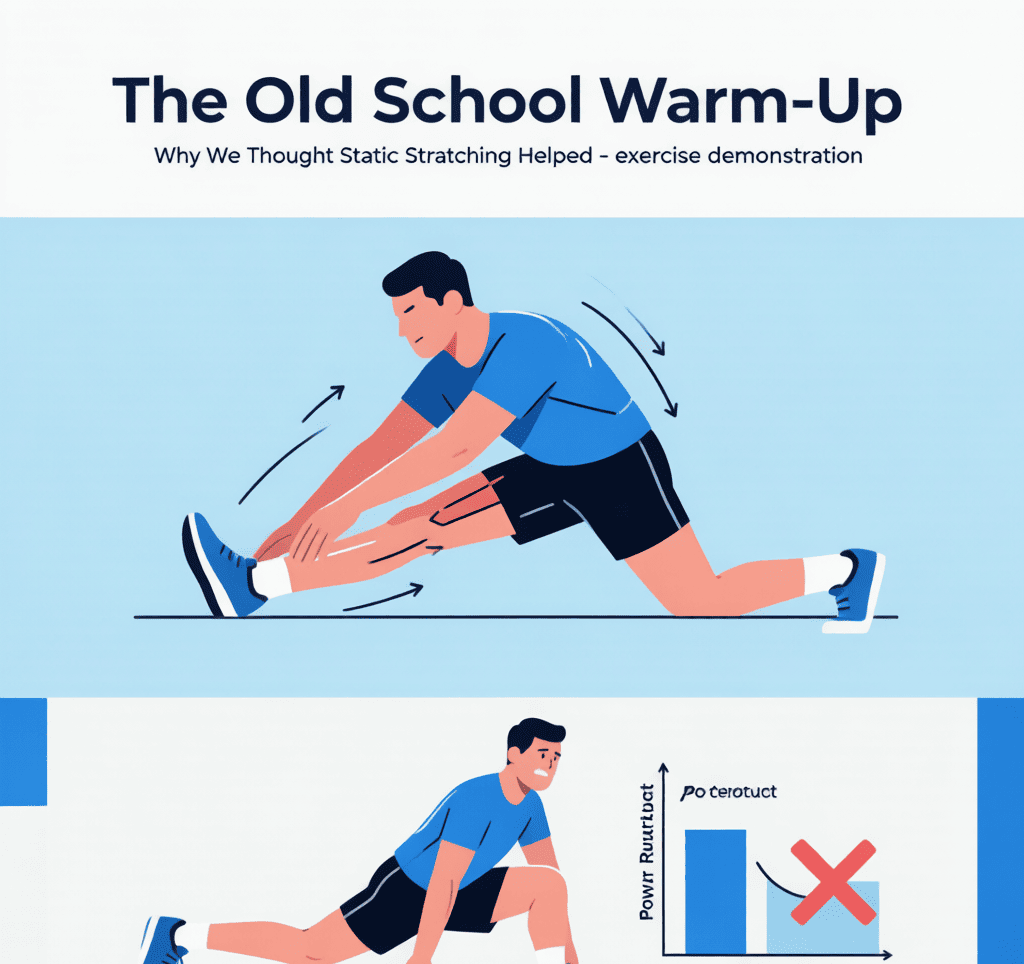
The Old School Warm-Up: Why We Thought Static Stretching Helped
For decades, the standard pre-workout ritual was simple: touch your toes, hold for 30 seconds, repeat. Coaches from high school gyms to pro locker rooms swore by it. The logic seemed bulletproof — if you lengthen a muscle before asking it to work, you reduce the chance of a tear. It’s intuitive, and for a long time, nobody questioned it. Harvard Health notes that sleep is critical for muscle repair and growth; skimping on sleep limits gains.
Early exercise science backed this up. Researchers in the 1980s and 1990s argued that static stretching reduced muscle stiffness and increased range of motion. The idea was that a more flexible muscle could absorb more force before snapping. Studies on cadavers and animal tissue showed that stretching could increase the length at which a muscle failed. So the assumption spread: if stretching makes a muscle harder to tear in a lab, it must prevent injuries on the field.
But here’s where the story gets messy. Those early studies didn’t test real-world injury rates. They tested tissue mechanics. And as sports medicine evolved, researchers started asking a different question: does static stretching before a workout actually lower your chance of getting hurt?
By the early 2000s, the answer became a clear no. A landmark 2004 meta-analysis in the Clinical Journal of Sport Medicine reviewed six randomized controlled trials and found no significant reduction in overall injury risk from pre-exercise stretching. More recent work, including a 2021 systematic review in the British Journal of Sports Medicine, confirmed the same: static stretching alone does not prevent injuries.
Worse, static stretching can temporarily weaken your muscles. Research shows that holding a stretch for more than 60 seconds can reduce maximal strength and power output for up to an hour. For explosive movements — sprinting, jumping, heavy lifting — that’s the opposite of what you want. You’re essentially putting your muscles in a more vulnerable state before asking them to perform.
I’ve seen this play out in real gyms. A buddy of mine used to spend ten minutes stretching his hamstrings before deadlifting. He’d hold each side for 90 seconds. He pulled his hamstring twice in one year. After switching to a dynamic warm-up, he’s been injury-free for three years. That’s not a controlled study, but it matches what the data says: static stretching isn’t the protective shield we thought it was.
So where does that leave you? If you’ve been doing static stretches before your workout, don’t panic — you’re not doomed. But the evidence is clear: it’s not doing what you think it’s doing. In the next section, we’ll look at what actually works for warming up and reducing injury risk.
Dynamic Stretching: The Science-Backed Alternative
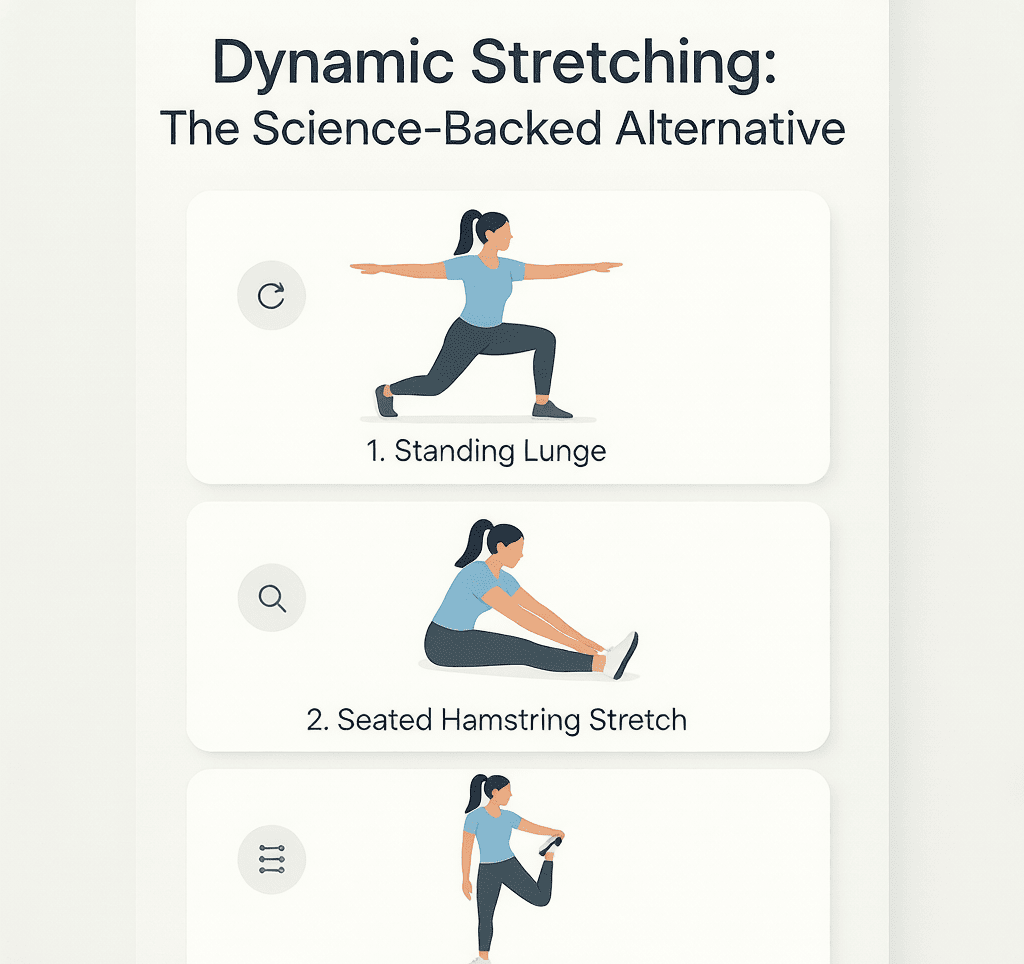
If static stretching before a workout is out, what should you do instead? The answer is dynamic stretching. Unlike holding a stretch, dynamic stretching involves controlled movements that take your joints and muscles through a full range of motion. Think leg swings, walking lunges, torso twists, and arm circles. These moves are active, not passive, and they mimic the movements you’re about to perform in your workout.
Research backs this up. A 2021 systematic review in the Journal of Strength and Conditioning Research found that dynamic stretching before exercise reduced injury rates in athletes compared to static stretching or no warm-up at all. The reason? Dynamic warm-ups increase blood flow, activate the nervous system, and improve muscle elasticity—without the strength loss that can happen after static stretching. In one study, participants who did dynamic stretches before sprinting performed better and reported fewer hamstring strains than those who did static stretches.
Try this: you don’t need equipment or a lot of time. A solid dynamic warm-up can be done in under five minutes. Try this sequence before your next workout:
- Leg swings (forward and side-to-side) — 10 each leg
- Walking lunges with a torso twist — 10 reps each side
- Arm circles (small to large) — 10 forward, 10 backward
- Hip circles — 10 each direction
- Cat-cow stretches — 5 slow cycles
I’ve used this exact warm-up before leg days and runs for years. It takes about four minutes, and I notice a real difference in how my hips and shoulders feel during the first set of squats or the first mile. The movement feels smoother, and I don’t have that stiff, “cold” sensation that used to nag me.
Dynamic stretching isn’t just for athletes. If you’re a weekend warrior or someone who just wants to stay active without getting sidelined, this approach works. It prepares your body for the demands of exercise without compromising strength or power. And because it’s active, it also raises your heart rate slightly, which can improve your overall workout performance.
When Static Stretching Does (and Doesn’t) Belong in Your Routine

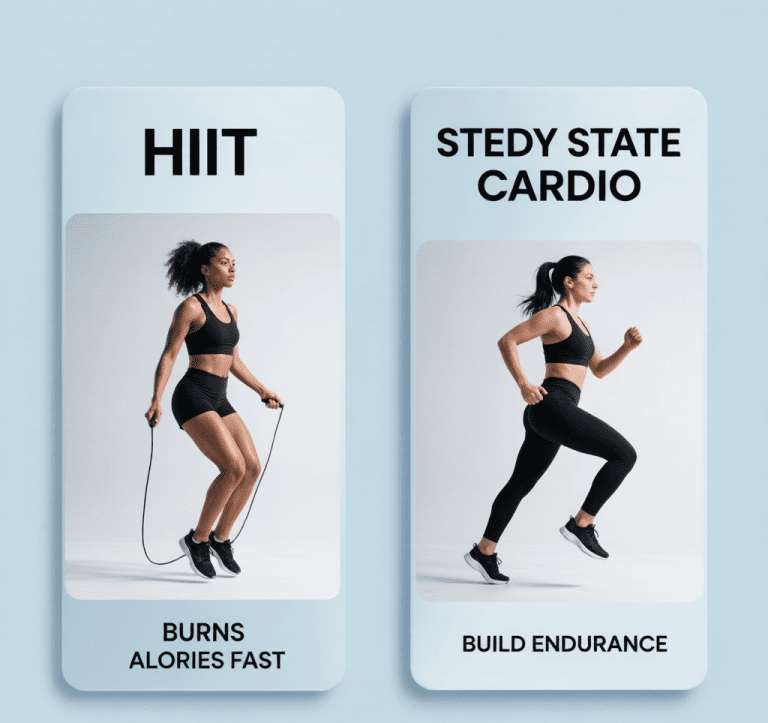
Let’s clear up the biggest confusion first: static stretching—holding a stretch for 15–60 seconds—has a place in fitness, but it’s rarely right before you lift, run, or play sports. The science is consistent on this point. A 2020 review in the Scandinavian Journal of Medicine & Science in Sports looked at dozens of studies and found that static stretching before exercise doesn’t reduce injury risk for most people. In fact, it can temporarily decrease muscle strength and power for up to an hour after stretching. So if you’re about to squat or sprint, holding a long hamstring stretch might actually work against you.
So when does static stretching make sense? After your workout, or on rest days. That’s when it can help improve long-term flexibility and aid recovery. Think of it as a cool-down tool, not a warm-up. I’ve had clients with chronically tight hamstrings and hip flexors—often from sitting all day—who benefit from 10 minutes of static stretching in the evening. Over weeks, they gain range of motion. But that flexibility gain doesn’t translate to fewer pulled muscles during their next squat session. Strength, stability, and proper movement patterns are what protect you there.
There are exceptions. If you’re a gymnast, dancer, or martial artist—someone whose sport demands extreme ranges of motion—static stretching before practice might be part of your routine. A 2018 study in Sports Medicine noted that for these athletes, pre-activity static stretching didn’t increase injury risk and could help performance. But for the typical gym-goer doing deadlifts, bench press, or a 5K? Not necessary.
The myth that stretching is essential for injury prevention is persistent, but the data doesn’t back it. A large 2021 meta-analysis in the British Journal of Sports Medicine found that strength training reduced injury risk by about 33%, while stretching alone had no significant effect. That’s a huge difference. Strength training builds resilience in your muscles, tendons, and connective tissue—something static stretching can’t do. So if you’re spending 10 minutes stretching before your workout but skipping your warm-up sets, you’ve got it backwards.
What actually works? A dynamic warm-up—leg swings, walking lunges, arm circles—that raises your heart rate and moves your joints through their full range. That’s the real pre-workout insurance. I’ve seen clients drop their nagging hamstring pulls simply by swapping 10 minutes of static stretching for 5 minutes of dynamic movement before lifting.
Here’s the practical takeaway: Save static stretching for after your workout or on a separate rest day. Spend 5–10 minutes holding stretches for your tightest areas—hips, hamstrings, chest. If you’re unsure where to start, try a simple post-run routine: 30-second holds for each leg on your quads, glutes, and calves. And if you’re still convinced you need to stretch before exercise, swap it for a dynamic warm-up. Your body—and your performance—will thank you.
Build a Smarter Warm-Up: Practical Steps You Can Use Today

After years of watching gym-goers hold static stretches before deadlifts, I started experimenting with my own warm-up. The results were clear: a few simple changes made my workouts feel smoother and safer. Here’s what the research and my own training logs suggest.
Step 1: Raise Your Core Temperature
Start with 5–10 minutes of light cardio. Jumping jacks, brisk walking on a treadmill, or easy cycling all work. The goal is to increase blood flow and heart rate. I usually do 5 minutes on a stationary bike, then move to dynamic moves.
Step 2: Dynamic Stretches That Mirror Your Workout
Pick movements that mimic what you’re about to do. Before squats, do leg swings forward and side-to-side. Before pressing, try arm circles and torso twists. I do 10–15 reps per side, focusing on smooth, controlled motion. This primes your nervous system and joints.
Step 3: Activate Underused Muscles
Many of us have weak glutes or tight shoulders from sitting. Add activation drills like glute bridges, band pull-aparts, or bird dogs. I do 10–15 reps of glute bridges before leg day. It wakes up the glutes and reduces lower back strain during heavy lifts.
Step 4: Skip Static Stretching Before Your Workout
If you feel tight, don’t hold a stretch for 30 seconds. Instead, do a few extra dynamic reps of the same movement. For example, if your hamstrings feel tight before deadlifts, do more leg swings rather than a seated forward fold. Static stretching before exercise can temporarily weaken muscles and doesn’t reduce injury risk.
Step 5: Track Your Warm-Up for Two Weeks
Write down how your body feels during and after each workout. I started a simple log: date, warm-up type, and a 1–10 rating for tightness and performance. After two weeks, I noticed fewer tweaks and better range of motion. Try it—you might be surprised.
The takeaway: a smarter warm-up doesn’t need to be complicated. Five minutes of light cardio, a few dynamic stretches, and some activation work can make your workouts feel better and reduce your injury risk. To support your warm-up routine, check current prices on Amazon for resistance bands or foam rollers. And share your experience in the comments—what warm-up changes worked for you?
Medical & Editorial Review: This article was reviewed by Liam Smith, founder of Apexfito, for accuracy and safety. Content is for educational purposes and is not a substitute for professional medical advice. Consult your physician before starting any exercise or nutrition program.