The Office Worker’s Guide to Staying Active:
Full disclosure: Some links in this article are affiliate links. We may earn a small commission at no extra cost to you if you make a purchase through them. Our recommendations are based on what real users report, not on commission size.
Why Sitting All Day Is Hard on Your Body
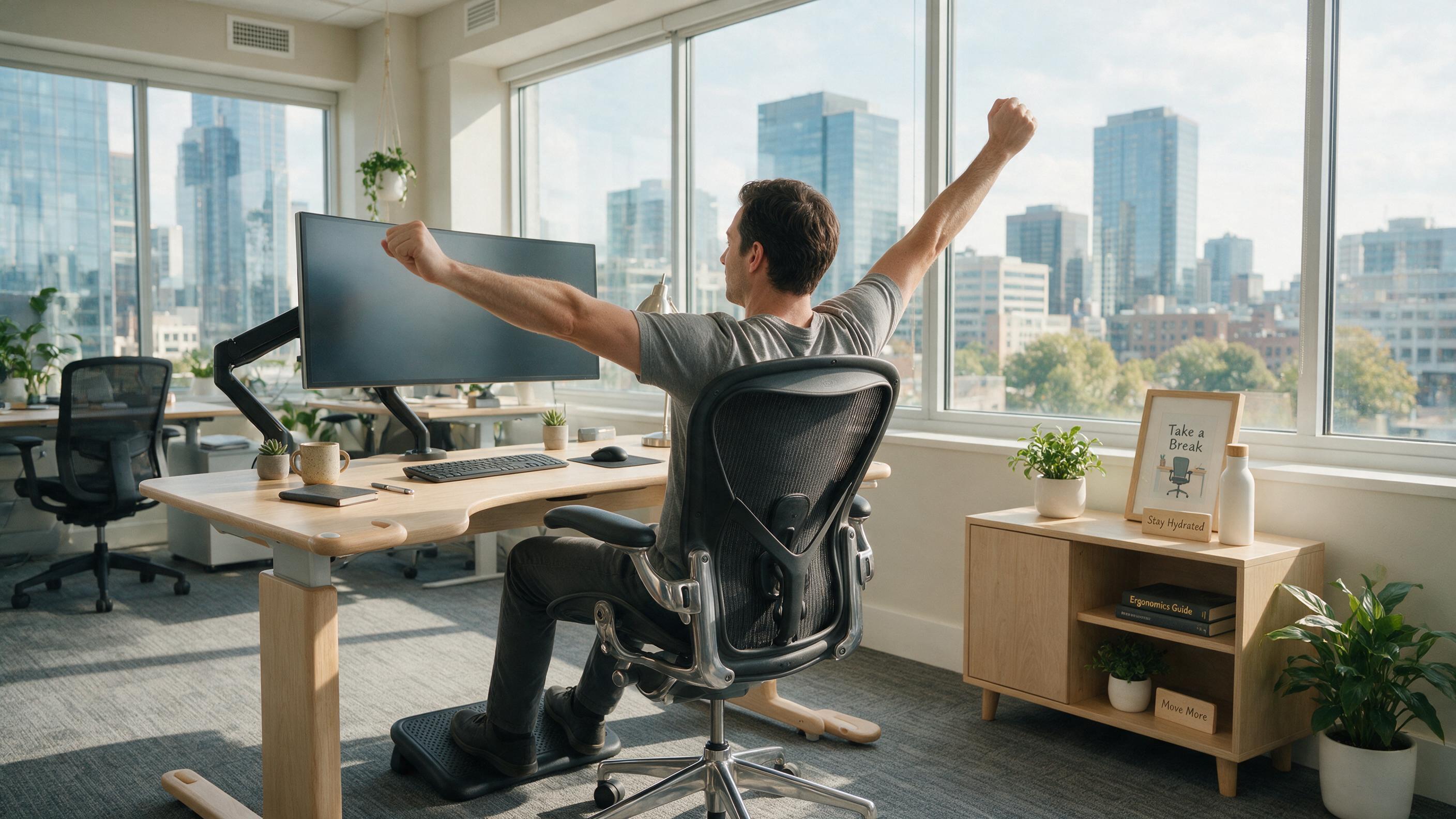
You know that stiff feeling when you stand up after a long meeting? That’s your body telling you something. After hours in a chair, your hip flexors shorten and tighten like a fist that won’t let go. This pulls your pelvis forward, yanking your lower back out of its natural curve. A 2018 study in the Journal of Physical Therapy Science found that sitting for more than eight hours a day significantly increases lower back pain risk — and most office workers log even more time than that.
Your upper body takes a hit too. Slouching forward to stare at a screen strains the muscles between your shoulder blades and shortens your chest. Your neck has to crane up to keep your eyes level, which can trigger tension headaches by lunch. Rounded shoulders follow, and suddenly you’re stuck in a posture that makes deep breaths harder than they should be.
Blood flow slows down when you sit for hours. Your legs feel heavy by 2 p.m., and that sluggishness isn’t just in your head — your body is literally pumping less oxygen to your brain. No wonder the afternoon slump hits so hard.
Here’s the thing: your body adapts to whatever shape you put it in most often. If that shape is a C-curve over a keyboard, your muscles and joints will lock into that pattern. But the reverse is also true. Small, consistent stretches can coax your body back toward neutral. You don’t need a gym or an hour of free time. You just need a few minutes every hour to undo the damage before it sets in.
Your 5-Minute Desk Stretch Routine (Do It Every 2 Hours)
After two hours in the same chair, your hips tighten, your shoulders round forward, and your lower back starts to ache. The fix isn’t a standing desk or an ergonomic chair—it’s movement. Specifically, a short, repeatable stretch routine you can do right at your desk, no equipment needed.
This five-minute sequence targets the areas that suffer most from sitting: your spine, hips, shoulders, and neck. Do it every two hours. Set a timer if you have to. Your body will thank you.
1. Seated Cat-Cow (5 reps, slow and controlled)
Start by sitting tall in your chair, feet flat on the floor, hands on your knees. Inhale as you arch your back, letting your belly push forward and your gaze lift toward the ceiling. Exhale as you round your spine, tucking your chin to your chest and pulling your navel in. Move slowly, matching each breath to a movement. Five reps is enough to wake up your spine and get blood flowing to your lower back.
2. Seated Figure-Four Stretch (30 seconds per side)
This one opens your hips, which get tight and stiff from hours of sitting. Sit near the edge of your chair. Cross your right ankle over your left knee, keeping your right foot flexed to protect your knee. If that feels okay, gently lean forward from your hips—keep your back straight—until you feel a stretch in your right glute and outer hip. Hold for 30 seconds, then switch sides. Important: If you feel any pinching in your knee, skip this stretch or keep your foot on the floor instead. Don’t push through joint pain.
3. Cross-Body Shoulder Stretch (30 seconds per side)
Your shoulders are probably hunched forward right now. Fix that. Extend your right arm straight out in front of you, then bring it across your chest. Use your left hand to gently pull your right arm closer to your body. Keep your shoulders relaxed—don’t let them creep up toward your ears. Hold for 30 seconds, breathing normally, then switch arms. This stretch targets the upper back and rear shoulder, areas that get tight from reaching for a mouse or keyboard.
4. Neck Stretch (20 seconds per side)
Finish with your neck. Sit up straight, shoulders relaxed. Slowly tilt your head to the right, bringing your right ear toward your right shoulder. Don’t lift your shoulder to meet your ear—keep it down. You should feel a gentle stretch along the left side of your neck. Hold for 20 seconds, then repeat on the left side. If you want a deeper stretch, you can gently place your hand on the side of your head for a little extra pull, but go easy.
That’s it. Four moves, five minutes, done. The hardest part is remembering to do it. I set a recurring alarm on my phone for every two hours—10:00 AM, 12:00 PM, 2:00 PM, 4:00 PM. After a week, it became a habit. Try it for yourself, and if you have a favorite desk stretch that isn’t on this list, drop it in the comments. Let’s build a movement habit together.
Mini Workout #1: The Mid-Morning Energizer (No Equipment, No Sweat)
By 10:30 a.m., your focus is slipping, your lower back is tight, and your chair feels like a trap. Instead of reaching for a third coffee, try this 4-minute circuit. It’s designed to wake up the muscles that go dormant while you sit—glutes, hips, and upper back—without making you sweat or need a change of clothes.
Here’s the circuit:
- 10 slow air squats — Keep your chest up and weight in your heels. Imagine you’re sitting back into a chair that’s just out of reach. This fires up your glutes and legs, which have been asleep under your desk.
- 10 wall push-ups — Stand arm’s length from a wall, hands at shoulder height. Lean in until your nose almost touches the wall, then push back. Keep your body straight from head to heels. This opens your chest and shoulders, counteracting the hunch you’ve been holding.
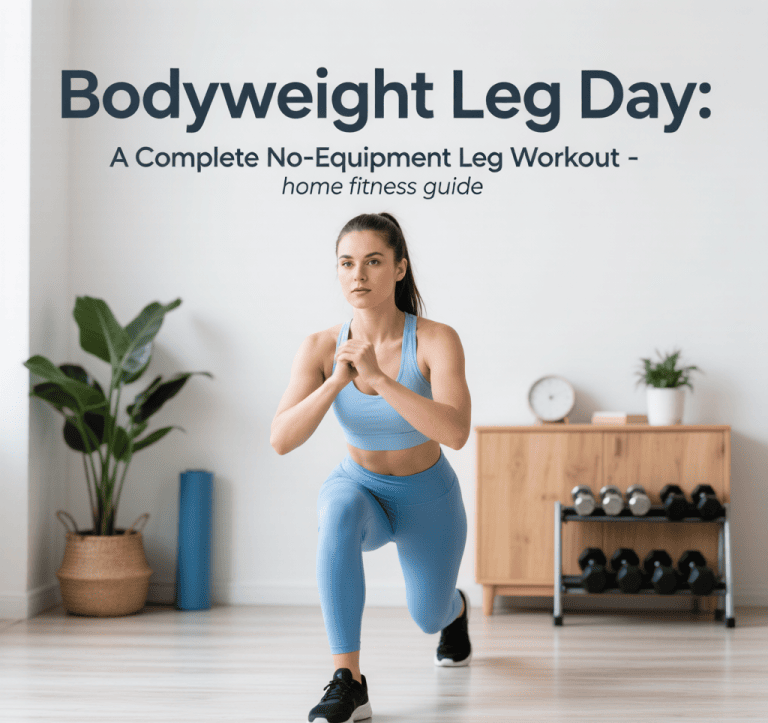
- 10 alternating reverse lunges (each leg) — Step one foot back, lower your back knee toward the floor, then drive through your front heel to return to standing. This activates your hips and improves balance. If you feel wobbly, hold the back of your chair for support.
Repeat the circuit twice, resting 30 seconds between rounds. Total time: about 4 minutes. Done at your desk or in a hallway, you’ll feel more alert and less stiff—without breaking a sweat.
I’ve done this circuit in a conference room before a meeting and walked in feeling sharper than if I’d sat for another hour. Give it a try this week.
Progression tip: Once this feels easy, increase to 12 reps per exercise or add a third round. That bumps the total time to about 6 minutes and keeps challenging your muscles as you get stronger.
Mini Workout #2: The Afternoon Reset (Strength and Mobility)
By mid-afternoon, your body has been folded into a chair for hours. Your hips are tight, your shoulders are rounded forward, and your lower back is starting to complain. This five-minute reset targets exactly those spots — and it doesn’t require leaving your office or even changing clothes.
Before you start, do a few neck rolls and shoulder shrugs to wake up your upper body. Roll your shoulders forward and backward five times each, then gently tilt your head side to side. That’s enough to get blood moving and make the exercises below feel smoother.
Do this sequence once through, or repeat it twice if you have time. Move slowly and focus on control, not speed.
1. Glute Bridges (10 reps)
Lie on your back on the floor with your knees bent and feet flat. Press your heels into the ground, lift your hips up, and squeeze your glutes hard at the top. Lower down with control. That’s one rep. If your lower back feels cranky, keep the range of motion smaller — just lift until you feel your glutes engage.
I’ve had days where my glutes felt completely asleep after sitting for six hours. These bridges wake them right up.
2. Scapular Retractions (10 reps)
Stand or sit tall. Squeeze your shoulder blades together as if you’re trying to hold a pencil between them. Hold for three seconds, then release. Keep your shoulders down — don’t let them creep up toward your ears.
This move counteracts the forward hunch that happens when you type all day. It’s subtle but powerful.
3. Standing Calf Raises (10 reps)
Stand with your feet hip-width apart. Rise up onto your toes as high as you can, pause for a second, then lower slowly. If you need balance, hold onto a desk or wall. These get blood moving in your lower legs and help prevent that heavy, tired feeling in your feet.
4. Forward Fold with Deep Breathing (30 seconds)
Stand with your feet hip-width apart, knees bent enough to keep your spine comfortable. Hinge at your hips and fold forward, letting your head and arms hang heavy. Take slow, deep breaths — in through your nose, out through your mouth. Feel your lower back release with each exhale. Keeping your knees soft is key here; it protects your lower back and lets you relax into the stretch.
This is the most relaxing part of the whole sequence. Don’t rush it.
That’s it. Five minutes, no equipment, done. Try this reset every afternoon for a week and notice how much better your back and shoulders feel by 5 p.m.
What’s your go-to desk stretch? Share your routine in the comments — I’d love to hear what works for you. Building a consistent movement habit starts with small, repeatable wins like this one.
Building a Consistent Movement Habit That Sticks
You’ve got a handful of stretches and mini workouts that can be done right at your desk. The next step is turning them into a habit that doesn’t rely on willpower or motivation. Motivation fades by Wednesday afternoon. A good system sticks.
Set a recurring timer on your phone or computer for every 90 minutes. When it goes off, stand up and pick one stretch or one mini workout. That’s it. No decision-making, no negotiating with yourself. The timer does the reminding, you just move.
Pair your movement break with something you already do automatically. After you finish your coffee, do a seated spinal twist. Right before a meeting, stand and do a few shoulder rolls. This is called habit stacking, and it works because you’re piggybacking on a routine that’s already solid. For example, every time you finish a phone call, do a 30-second neck stretch. Or after you send a big email, stand up and do a quick side bend. The more specific the trigger, the easier it is to remember.
Start small. Really small. Aim for just one mini workout per day in the first week. Maybe that’s the desk chair squat series at 10 a.m. In week two, add a second break, perhaps a quick stretch in the afternoon. Don’t try to do everything at once. A habit that grows slowly is one that lasts.
I’ve tried going all-in before — setting alarms for every hour, planning a full routine. It lasted three days. What worked was doing one thing consistently for a week, then adding another. Your body and brain need time to adjust.
Now, here’s where you come in. Share your favorite desk stretch in the comments below. Seeing what works for others can help you discover new moves and stay accountable. Maybe someone’s go-to neck release becomes your new afternoon reset. Or a fellow reader’s seated hamstring stretch becomes your go-to after lunch. Building a movement habit isn’t about perfection — it’s about showing up, one 90-minute block at a time. Drop your go-to move in the comments and let’s build this habit together.
Medical & Editorial Review: This article was reviewed by Liam Smith, founder of Apexfito, for accuracy and safety. Content is for educational purposes and is not a substitute for professional medical advice. Consult your physician before starting any exercise or nutrition program.