Lunge Variations: 4 Types of Lunges for Stronger Legs and…
Lunge Variations: 4 Types of Lunges for Stronger Legs and Glutes
Lunges are one of those exercises that never get old. They build real strength in your legs and glutes, improve your balance, and you can do them anywhere. The problem is most people stick to one type of lunge and never explore what else is out there.
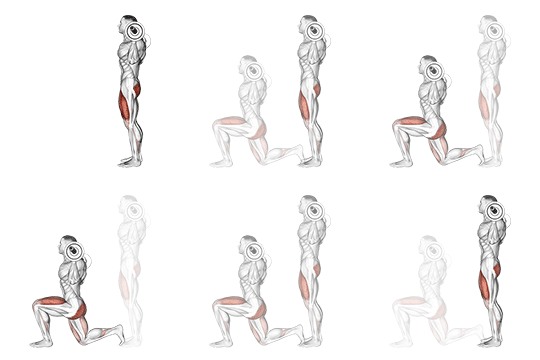
I’ve pulled from a dataset of 21 different lunge exercises to bring you the four that matter most. These lunge variations for stronger legs and glutes target your quads, hamstrings, glutes, and adductors in different ways. If you only do one type of lunge, you’re leaving gains on the table.
Why Lunges Matter
Lunges are a unilateral exercise, meaning they work one leg at a time. That makes them better than squats for fixing muscle imbalances, improving coordination, and challenging your stabilizer muscles. Your core has to work overtime to keep you upright, especially when you add weight.
Each lunge variation shifts the emphasis slightly. Some hit the quads harder. Others light up your glutes. The lateral lunge works muscles that most leg exercises ignore entirely.
Forward Lunge — The Foundation
The forward lunge is where everyone starts. It’s straightforward but easy to mess up.
How to do it:
- Stand tall with your feet hip-width apart. Hands on your hips if you’re using body weight, or hold a barbell across your upper back.
- Take a big step forward with your right foot. Your step should be long enough that when you descend, your front shin is vertical.
- Lower your body until both knees are at 90 degrees. Your back knee should hover just above the ground.
- Drive through your front heel to push back to the starting position.
- Repeat on the left leg. That’s one rep.
Form cues that actually help: Keep your torso upright — don’t lean forward to “help” the movement. Your front knee should stay behind your toes. If your knee tracks past your toes, take a longer step.
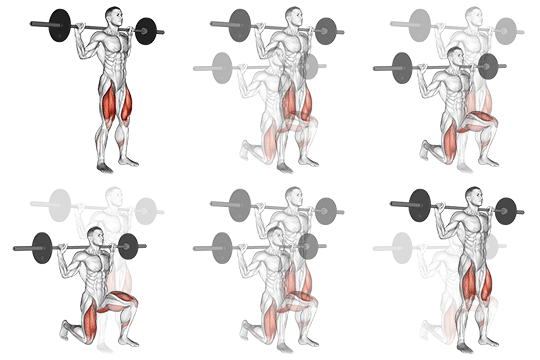
Reverse Lunge — Easier on the Knees
The reverse lunge is smoother on your knee joints because you step backward instead of forward. That changes the deceleration pattern and shifts more load into your glutes.
How to do it:
- Start standing with your feet together.
- Step your right foot backward about two feet.
- Lower your hips until your front thigh is parallel to the ground and your back knee is an inch off the floor.
- Push through your front heel to return to standing.
I recommend starting with reverse lunges if you have knee issues. The movement pattern is more stable and most people find it easier to keep their front knee in line with their toes.
Walking Lunge — Add a Conditioning Element
Walking lunges turn the lunge into a moving exercise, which cranks up your heart rate and challenges your balance in a different way.
How to do it:
- Stand with feet together.
- Step forward with your right foot into a lunge.
- Instead of pushing back, push off your back foot and bring it forward to meet your front foot.
- Immediately step into a lunge with your left foot.
- Keep walking forward, alternating legs.
Walking lunges are brutal for your quads and your cardiovascular system. Three sets of 10 reps per leg with body weight will leave you breathing hard.
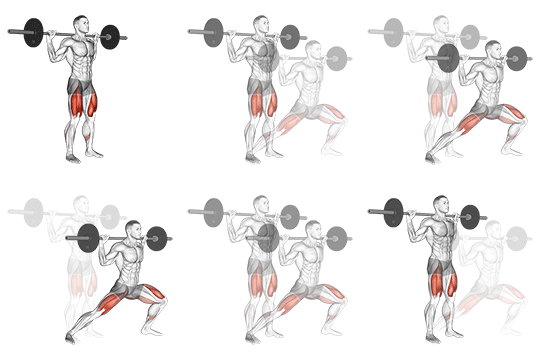
Lateral Lunge — The Glute Medius Builder
The lateral lunge moves in the frontal plane — side to side. Most leg exercises only go forward and backward. This one targets your glute medius and adductors, muscles that stabilize your hips and knees.
How to do it:
- Stand with feet together.
- Take a large step to the right.
- Bend your right knee and push your hips back, keeping your left leg straight.
- Lower until your right thigh is parallel to the ground.
- Push off your right foot to return to the start.
Keep your chest up and your weight in the heel of the bent leg. If you feel this in your knees, widen your stance and sit your hips back further.
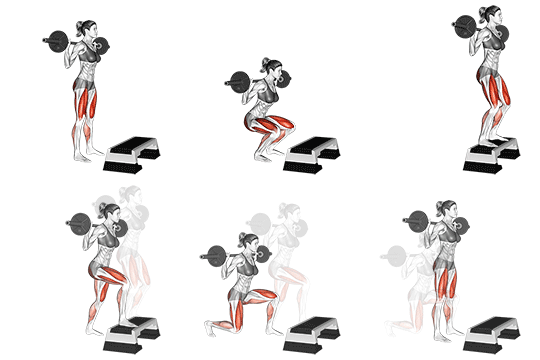
Bulgarian Split Squat — The Bonus Exercise
The Bulgarian split squat is technically a split squat, not a lunge. But it belongs in any conversation about single-leg training. It places your rear foot on an elevated surface (bench, box, or chair) and loads the front leg.
How to do it:
- Stand about two feet in front of a bench or box.
- Place the top of your back foot on the bench.
- Lower your back knee toward the ground, keeping your front shin vertical.
- Descend until your front thigh is parallel or slightly below.
- Drive through your front heel to stand back up.
This exercise isolates each leg completely. There’s no cheating. It hits your quads hard (the reference exercise calls for 8 steps and targets quads) and your glutes get a serious stretch at the bottom.
Common Mistakes Across All Lunges
Short-stepping. If your step is too short, your knee travels past your toes and loads the kneecap. Fix it by taking a longer step.
Torso collapse. Leaning forward shifts the work from your glutes to your quads and lower back. Keep your chest proud and your shoulders back.
Knee caving. Letting your front knee roll inward is a recipe for pain. Push your knee out to track over your second toe.
Weight on the toes. Your weight should be through your front heel. If you’re on your toes, you’re losing glute activation and stressing your knee.
Rushing the movement. Lunges need control. Lower under control, pause at the bottom for a second, and drive up.
How to Add Weight
Once body weight lunges are easy (3 sets of 12 per leg), here’s how to progress:
- Dumbbells at your sides — easiest way to add load, keeps the center of gravity low
- Goblet hold — hold one dumbbell at your chest, great for core engagement
- Barbell on your back — heaviest option, requires more stabilization
- Front rack — two dumbbells held at your shoulders, forces upright posture
Start with dumbbells at your sides. Work up to 3 sets of 8-10 reps per leg before going heavier.
Programming Lunges Into Your Routine
| Goal | Exercise | Sets x Reps | Frequency |
|---|---|---|---|
| Strength | Reverse Lunge (heavier weight) | 4 x 6-8 per leg | 2x per week |
| Hypertrophy | Forward Lunge + Bulgarian Split Squat | 3 x 10-12 per leg | 2x per week |
| Endurance / Conditioning | Walking Lunge | 3 x 12-15 per leg | 1-2x per week |
| Mobility / Warm-up | Lateral Lunge | 2 x 8 per leg | Before every leg day |
Rotate through the variations every 4-6 weeks. Your legs adapt fast, so changing the stimulus keeps them growing.
Conclusion
You don’t need 20 different leg exercises to build strong legs and glutes. Master these four lunge variations — forward, reverse, walking, and lateral — and throw in the Bulgarian split squat when you want an extra challenge. Each one teaches your legs to work in a different plane of motion, which builds more balanced strength and reduces your risk of injury.
Start with body weight. Nail the form. Then add weight slowly. Your legs will tell you when they’re ready for more.
Medical & Editorial Review: This article was reviewed by Liam Smith, founder of Apexfito, for accuracy and safety. Content is for educational purposes and is not a substitute for professional medical advice. Consult your physician before starting any exercise or nutrition program.