Why You’re Not Seeing Results: 4 Hidden Reasons Your Workouts Aren’t Working
Full disclosure: Some links in this article are affiliate links. We may earn a small commission at no extra cost to you if you make a purchase through them. Our recommendations are based on what real users report, not on commission size.
Why Hard Work Alone Can Backfire
You lace up, grind through your workout, and leave drenched. A month later, the mirror looks the same. The scale hasn’t budged. You’re doing the work—so why aren’t you getting anywhere?
I’ve seen it with clients and lived it myself: hard work alone isn’t enough. Your body is a master of efficiency. Repeat the same routine week after week, and it learns exactly what to expect. It stops adapting because it doesn’t need to. No new challenge means no new results.
This isn’t a motivational problem. It’s biological. Gains in muscle and stamina happen only when you force your body to handle something it hasn’t seen before—more weight, more reps, less rest, or a completely new movement pattern. Scientists call this the stimulus–adaptation cycle. Skip the stimulus, and your body stays right where it is.
Think of it like learning a language. You wouldn’t study the same five words every day and expect fluency. You increase difficulty, introduce new vocabulary, challenge recall. Training is no different. Show up with a plan that gradually increases demand, or you’re just going through the motions.
Here’s what you can do starting today:
- Track your numbers. Write down the weight, reps, and sets for each exercise. If you’re not pushing past last week’s performance, you’re not providing a new stimulus.
- Change one variable each week. Add 5 lbs to your main lift, do one extra rep per set, or cut rest time by 15 seconds. Small leaps beat no leaps.
- Re-evaluate your program every 4–6 weeks. If your workouts feel comfortable, they’re probably not working. Swap exercises, adjust volume, or try a different rep range.
The trap is believing more effort equals more results. The science shows that effort without direction just produces fatigue, not growth. You need to deliberately increase demand on your muscles and nervous system.
Simple tools like a training log or adjustable dumbbells can help you track changes and break through plateaus. Check current prices on Amazon to find what fits your setup—and share your experience in the comments. Sometimes the smallest gear tweak is what shifts your progress from stuck to steady.
Missing the Progressive Overload Principle
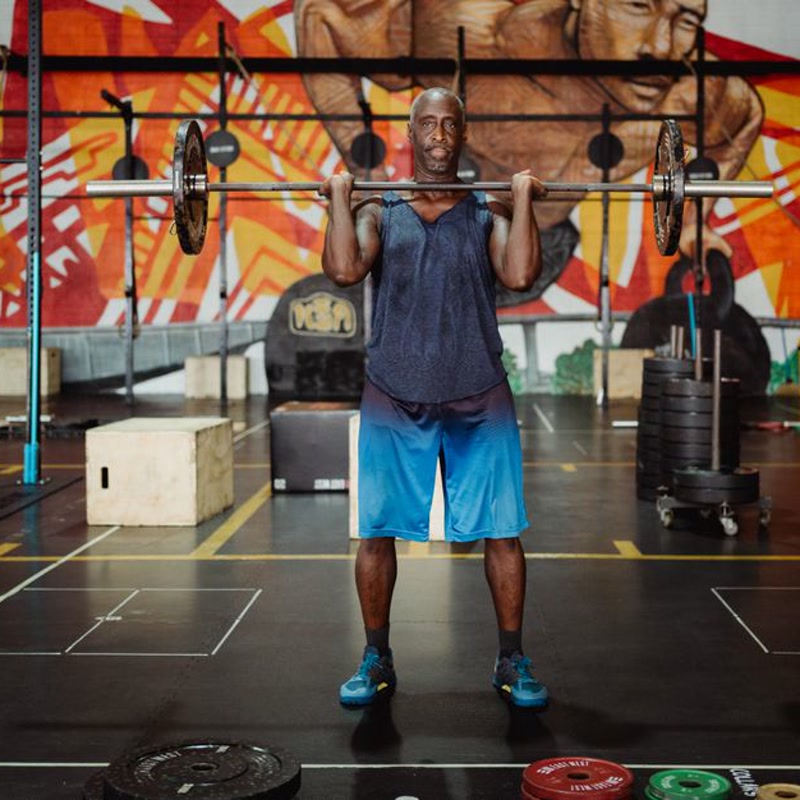
If your workout routine hasn’t changed in weeks or months, your body has already adapted. That’s not laziness — that’s physiology. The principle of progressive overload states that to keep making gains, you must gradually increase the demands placed on your muscles. Without it, your body has zero reason to get stronger, leaner, or more defined.
Most people think adding weight is the only way to progress. It’s not. You can also:
- Add more reps or sets (e.g., go from 3×8 to 3×10)
- Shorten your rest periods (e.g., 90 seconds to 60 seconds)
- Increase time under tension (slow down each rep to 3–4 seconds)
- Improve your form and range of motion
- Swap in a harder variation of an exercise
Let me give you a concrete example. Say you’re doing dumbbell bench press with 25-pound dumbbells for 3 sets of 10 reps. Week 1, you barely finish — last rep is a grind. Week 2, you hit all sets clean. Week 3, you add one rep to each set: 3×11. Week 4, you go to 3×12. If 3×12 feels too easy, you don’t just sit there — you bump up to 30-pound dumbbells and drop back to 3×8, then repeat the process. That’s progressive overload in action.
I’ve had clients break plateaus simply by slowing down their lifts and focusing on the eccentric phase. No extra weight needed. One woman added 5 pounds to her deadlift over six weeks just by taking 3 seconds to lower each rep. Her form improved and the strength followed.
The real issue? Most people don’t track their workouts. They guess. They rely on memory. A simple log — notebook, app, even a note on your phone — lets you see if you’re actually progressing. If you can hit 3 sets of 12 reps with good form and still feel like you could do more, that’s your signal to increase the load or try a harder movement.
Without progressive overload, your body has no reason to adapt. You’re not providing sufficient stimulus for change, so the scale stays put and strength flatlines. Apply it consistently, and you give your body a reason to change shape and get stronger.
Recovery: The Unsexy Difference-Maker

You grind through sets, you drench your shirt, you leave the gym feeling like you earned something. But if you’re sleeping five or six hours, eating whatever’s convenient, and letting work stress pile up, you’re effectively training in quicksand. Recovery isn’t the soft, optional part of fitness — it’s where your body actually adapts. Here’s where most people screw it up, and how to fix it without overhauling your life.
Sleep Deprivation Kills Gains — Literally
Drop below seven hours of sleep and your cortisol spikes while protein synthesis tanks. That’s a one-two punch: more of the hormone that breaks down muscle, less of the process that builds it. I’ve seen clients who train like animals but sleep like insomniacs, and their strength numbers flatline for months. The fix isn’t complex: aim for 7–9 hours, keep your room cool and dark, and stop scrolling 30 minutes before bed. No supplements required — just consistency.
Undereating on Training Days Backfires
If you’re eating the same calories every day regardless of whether you trained, you’re probably underfueling on workout days. Your body needs extra protein and carbs to repair muscle fibers torn during lifting. Skimping leaves you sore longer, weaker next session, and more likely to binge later. Practical advice: add roughly 200–300 calories on training days, mostly from protein and carbs. That’s a solid starting point for most people — if you’re bigger or more active, you might need more; if you’re smaller, less. Track how you feel and adjust. Recovery needs vary individually, so treat that 200–300 calorie suggestion as a starting target, not a law. A post-workout shake with a banana works. Try it for a week and see.
Chronic Stress Melts Fat Loss Efforts
High cortisol doesn’t just hurt muscle — it also tells your body to hold onto fat, especially around the midsection, even if you’re in a calorie deficit. I’ve worked with people who ate perfectly, trained hard, and saw nothing change because their job or relationship had them wired 24/7. Stress management isn’t woo-woo; it’s physiology. Ten minutes of box breathing or a walk outside after work can lower cortisol enough to let your fat loss actually work. Try it for two weeks and watch the scale move.
Deload Weeks Aren’t Lazy — They’re Necessary
Every few weeks, take a week where you lift lighter (about 50–60% of your max) or do fewer sets. This isn’t a vacation; it’s a planned recovery period that lets your central nervous system reset and your joints heal. I used to skip deloads because I felt guilty taking it easy. Then I’d stall for a month, get frustrated, and almost quit. Now I schedule a deload every fourth week, and I come back stronger every time. You will too.
If you’re stuck, look at your sleep, your food, your stress, and whether you ever take your foot off the gas. Fix those and the workouts you’re already doing will finally deliver results. Check current prices on Amazon for sleep aids or recovery supplements — but honestly, the basics (blackout curtains, a shake shaker, a cheap foam roller) are all you need. Drop a comment and tell me which of these four you’re going to tackle first.
You’re Judging Progress With the Wrong Tool

You step on the scale every morning hoping for a different number. I’ve been there — holding my breath, then sighing when the digits barely moved or even crept up. It’s frustrating, but the problem isn’t your effort. It’s your measuring stick.
Scale weight fluctuates wildly day to day. A high-sodium meal, your menstrual cycle, even the time of day can swing it 2–5 pounds. A 2020 review in the Journal of Clinical Medicine found that daily weight changes are mostly water, glycogen, and bowel content — not fat loss or gain. That means the scale can be misleading if you rely on it alone.
So what should you use instead? Three tools that actually reflect progress:
- Progress photos. Take them under the same conditions every time: same room, same lighting (natural window light works great), same pose (front, side, back), and wearing minimal clothing like shorts and a sports bra. I snap mine every four weeks on Sunday morning and save them in a folder with the date. The visual difference is often dramatic even when the scale hasn’t budged. Muscle is denser than fat, so you can shrink while staying the same weight.
- Strength gains. If your lifts are going up — even a single rep or a few pounds — you’re building muscle. That drives metabolic adaptation and long-term fat loss. Track your squat, bench, deadlift, or any compound movement. Progress there is real, measurable progress.
- How your clothes fit. Your favorite jeans don’t lie. If they’re looser around the waist or tighter in the shoulders in a good way, you’re changing composition. That’s a win the scale won’t show.
Body recomposition — losing fat while gaining muscle — takes time. Research suggests it takes 4–8 weeks before noticeable visual changes appear in most people doing consistent resistance training with adequate protein. That’s not a long time in the grand scheme, but it feels like forever when you’re waiting.
Patience isn’t passive. It’s active: you keep training, keep eating enough protein, keep sleeping, and keep using the right tools to measure. The scale is just one data point. Don’t let it be the only one.
If you’re ready to break out of your rut and start seeing real changes, check current prices on Amazon for a simple body tape measure or a smart scale that tracks more than just weight. Then drop a comment below sharing your experience — what tracking method has made the biggest difference for you?
Medical & Editorial Review: This article was reviewed by Liam Smith, founder of Apexfito, for accuracy and safety. Content is for educational purposes and is not a substitute for professional medical advice. Consult your physician before starting any exercise or nutrition program.