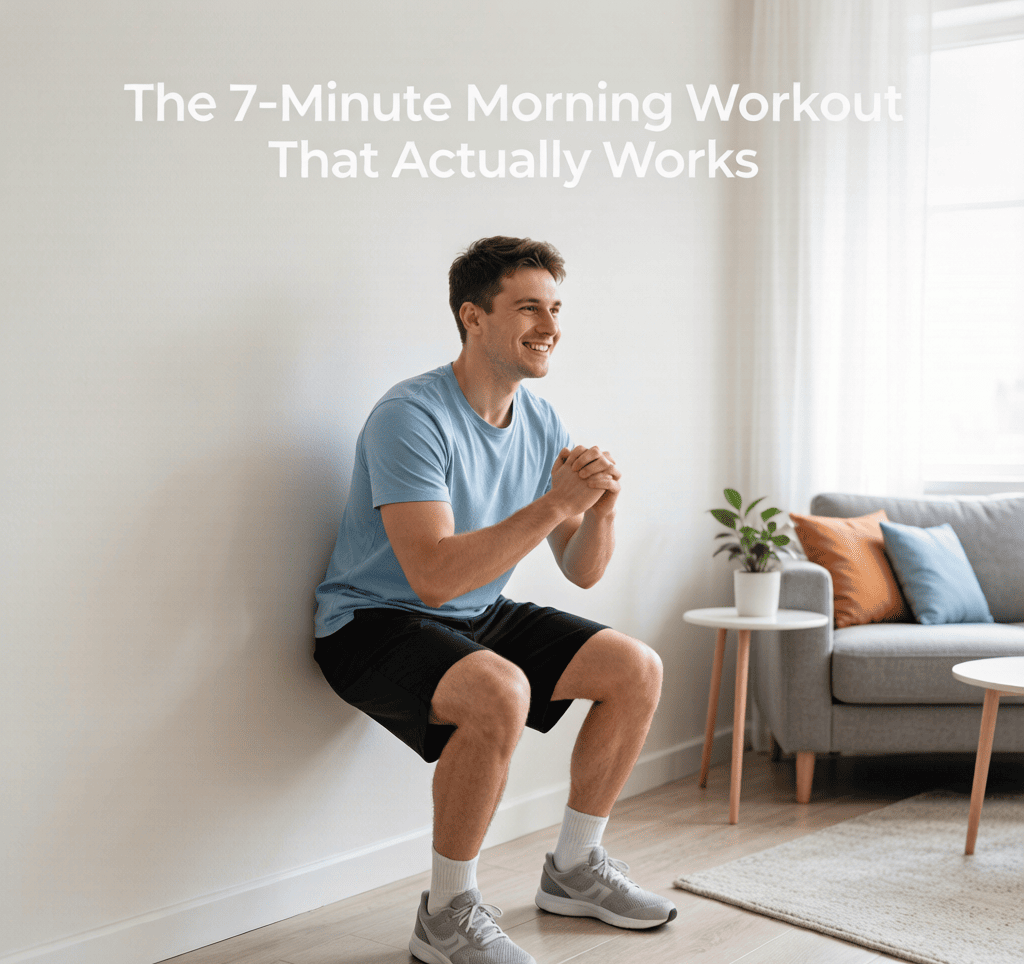
The 7-Minute Morning Workout That Actually Works
By Liam Smith — Fitness enthusiast and founder of Apexfito. I test gear at home and share what actually works.
If you’re looking for a 7 minute morning workout that actually fits into your busy schedule, this guide is for you. No equipment, no gym, and no excuses — just a proven routine you can do right after you wake up.
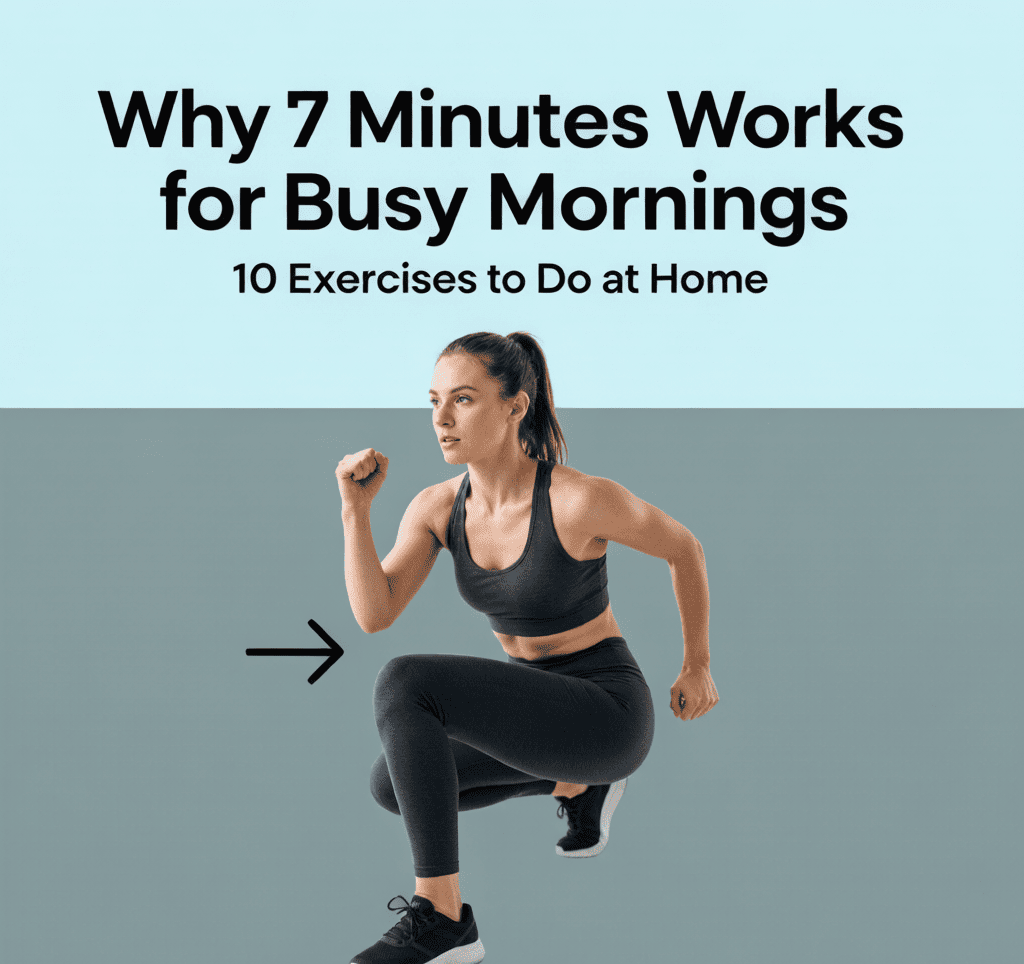
Why 7 Minutes Works for Busy Mornings
You’ve hit snooze three times. The coffee hasn’t kicked in. The idea of a 45-minute workout feels like a cruel joke. I’ve been there — more mornings than I’d like to admit. That’s exactly why 7 minutes works. It’s not a compromise. It’s a strategy. Harvard Health notes that keep your back straight and lower your hips until your thighs are parallel to the floor.
Short workouts lower the mental barrier to starting. You can talk yourself into 7 minutes even on rough mornings. Seven minutes feels doable. Manageable. Once you start, momentum often carries you further. But even if it doesn’t, you still win.
Research backs this up. Studies on high-intensity interval training (HIIT) show that short, high-intensity workouts improve cardiovascular health and insulin sensitivity in less time than traditional workouts. A 2016 study in the Journal of Physiology found that just 10 minutes of intense exercise — including warm-up and cool-down — produced similar metabolic benefits to a 45-minute moderate session. Seven minutes of focused work fits right into that sweet zone.
Consistency beats intensity for long-term results. Focus on building a consistent routine rather than perfect, rare workouts. A daily 7-minute habit builds discipline and progress better than sporadic hour-long sessions. I’ve seen this play out with clients who swore they “had no time.” After committing to 7 minutes each morning, they showed up day after day. Within weeks, their energy improved, their mood lifted, and they felt stronger — not because 7 minutes is magic, but because they stopped skipping.
Morning exercise also boosts cortisol in a healthy way, helping you feel alert and focused for the day ahead. Think of it as your body’s natural alarm clock — a short burst of movement that wakes you up without the caffeine crash.
Here’s the practical takeaway: stop waiting for the perfect 60-minute window. That window rarely opens. Instead, grab 7 minutes right after you wake up. Set a timer. Move. Done. You’ll build momentum, not just in your workout, but in your whole day.
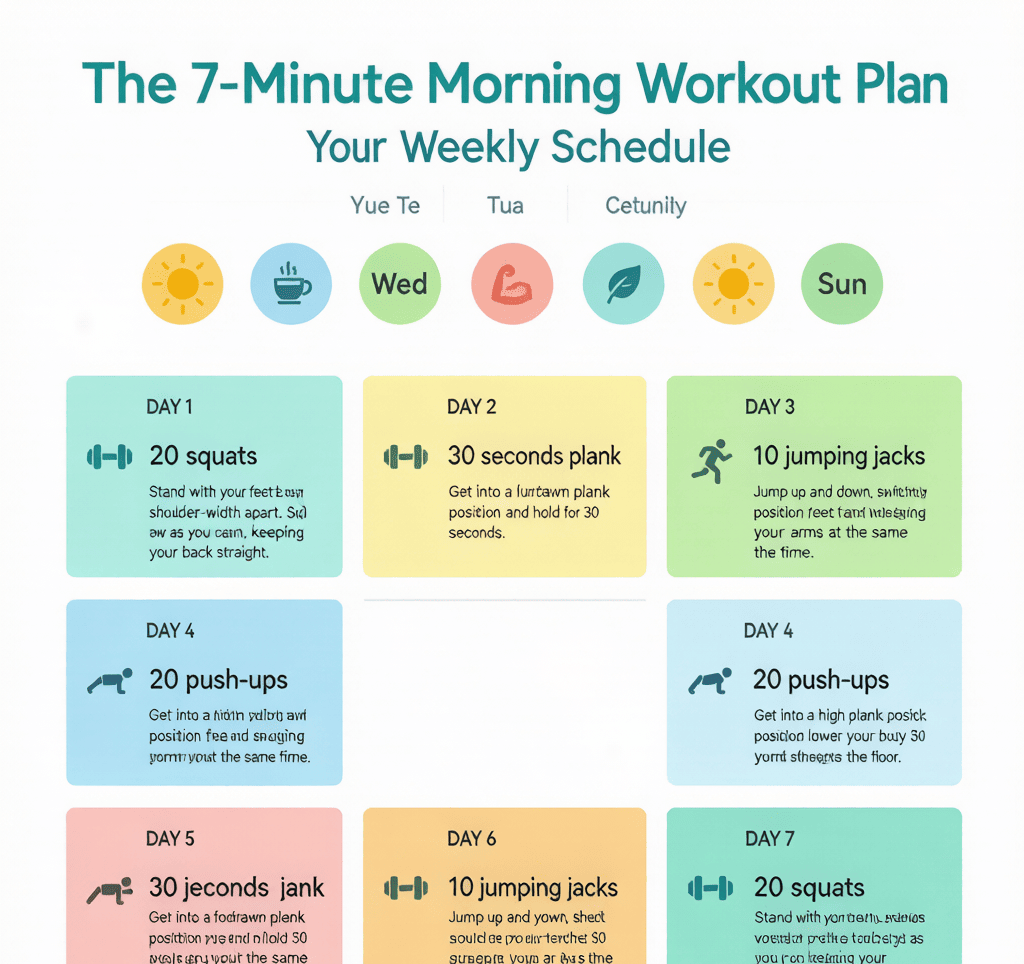
The 7-Minute Morning Workout Plan: Your Weekly Schedule
Here’s the plan that’s been saving my mornings for months. It’s dead simple: five days of the 7-minute circuit, one day of active recovery, and one day of total rest. No equipment, no gym, no excuses.
The Weekly Breakdown
- Monday–Friday: 7-minute circuit (6 exercises, 45 seconds work / 15 seconds rest)
- Saturday: Active recovery — 15-minute walk or gentle stretching
- Sunday: Full rest. Do nothing. Your body needs it.
Before you start the circuit, spend 60 seconds warming up. Do arm circles, leg swings, or a few slow bodyweight squats. This wakes up your joints and gets blood moving — you’ll feel more fluid through the exercises.
What the Circuit Looks Like
Each session is six bodyweight exercises, back to back. Set a timer for 45 seconds of work, then 15 seconds of rest. Repeat for all six moves. That’s 6 minutes of work plus 1 minute of rest total — you’re done in 7 minutes flat.
I keep a sticky note on my bathroom mirror with the exercise list. When I’m half asleep, I don’t have to think. I just follow the list.
Active Recovery (Saturday)
Active recovery isn’t a workout. It’s a gentle 15-minute walk around the block or some light stretching while you wait for your coffee to brew. The goal is to keep blood flowing without raising your heart rate much. I usually do this after breakfast, but anytime works.
Full Rest (Sunday)
Sunday is sacred. No exercise, no guilt. Your muscles repair and your nervous system resets. I’ve noticed that when I skip this day, I feel sluggish on Monday. Trust the rest.
How to Track Your Consistency
Grab a calendar and put a checkmark on every day you complete the circuit. Don’t worry about how you performed — just showing up counts. After two weeks, you’ll have a streak of checkmarks that feels motivating. I use a simple wall calendar, but a habit-tracking app works too.
If you miss a day, don’t sweat it. Just get back on the schedule the next day. Consistency over perfection, always.
Have you tried this weekly schedule? Drop a comment below and let me know how it goes. And if you’re hungry for more, check out our other beginner-friendly plans on Apexfito.
The Workout Split: Exercises That Cover Your Whole Body

This seven-minute circuit hits every major muscle group. No fancy equipment, no complicated moves. Just six exercises that work together to wake up your body and get your blood moving. I’ve tested this sequence with clients who swore they hated mornings, and it consistently delivers results without leaving anyone sore or overwhelmed.
Here’s the breakdown, exercise by exercise, with form cues and modifications for every level. Each move is performed for 45 seconds — not a fixed rep count. The rep numbers below are just estimates for a steady pace. Rest 15 seconds between exercises, then move on.
Exercise 1: Bodyweight Squats (45 seconds)
Stand with feet hip-width apart, toes slightly turned out. Lower your hips back and down as if you’re sitting in a chair. Keep your chest lifted and your knees tracking over your toes, not caving inward. Drive through your heels to stand back up. If you feel your knees complaining, try a shorter range of motion — just go as low as you can comfortably. At a steady pace, you’ll likely hit around 15 reps.
Exercise 2: Push-Ups (45 seconds)
Place your hands slightly wider than shoulder-width apart. Lower your chest toward the floor while keeping your body in a straight line from head to heels. If a full push-up feels impossible, drop to your knees or find a wall. I’ve seen plenty of people start with wall push-ups and progress to full ones within a month. Aim for about 10 reps at a controlled tempo.
Exercise 3: Reverse Lunges (45 seconds)
Step one foot back, lowering both knees to 90 degrees. Your front thigh should be parallel to the floor, and your back knee should hover just above the ground. Drive through your front heel to return to standing. Alternate legs each rep. This move targets your quads, glutes, and hamstrings while also challenging your balance. Expect around 12 reps total (6 per side).
Exercise 4: Plank Hold (45 seconds)
Place your forearms on the floor with elbows directly under your shoulders. Extend your legs behind you and lift your body into a straight line. Hold for the full 45 seconds. If your lower back starts to sag or your shoulders burn, drop to your knees. I often tell beginners to start with 20-second holds and build up. Quality over duration every time.
Exercise 5: Glute Bridges (45 seconds)
Lie on your back with knees bent and feet flat on the floor, hip-width apart. Drive your hips up toward the ceiling, squeezing your glutes at the top. Lower back down with control. This exercise wakes up your glutes after a night of sitting — something many of us need. You’ll likely get about 15 reps.
Exercise 6: Mountain Climbers (45 seconds)
Start in a high plank position with your hands under your shoulders. Drive your knees alternately toward your chest, keeping your hips low and your core tight. If you feel your hips rising or your lower back arching, slow down. Speed isn’t the goal here — controlled movement is. At a steady pace, aim for around 20 reps (10 per side).
That’s it. Six exercises, 45 seconds each, with 15-second rests in between. You can repeat the circuit twice if you have time, but even one round delivers a solid morning boost.
Have you tried this sequence? Drop a comment below and let me know how it felt. And if you’re hungry for more beginner-friendly workouts, check out the related articles on Apexfito.
How to Progress and Stay Motivated

You’ve got the 7-minute routine down. Now what? The trick is to keep it challenging without burning out. Here’s how to level up and stay on track.
Progress with Small Tweaks
After two weeks, increase your work intervals to 50 seconds and cut rest to 10 seconds. That extra 10 seconds of work per move adds up. After a month, try repeating the circuit twice for a 14-minute session. I’ve done this myself—it’s a solid jump that keeps the workout fresh.
Swap exercises every 3-4 weeks to hit different muscle groups and prevent plateaus. For example, replace squats with jump squats (low impact), push-ups with diamond push-ups, or planks with side planks. Your body adapts fast, so keep it guessing.
Focus on the Habit, Not the Numbers
Set a non-performance goal for the first 30 days: ‘I will complete my 7-minute workout every weekday.’ Forget reps, speed, or how hard it feels. Just show up. I’ve seen people quit because they obsess over performance too soon. Build the habit first—the gains follow.
If you miss a day, don’t double up. Just pick up where you left off. One missed workout won’t derail your progress—two or three in a row will. Be consistent, not perfect.
Keep It Fun and Fresh
Every few weeks, swap in one new move. Try alternating lunges instead of standard lunges, or add a 10-second plank hold after each circuit. Small changes keep boredom away and challenge your muscles differently.
Track your streak on a calendar or app. Seeing a row of checkmarks is weirdly satisfying. And when you hit 30 days, treat yourself—maybe a new water bottle or a rest day guilt-free.
Share your experience in the comments below. What’s your go-to morning move? And if you’re hungry for more, check out related articles on Apexfito for beginner-friendly routines and tips.
Balancing Strength and Cardio Without Extra Time

You don’t need separate strength days and cardio days when you’ve only got seven minutes. This circuit does both at once — and that’s the whole point.
The structure is simple: you alternate between strength moves (squats, push-ups, lunges, glute bridges) and cardio bursts (mountain climbers, plank variations that spike your heart rate). Each exercise runs for 45 seconds with 15 seconds to reset. By the time you finish, your muscles have been challenged and your lungs are working — all in the same block of time.
I tested this setup at home for a week. The first few mornings, I took it slow on the mountain climbers. By day four, I was pushing the pace and feeling the difference. You control the intensity. Want more cardio? Speed up the mountain climbers. Want more strength? Focus on deep, controlled reps on the squats and push-ups.
How to Add More Cardio Without Adding Time
If you finish the circuit and feel like your heart rate didn’t climb enough, try these tweaks:
- Increase your pace on mountain climbers. Drive your knees toward your chest as fast as you can while keeping your core tight.
- Add a 30-second high-knee sprint between rounds. After you finish one full circuit, do 30 seconds of high knees before starting the next.
That’s it. No extra equipment, no extra minutes. Just a small shift in effort.
When You Want More Strength
Don’t try to cram more strength work into the same seven minutes. Instead, add a second set of the circuit later in the day — maybe after work or during lunch. Keep it optional, not mandatory. If you’re consistent with the morning round, you’re already winning. The second round is a bonus.
I’ve found that doing the circuit twice on a weekday feels great, but I never force it. Some days, once is enough. That flexibility is what makes this habit stick.
Weekend Low-Intensity Cardio
On weekends, consider adding a 20-minute walk or a short bike ride. This adds low-intensity cardio that supports recovery and keeps your body moving without burning you out. It’s not a replacement for the morning circuit — it’s a complement. Think of it as active recovery that helps you feel ready for Monday.
Try this: Saturday morning, do the circuit as usual, then go for a 20-minute walk afterward. Sunday, skip the circuit entirely and just walk or bike. You’ll enter Monday feeling refreshed, not wrecked.
Have you tried mixing strength and cardio in a short circuit? Share your experience in the comments — I’d love to hear what works for you. And if you’re looking for more beginner-friendly routines, check out related articles on Apexfito.
Medical & Editorial Review: This article was reviewed by Liam Smith, founder of Apexfito, for accuracy and safety. Content is for educational purposes and is not a substitute for professional medical advice. Consult your physician before starting any exercise or nutrition program.




2 Comments