What Is BMR? Calculate Your Basal Metabolic Rate
BMR stands for Basal Metabolic Rate. It is the number of calories your body burns at complete rest — just lying in bed doing nothing. It is the energy cost of keeping you alive.
Your heart needs energy to beat. Your lungs need energy to expand. Your brain needs energy to think. Your cells need energy to repair themselves. All of that adds up to your BMR, and it accounts for roughly 60 to 75 percent of the total calories you burn in a day.
Knowing your BMR is useful because it gives you a baseline. Once you know this number, you can add your activity on top and figure out your actual calorie needs. Use our free BMR calculator to find yours in seconds.
BMR vs. TDEE
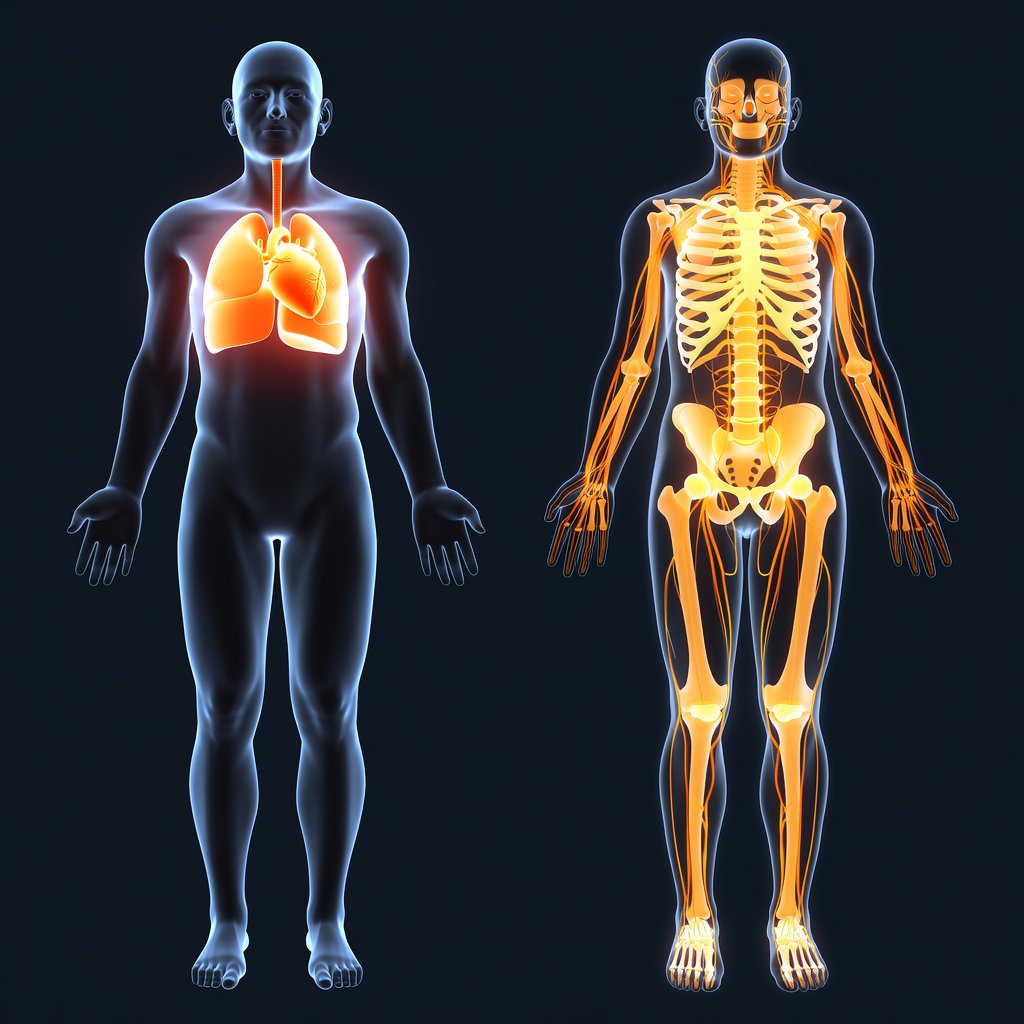
These two get mixed up constantly. BMR is what your body burns at rest. TDEE is BMR plus everything else: walking, exercising, digesting food, fidgeting, standing.
Think of it this way. Your BMR is the cost of leaving your car in park with the engine running. Your TDEE is the fuel you actually use driving around all day.
If you want the full picture including activity, use the TDEE calculator. If you just want your baseline metabolic number, the BMR calculator gives you that directly.
What determines your BMR

Several factors influence how fast your engine idles.
Muscle mass is the biggest one you can control. Muscle tissue burns more calories at rest than fat tissue, pound for pound. This is why two people of the same weight can have different BMRs, and why strength training is one of the best things you can do for your metabolism long term.
Age works against you. BMR drops about 1 to 2 percent per decade after 20, mostly because people lose muscle as they age. The good news is that this decline is not inevitable. Consistent strength training largely offsets it.
Genetics play a role too. Some people just have faster metabolisms. You did not choose your parents, so worrying about it is pointless.
Hormones matter. Thyroid function, sex hormones, and cortisol all affect your BMR. This is why medical conditions like hypothyroidism can cause weight gain even when calorie intake has not changed.
How BMR is calculated
This calculator uses the Mifflin-St Jeor equation, which is the most widely validated formula for estimating BMR in the general population.
Male BMR: 10 × weight(kg) + 6.25 × height(cm) − 5 × age(y) + 5
Female BMR: 10 × weight(kg) + 6.25 × height(cm) − 5 × age(y) − 161
The formula was developed in 1990 and confirmed by a 2005 study from the Academy of Nutrition and Dietetics as the most accurate option available.
What to do with your BMR number

Your BMR tells you the floor. The absolute minimum calories your body needs before you account for any movement at all.
From here, you multiply by an activity factor to get your TDEE, then adjust for your goal. But knowing your BMR on its own is useful context — it helps you understand why your calorie needs are what they are, and why crash diets below your BMR are a terrible idea.
FAQs
Can I increase my BMR?
Yes. Building muscle through strength training is the most effective way. Getting enough protein and sleep also helps maintain a healthy metabolic rate.
Does BMR decrease with weight loss?
Yes. A smaller body requires fewer calories. This is why you need to recalculate your targets every 10 to 15 pounds lost.
Is a higher BMR always better?
Not necessarily. A higher BMR means you burn more calories at rest, which makes weight maintenance easier. But extremely high BMRs are usually just a function of having more body mass to maintain.
How accurate are BMR calculators?
The Mifflin-St Jeor formula is about 85 to 90 percent accurate for most people, which is very good for a free tool. Use it as a starting point and adjust based on real-world results.
Medical & Editorial Review: This article was reviewed by Liam Smith, founder of Apexfito, for accuracy and safety. Content is for educational purposes and is not a substitute for professional medical advice. Consult your physician before starting any exercise or nutrition program.