How to Read Nutrition Labels: A Practical Guide for Fitness Enthusiasts
Full disclosure: Some links in this article are affiliate links. We may earn a small commission at no extra cost to you if you make a purchase through them. Our recommendations are based on what real users report, not on commission size.
Why Nutrition Labels Confuse Most People
Stand in any grocery aisle and you’ll see someone flip a package over, stare at the back, then put it back on the shelf. I’ve been that person. The label is not a simple sign. It’s a small spreadsheet full of numbers, daily values, and unit conversions, and none of it was designed to make a 30-second shopping decision easy.
Part of the problem is that labels follow government rules, but those rules leave room for real-world mess. In the U.S., the FDA sets the format. In Canada, Health Canada does the same. Both agencies require clear line items, but serving sizes can be based on what a typical person might reasonably eat, which is not the same as what you scoop into a bowl. Amounts can round down. Add front-of-package marketing like no added sugar or good source of protein, and you have a legal label that still manages to confuse. A granola that lists 190 calories per 1/3 cup can be correct, while a 1-cup pour can easily be 570 calories. The label didn’t fail. You missed the one line that makes every other number make sense.
Even more common is a simple reading error: people scan calories first and skip serving size. I still catch myself doing this with nut butters. Calories are only useful when you know the amount they refer to. Two tablespoons of peanut butter is not the same as a big spoonful off the jar. One is 190 calories; the other might be 300 or 400. If your goal is fat loss, that difference can decide whether you end the day in a comfortable deficit or a frustrating surprise.
The third reason labels feel overwhelming is that we treat them as good-or-bad verdicts. The label won’t tell you if a food is good or bad. It just gives you data, and you decide how that data fits your goals. A package of nuts can be 600 calories for half a cup, but those calories bring protein, fiber, and fats that keep you full for a long time. A low-calorie packaged snack can be gone in two bites and leave you hungry thirty minutes later. The label doesn’t sort food into clean and dirty. It shows you what’s inside, and you get to make the call.
So here’s the shift: treat the label as a practical tool, not a test. You don’t have to understand every vitamin, mineral, or footnote. For fat loss, check a short list:
- Serving size
- Calories
- Protein
- Total sugar
Those four lines tell you most of what you need to decide if a packaged food helps your day or gets in the way.
Try this at the grocery store next time: stop at any packaged food, put your finger on the Serving Size line, and say that amount out loud. Then check calories. If you’d naturally eat double that serving, double the calories. Look for protein per serving, not just the lowest calorie count. That’s the difference between a snack that keeps you full and one that leaves you fighting cravings an hour later.
The label is not your enemy. It’s one of the few places where a food company has to show its work. Once you get used to looking at serving size first and calories second, you’ll read labels in under thirty seconds and stop guessing about what’s actually in the box.
Serving Sizes and Calories: Start Here Before You Judge a Food
You pick up a package, flip it over, and look straight at the calories. A number. Good or bad. Into the cart. I did that for years. The problem is that number means almost nothing until you check the lines right above it.
Serving size and servings per container are the math behind every other value on the label. Skip them, and you will build your fat-loss plan on wrong numbers.
A client once told me he was eating a 300-calorie frozen lasagna every day. He showed me the box. It said 280 calories per serving, but there were two servings in the tray. The whole meal was 560 calories. He had been eating double his estimate for two months because the package looked like a single portion.
Read the Top Section First
The serving size is the base unit for every number on the label. It might read “1 cup (240g),” “1 bar (50g),” or “2 tablespoons (32g).” That is not a recommendation. It’s just the amount the label uses for calculations.
Next find “servings per container.” Sometimes it’s obvious, like “about 5 servings” on a bag of frozen peas. Other times it’s easy to miss: a small yogurt tub, a sleeve of crackers, or a single protein bar can say 2 or 3 servings on the back.
- Eating the whole package? Multiply every number on the label by the total servings per container.
- Eating part of the package? Compare your portion to the serving size. Half a serving? Multiply calories and macros by 0.5. Two servings? Multiply by 2.
That is simple arithmetic, not a math test. Once you look at the top lines first, it becomes automatic.
The Calories on the Label Are for One Serving
A bag of tortilla chips lists 150 calories per serving and 4 servings per container. The whole bag has 600 calories. If you put a quarter of the bag in a bowl, you’re at 150 calories. If you eat straight from the bag while watching a show, half the bag disappears and you just consumed 300 calories.
I stopped buying chips by the big bag because I won’t weigh them. I buy the small snack-size bags and log the whole thing. You don’t have to do the same, but if you keep the big bag, do the multiplication.
For fat loss, you don’t need to memorize labels. You need to know how the calories add up in your actual portion. A label says 180 per serving and you eat 2.5 servings: 450 calories. That isn’t a judgment. It’s data to fit the food into your day.
Total Daily Intake Is What Counts
One label is a snapshot. Your body responds to the total calories you eat over the day, not to a single serving of oatmeal. Aim for consistency. If you occasionally guess a portion wrong, it will average out.
Some foods, though, deserve more attention because they’re easy to underestimate.
Use a Food Scale for Peanut Butter, Granola, and Frozen Meals
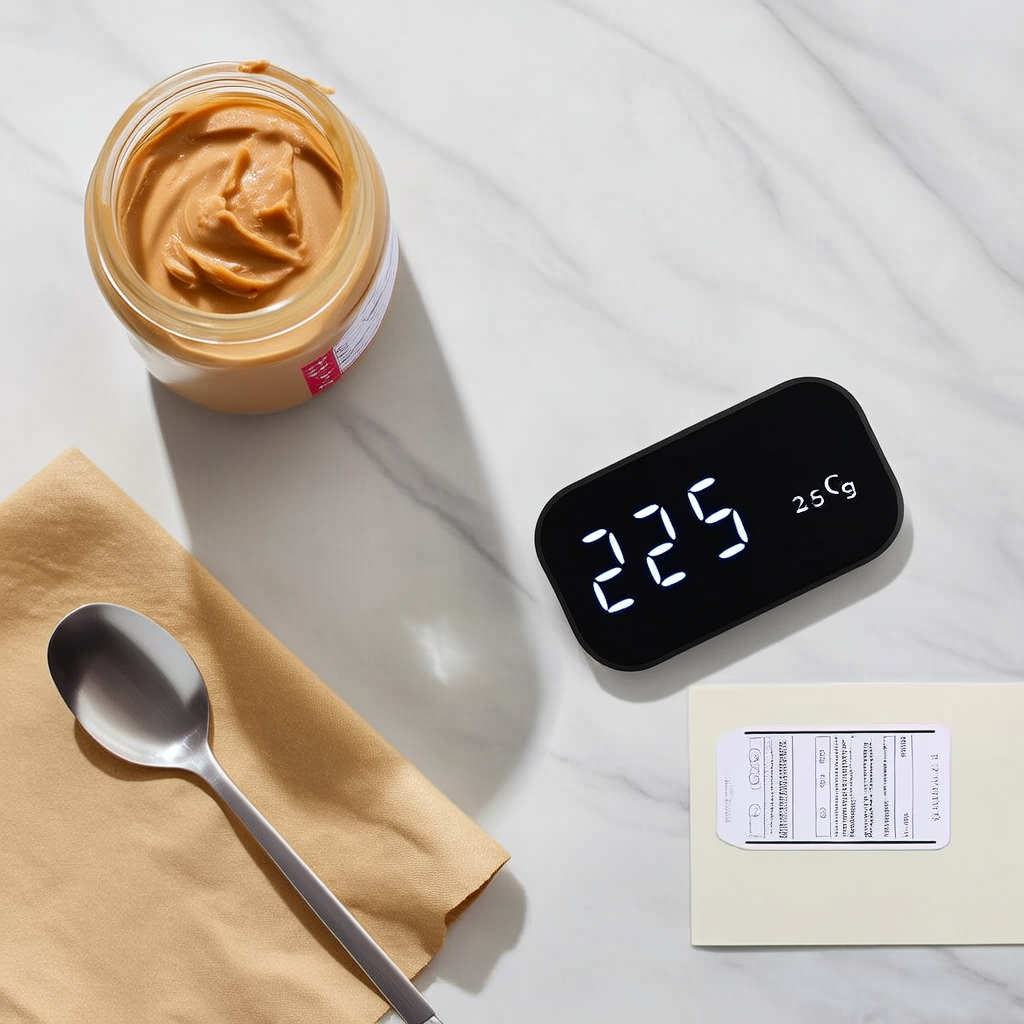
Peanut butter label says serving size 2 tablespoons (32g). But “2 tablespoons” scooped from a jar can easily be 40 or 45 grams. Granola is worse: a label says “1/2 cup (50g),” and a bowl poured by eye can hit 100 grams.
When I first weighed peanut butter, my usual spoonful was 42 grams. That’s 280 calories instead of the 200 listed. An extra 80 calories on toast doesn’t ruin a day. But 80 extra calories every morning means about 560 calories per week. That can erase a large part of a fat-loss deficit.
Frozen meals deserve the same caution. Some packages look like one meal but list 2 servings. Check the servings per container before you trust the calorie count. Use a food scale the first few times so you know what one serving actually looks like on your plate.
Here is a routine that works:
- Read serving size and servings per container before you look at calories.
- Multiply calories and macros by the amount you actually eat.
- Weigh peanut butter, nut butters, oils, granola, and anything one spoonful can drift on.
- Keep a scale next to your pantry for a week. After that, your eyes will learn what portions look like.
You don’t have to weigh every meal for the rest of your life. If fat loss is the goal, weigh the foods that are easy to misjudge and keep an eye on your total for the day.
If you want to test this without spending much, a basic digital food scale on Amazon is affordable. Try the routine for a week and then share what you noticed in the comments — especially if you were surprised by a label.
Macros on Labels: Protein, Carbs, Fiber, Sugar, and Fat
Once the serving size makes sense, the macronutrient rows do most of the work. This is where fat loss decisions happen, but it is also where package design can make a processed product look better than it is. Here is how to read each line without getting lost.
Protein: the number you can trust
Protein grams are the most straightforward macro on the label. There is no hidden math. If you eat two servings, double the grams, and that is what counts toward your daily target.
During my last cut, I stopped buying packaged snacks with less than 10g protein and more than 20g total sugar. That single filter removed most granola bars and protein cookies that were basically candy with a gym logo.
Total Carbohydrates: fiber and sugar live under this line
Total Carbohydrate includes every carb in the food: starch, fiber, and sugar. If you track net carbs, subtract fiber from total carbs. For standard fat loss, you don’t need that step. Total carbs and total calories are what matter, because they directly affect your daily intake.
A useful check is the fiber line. 0g fiber means those carbs will hit quickly and you may not stay full. 5g fiber changes how the same number of carbs feels.
Sugar: total versus added
The label lists Total Sugars and, below it, Added Sugars. That distinction is worth the extra second. Plain Greek yogurt has naturally occurring lactose, so it can show 6g total sugars and 0g added. A flavored version might show 16g total and 10g added. Same dairy base, completely different product.
When I’m cutting, added sugars are my red flag. Low total sugar doesn’t automatically mean healthy, but high added sugar usually explains cravings and extra calories.
Fat: total, saturated, and trans
Fat used to be treated like a warning label. The actual reading is straightforward. Total fat includes all fats. Saturated and trans fats are called out separately. Trans fat is the one to avoid as much as possible. Saturated fat you can manage within your overall diet.
Don’t skip total fat. Fat gives you 9 calories per gram, more than double protein or carbs. A handful of almonds or a spoonful of peanut butter can add 200+ calories to a snack. That is fine if it fits your daily numbers, but it has to be counted.
My label checklist
When I’m in the grocery store, I run this filter:
- Protein grams: how does this help me hit my protein target?
- Total carbs: what is the serving size, and how many servings am I really eating?
- Fiber: 3g or more per serving is a good sign for most packaged foods.
- Added sugars: less is better, especially if you are cutting.
- Total fat: count the grams and enjoy it if it keeps you full.
That filter cut my label-reading time in half and stopped a lot of impulse buys. Use it, adjust it, and let your own results show you what matters.
If you want a simple food scale or a macro cheat sheet for your phone, check current prices on Amazon and see what fits your setup. And if you have a label-reading trick that works for you, share your experience in the comments.
Ingredient Lists and Label Tricks: What Food Marketers Hope You Miss
You flip a package over. The front says “whole grain,” “natural,” and “no artificial flavors.” Then you read the ingredient list and the product is mostly sugar, refined flour, and a pinch of vitamins. The label isn’t lying exactly, but it’s telling a story the numbers don’t support.
Here’s how to stop falling for it.
Ingredients Appear by Weight
In the US and Canada, every packaged food must list ingredients from highest amount to lowest. The first two or three ingredients tell you what the product is really made of. If you see sugar or enriched flour near the top, that’s the main event.
I’ve had clients show me cereals that looked like health food. The box said “with oats and honey.” The ingredient list said whole grain oats, sugar, honey, then a bunch of flavorings. Sugar was the second ingredient. That cereal might as well be dessert.
Learn the Hidden Sugar Names
Food makers split sugar into multiple ingredients so sugar appears farther down the list. If a product contains cane syrup, honey, agave, and fruit juice concentrate, each one gets its own slot, and no single one sits near the top. Don’t be fooled.
Here are common sugar aliases:
- Cane syrup, cane juice, evaporated cane juice
- Brown rice syrup, corn syrup, barley malt syrup
- Honey, agave, molasses
- Fruit juice concentrate
- Any word ending in -ose: glucose, sucrose, maltose, dextrose, fructose, lactose
When sweeteners appear three or four times in one list, add them together in your head. They all count as sugar.
Don’t Be Fooled by Health Halo Claims
Words on the front of a package are marketing, not a nutrient breakdown. “Natural” means almost nothing. “Low-fat” products often add extra sugar and starches to replace the fat. “Gluten-free” matters for people with celiac disease, but it doesn’t make a food better for fat loss.
The most misleading one I see? “No high-fructose corn syrup.” That’s technically true, but the product might still be sweetened with organic honey and agave. Those are still sugar.
How to Scan a Label in 30 Seconds
- Check the serving size first. Then look at the calories and protein per serving. Multiply if you plan to eat more.
- Read the first three ingredients. If they’re whole foods such as oats, nuts, seeds, or whole wheat flour, move on to the next step.
- Look for hidden sugars in the rest of the list. If there are more than two sweetener names, watch out.
- Check the fiber and sugar numbers. A product with more fiber and less added sugar usually works better for fat loss.
This process gets faster with practice. The goal isn’t to obsess over every label. It’s to notice patterns so you can make better decisions without wasting mental energy.
Compare Prices and Share What You Find
Once you read ingredients the right way, you’ll start noticing products that used to fool you. My own surprise was a popular protein bar with “brown rice syrup” listed before the protein. It had almost as much sugar as a candy bar.
Before you buy your next batch of pantry staples, check current prices on Amazon. A quick compare takes about a minute and can save you a few dollars each week. And if you’ve ever been surprised by what you found on a label, leave a comment below. Your story might help someone else spot the same trick.
Medical & Editorial Review: This article was reviewed by Liam Smith, founder of Apexfito, for accuracy and safety. Content is for educational purposes and is not a substitute for professional medical advice. Consult your physician before starting any exercise or nutrition program.