Loop Bands vs Tube Bands vs Fabric Bands: Which Resistance Band Type Is Best for Home Workouts?
The Three Band Families: What Each Type Does Differently
Disclosure: Some of the links in this article are affiliate links. If you buy through them, I may earn a small commission at no extra cost to you. I only recommend bands I have used or would use myself.
Resistance bands all stretch and snap back, but the way they are built changes how you use them. A thin latex loop that is perfect for glute bridges feels wrong when you try to curl it. A handled tube band can anchor to a door, but you don’t want it wrapped around your thighs for a lateral walk. The first buying decision is not brand or color. It is shape.
There are three main families: closed rubber loops, handled tube bands, and fabric-covered loops. Each one shifts the stress of an exercise enough that the wrong type will leave you fighting your equipment instead of training. Here is what each family does, which movements it suits, and what you should look for in a set.
Loop bands: closed rubber rings for lower-body work and simple pulls
Loop bands are exactly what the name says: closed rubber rings. They range from thin, light loops to thick, heavy ones, and they can be used on their own or attached to a fixed point.
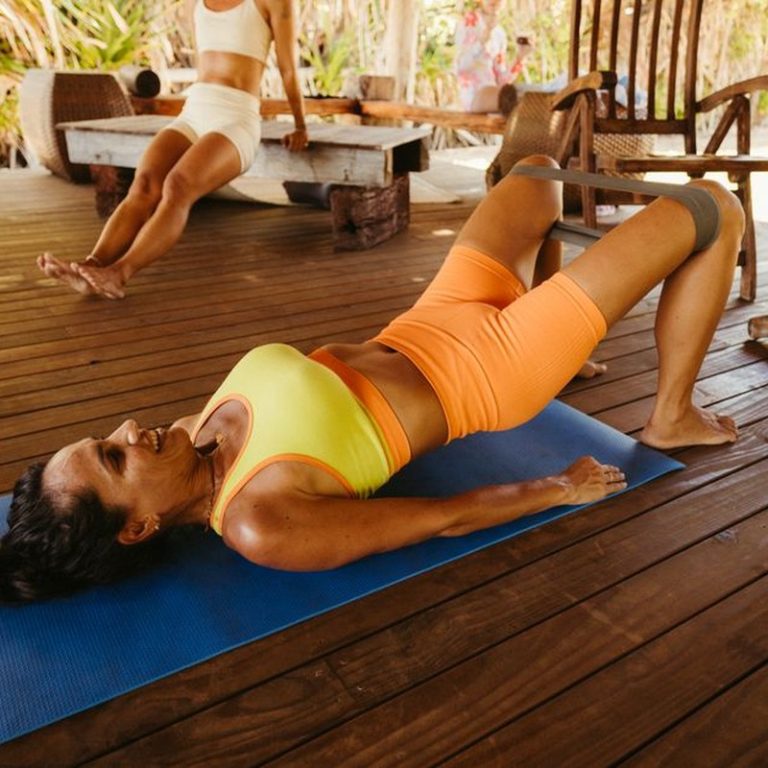
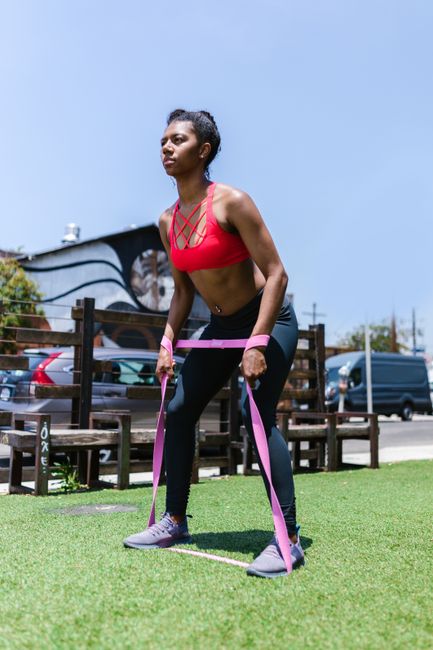
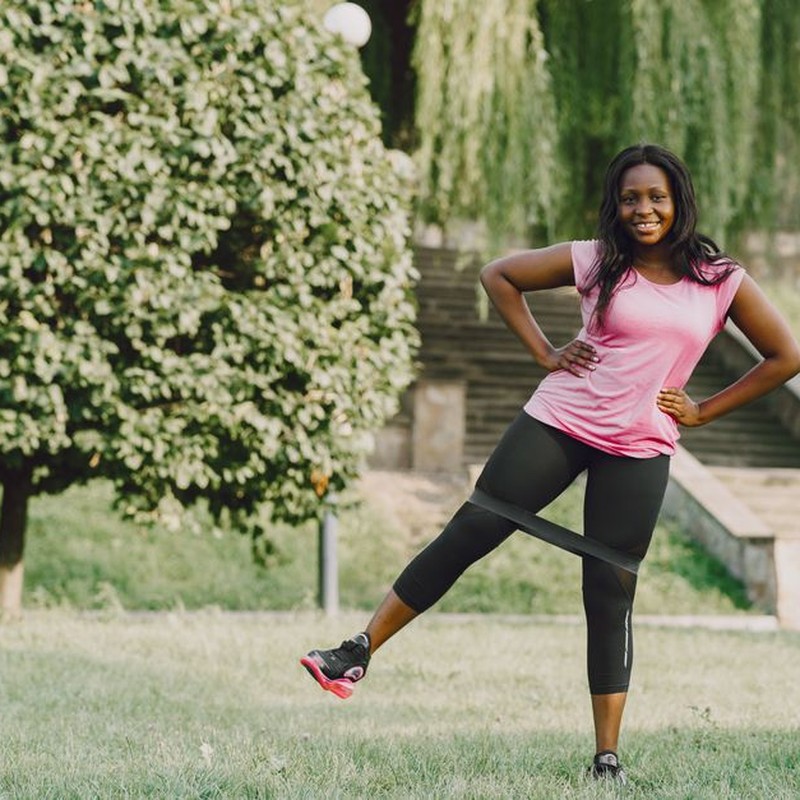
The strongest use case is lower-body training. Put a loop above your knees and do lateral walks or monster walks; your glutes have to work hard the whole time. Use a heavier loop above your thighs for glute bridges, hip thrusts, and squats. For upper-body pulling, you can loop the band around a post and row it, but that is not where these bands shine.
The Fit Simplify Resistance Loop Bands Set is the most common starter set in this category. It comes with five latex loops in a small pouch and is cheap enough to try without overthinking. I used mine for two years. The lighter bands were useful for warm-ups, but once my glute strength went up, the medium band barely simulated fatigue on hip thrusts. If you already train legs with weights, start with a heavier loop set instead.
Tube bands with handles: the closest thing to a cable machine at home
Tube bands are latex or rubber tubes with molded handles on the ends. Most sets include a door anchor, so you can attach the band to a door jamb and make it act like a cable stack. Some also come with ankle straps for leg extensions and kickbacks.
These are the bands to buy if your home workouts need pressing, curling, pushing down, or pulling flat. Anchor the band low for bicep curls, high for triceps pushdowns, or mid-height for chest presses and rows. You can change the angle just by moving the anchor, which is why people describe them as a portable cable machine.
Sets like the WODFitters Resistance Band Set and the Whatafit Resistance Bands Set include multiple tubes, handles, a door anchor, and ankle straps in one package. The INNSTAR Resistance Bands Set is another version of the same idea, with color-coded tubes so you know which one to grab. My advice: buy a set with at least three tubes. A single band feels too light in a month, and you will be happier having a progression already in the closet.
Two flat-band variations worth knowing
Before moving to fabric loops, one more shape is worth knowing: the flat band. It is a wide, long strip instead of a tube, and it changes how the resistance loads through the movement.
The TheraBand CLX Resistance Band Set is a flat continuous loop with no handles. You grip the band itself, and you can shorten the working length by moving your hands closer together. That makes it good for presses, rows, stretching, and shoulder work, but it takes a little getting used to because there are no molded handles.
If you want something heavier in a flat form, the Serious Steel Heavy Resistance Bands Set is built for strength work. The thicker flat band doesn’t dig into your hands the way a thin strip does, and it is a step up from the light loops for pulling exercises.
Fabric loop bands: stay-put comfort for thigh and glute work
Fabric loop bands look like rubber loops at first, but the outside is cloth. The cover adds friction, so the band doesn’t slide down your thighs during lateral walks or hip thrusts. It also presses into your skin with less irritation than a thin latex loop. If you train bare-legged in shorts, that alone is worth the switch.
Fabric loops are usually made thicker and stiffer. That makes them better for heavy lower-body work, especially squats, glute bridges, and monster walks. The trade-off is a sharper resistance curve: the band gets noticeably harder at the top of the movement, instead of staying smooth like a long latex tube.
I have tried cheap fabric loops, and the ones that stay put are wider with a tighter weave. The exact brand matters less than those two things. If you are buying your first fabric set, look for at least three resistances and a width around two inches.
Which family should you buy first?
- Loop bands: best for glutes, hips, lateral walks, and simple pulls around a post.
- Tube bands with handles: best for pressing, curling, pushdowns, and rows using a door anchor.
- Fabric loop bands: best for thigh and glute work when you want the band to stay put.
That depends on the exercises you actually do. If your workout is mostly hips, glutes, and side steps, start with a rubber loop band or a fabric loop. If you want to press, curl, and push down, start with a handled tube set. The next decision is weight, because resistance is just as important as the shape.
My own home setup has all three, but if I had to pick one for a fresh start, I would choose a handled tube set. It is the most versatile for an upper-body and lower-body program with just a door anchor. Then I would add a fabric loop for glute work.
Check current prices on Amazon and see which set fits your budget and your workout. Then come back and tell me what you chose – I am curious whether you found the same trade-offs.
Loop Bands vs Tube Bands vs Fabric Bands: Side-by-Side for Home Workouts
I keep all three types in my home setup, and I reach for each one for a different reason. If you try to force one kind to do every job, you will get frustrated and probably quit. This is the comparison I wish I had before my first order.
Tube bands with handles are the closest thing to a cable machine at home. Loop bands are the budget-friendly, travel-friendly option with a heavy lockout. Fabric bands are the easiest on your thighs and ideal for glute activation. That distinction clears up most buying decisions.
Tube Bands with Handles
Tube bands are the set you probably picture when you hear resistance bands: a rubber tube with a foam handle on each end. The handles give you a secure grip for rows, presses, pull-downs, and triceps pushdowns. Because the handles stay in your hands, it is easy to keep your wrists in a neutral line and move the band in a straight path, which matters when you are doing an overhead press or a single-arm row.
Tube sets usually include extras. The INNSTAR Resistance Bands Set, for example, comes with a door anchor and ankle straps. Shut the door anchor in the top of the doorframe and you can do lat pull-downs, face pulls, and tricep extensions just like you would on a cable stack. The Whatafit Resistance Bands Set 20-100LB gives you more total resistance, with tubes that can be combined, so you can warm up with the lightest band and then load up for a pressing movement.
The main trade-off is the resistance curve. Tube bands deliver fairly even tension through a full range of motion. You still feel more tension as the rubber stretches, but it does not spike as hard at the end as a loop band does. That makes tube bands a strong choice for strength work where you want constant load on the muscle at the bottom of a movement, like a row or a press.
In terms of price, you are paying for convenience. A set with handles, a door anchor, and ankle straps usually runs $30 to $50. That is still cheaper than a used cable machine, and it stores in a drawer when you are done.
Loop Bands
Loop bands are the ones I pack for travel. They are just continuous loops of latex, no handles, no clips, no door anchor. The Fit Simplify Resistance Loop Bands Set comes with five light-to-heavy loops and sells for right around $20. It is the easiest first purchase in this whole category.
Loop bands get harder as they stretch, and that is the thing to understand before you buy. The tension starts low and climbs quickly, especially when you use the shorter loops. That is useful for building lockout strength at the top of a press or a deadlift-style pull. It is less useful for an exercise like a lateral band walk, where the band is tight the whole time and gets punishing before you finish the set.
They are also the most portable option. Five loop bands weigh less than a pound and take up about as much space as a sweatshirt. I have thrown a couple into a duffel and had a full workout without leaving my hotel room. Just keep latex away from direct sunlight and sharp objects; a snapped loop in a gym bag is a nuisance. If you need heavier pulls or assisted pull-up work, the Serious Steel Heavy Resistance Bands Set is a useful upgrade.
Fabric Bands
Fabric bands are the ones I reach for when I need to wake up my glutes before a squat or run. They are wide fabric loops, usually non-latex, and they sit on your thighs without rolling or snapping. The WODFitters Resistance Band Set is a good example of this style. The cotton-blend material stays in place through glute bridges, clamshells, and monster walks, and it does not bite into your skin the way latex can.
The trade-off is that fabric adds friction. If you try to hold a fabric band in your hands for an overhead press or pull-apart, the cloth bunches and you lose grip. I would not use a fabric band for upper-body pulling exercises. Keep it below the knee, or above the knee for hip circles, and it will be the most comfortable band you own.
The TheraBand CLX Resistance Band Set is a slightly different option in this group. It is a continuous flat band with a bit more stretch than a traditional fabric booty band, which makes it useful for shoulder rehab and light assistance work. If you are recovering from an injury or have limited mobility, that set is a smart starting point. But for pure glute activation, a wider fabric loop like the WODFitters set is easier to control.
Side-by-Side Comparison
| Loop Bands | Tube Bands | Fabric Bands | |
|---|---|---|---|
| Resistance curve | Progressive; tension climbs as the band stretches and peaks at lockout. | Fairly even through a full range of motion; makes presses and rows feel more like a cable machine. | Short, controlled range of motion works best for hip and lower-body activation. |
| Grip | You grip the loop itself; fine for exercises where you can anchor the band, but harder to hold for overhead work. | Padded handles are the easiest to hold for pressing and pulling. | No handles; great on the thighs, awkward in your hands. |
| Portability | Smallest and lightest; packs flat in a backpack. | Handles and clips take up more space. | Wide loops roll up flat, though the material is thicker than thin latex loops. |
| Durability | Latex can snap if it gets pinched or baked in a hot car. | Connector clips tend to wear out before the tubes themselves. | Stitching and fabric hold up for years, as long as you keep them off rough floors. |
| Price | About $20 for a basic set; up to $50 for heavy-duty loops. | Usually $30 to $50 with handles and door anchor. | About $20 to $45 for a set. |
Here is how I would spend money if I was starting over. Get a tube set with handles and a door anchor for upper-body pressing and rowing. Add a small loop set for warm-ups and travel. Only buy fabric bands after you know you are actually going to do lateral band work on a regular basis. If you want one single purchase for the most versatile home gym, the INNSTAR tube set is what I would choose; if you only travel and need to fit everything in a suitcase, the Fit Simplify loops are the best value.
Prices move around depending on the season, so if one of these sets looks interesting, check current prices on Amazon. And after you train with them for a few weeks, come back and tell us which band type you reach for first.
Which Band Should You Buy? Matching the Band to Your Training Style
After testing all three band styles at home, I’ve found that the best choice depends less on which brand has the most reviews and more on how you actually train. So let’s skip the spec-sheet contest and look at your week: where do you work out, which movements do you want to load, and how much are you willing to spend?
Here’s the short version:
- Tube bands are for lifters who want a full-body gym at home without buying a rack.
- Latex loop bands are for glute and leg work, warm-ups, and mobility.
- Fabric loop bands are for the same moves, but they sit flat and don’t pinch.
- Heavy flat bands are for actual strength work: deadlifts, rows, presses.
If you want a complete home gym that fits in a drawer, start with a tube band set with handles and a door anchor. The Whatafit Resistance Bands Set 20-100LB gives you five resistance levels, a door anchor, ankle straps, and a carry bag for around $40. The INNSTAR Resistance Bands Set costs a bit less and covers the same ground. Both include everything you need for pressing, curling, squatting, and rowing, and I’ve had a similar set in my garage for two years that still holds up.
These tube sets are the closest thing to a cable machine under $50. You can do lat pulldowns through a door anchor, chest presses, triceps pushdowns, and biceps curls. Because the band stretches evenly, the resistance stays smoother than with most loop bands, which makes the movement feel closer to a real machine.
If your training focuses on legs and glutes, fabric loop bands are a better fit than a handled tube set. The WODFitters Resistance Band Set includes five fabric loops from roughly 10 to 50 pounds, so you can progress without buying another kit. I use mine for glute bridges, monster walks, and hip thrusts before heavier work. No handles, no anchors, no setup — just slip them around your thighs and go.
Fabric bands fix the most annoying thing about latex loops: the rolling and pinching. If you’ve done 30 clamshells with a thin latex band, you know exactly what I mean. Fabric versions sit flat and stay put, which makes them more comfortable for high-rep lower-body work. You pay a little more for that comfort, and some fabric sets only come in one resistance. The WODFitters set gives you five levels, which is why it’s a better buy.
If you want serious tension for deadlifts, rows, and chest presses, skip the small loops and look at thick flat bands. The Serious Steel Heavy Resistance Bands Set is built for this. These bands are short and extremely stiff, made to be stepped on or anchored to a heavy object, not wrapped around your thighs. They cost around $50 and take up more floor space, but they actually load the posterior chain.
This is where I see most band buyers make a mistake. They pick up a light loop set, try a hip thrust or a deadlift, and the band doesn’t provide enough resistance to fatigue the target muscles. So they decide bands are useless. Heavy bands are a different tool entirely. You want 50 to 100 pounds of tension before the setup will challenge your hips and hamstrings.
Beginners who aren’t sure which style they’ll keep using shouldn’t overthink this. Buy a basic loop set, learn the movements, and upgrade later. The Fit Simplify Resistance Loop Bands Set costs around $20 and ships with five latex bands from extra light to extra heavy, plus a carry pouch you’ll probably lose. It’s enough to run a full-body routine for months. When you know you need more resistance or a different band type, go from there.
Quick reference for matching bands to goals:
- Full-body home gym: Tube band set with handles and door anchor — Whatafit or INNSTAR.
- Glutes and legs: Fabric loop bands — the WODFitters set covers 10 to 50 pounds.
- Deadlifts, rows, chest presses: Heavy flat bands — Serious Steel.
- First band ever: Basic $20 loop set — Fit Simplify.
- Rehab, mobility, warm-up: Light loops or a TheraBand CLX Resistance Band Set for controlled, even resistance.
Budget breaks down like this:
- $15–25: Basic latex loop sets like Fit Simplify or a single TheraBand CLX.
- $25–40: Full tube sets with accessories (Whatafit, INNSTAR) or multi-level fabric or loop bundles (WODFitters).
- $40–60: Heavy-duty flat bands like the Serious Steel set.
Space matters too. Tube sets stay in a drawer with their bag and door anchor. Heavy flat bands are longer and stiffer, so you’ll want clear floor space to step on and stretch them. Fabric loops and latex loops are the easiest to pack — about the size of a pair of socks.
For most people, the practical setup is a tube set for pressing and pulling plus a fabric or latex loop set for lower-body work. Together they cover every major movement pattern, and the combined price is often less than one month of a commercial gym membership.
Check the current prices on Amazon through the links above — they move around a few dollars from week to week. And if you’ve used any of these sets, leave a comment about how they’ve held up. That feedback helps other readers decide.
Buying Guide: What to Check Before You Add to Cart
Most resistance band listings look nearly identical. The same bright colors, the same stock photo of someone doing a biceps curl, the same ‘total body training set’ headline. Then the package arrives and the carabiner feels brittle, the resistance jumps from easy to impossible, or the bands smell like a tire warehouse. I’ve been there more times than I want to admit. Here’s the checklist I run through now before I click buy.
1. Find Out What the Resistance Labels Actually Mean
Some brands list resistance in pounds or kilograms for every band. Others just call them ‘light,’ ‘medium,’ and ‘heavy.’ That vague labeling makes it hard to build a logical progression, especially if you’re buying online and cannot feel the stretch.
Look at the product images carefully. A good listing will show a resistance chart with pounds or kilograms for each color. If the chart is missing, scroll down to the customer photos. People love to post side-by-side pictures of bands stretched across their arms, around door frames, or laid out next to a dumbbell. Those photos give you a real-world idea of size and tension that a stock photo cannot.
Color-coded sets can work. TheraBand CLX Resistance Band Set has been used in clinics for years, and its colors come with documented resistance values. But random ‘five levels’ with no numbers is not enough. If the listing says ’20-100LB,’ find out whether that means the combined resistance of the whole set or the heaviest single band. That difference changes the whole calculation.
For tube bands, the labeled resistance is the force at or near full stretch. A 30-pound tube will not feel like 30 pounds at the start of a pressing movement. It climbs as you pull. That is normal, but it means you should focus on the part of the movement where the band is most taut.
2. Inspect the Hardware Before You Trust It
Tube bands depend on small pieces of metal and plastic. A metal carabiner or clip can handle hundreds of pulls. A plastic clip may crack after a few weeks. I had a plastic clip fail on me during a row once. The handle shot back, hit my palm, and left a red mark. That was enough for me to stop buying sets with cheap clips.
The WODFitters Resistance Band Set uses metal connectors and reinforced straps, and the Serious Steel Heavy Resistance Bands Set gets consistently positive feedback for its heavy-duty hardware. I look for those details in reviews before I trust a product photo.
Door anchors deserve extra attention. A good door anchor has a thick strap, a metal ring, and a piece of foam or rubber that grips the door frame. If the anchor looks like a piece of luggage strap from a discount store, it will slip or tear at the worst time.
For loop bands, the hardware is the stitching. Run your thumb over the seam. It should be smooth and tight. A fabric loop band with loose stitching will fall apart after a few glute bridge workouts. A solid rubber loop should not have rough edges or visible marks.
3. Do the Sniff Test, Especially If You Are Sensitive to Latex
Put your nose near the package before you cut open the bag. Cheap resistance bands can smell heavily of latex and need days of airing out. I learned this after leaving a set in my home office and coming back to a room that smelled like a balloon clinic.
If you are sensitive to latex, your nose is not the only concern. Look for words like ‘latex-free,’ ‘TPE,’ ‘powder-free,’ or ‘low odor’ in the product description. Natural rubber bands can trigger the same reaction as latex. Fabric loop bands tend to be less smelly because the rubber core is wrapped in cloth, but the odor can still show up if the cloth is thin.
If a band smells too strong when it arrives, do not use it right away. Leave it in a well-ventilated spot for a few days. If the odor stays heavy after that, send it back.
4. Count the Included Parts Before Comparing Prices
Resistance band sets are not all priced the same, and the difference is often in the extras. A tube band set with four tubes, two handles, a door anchor, ankle straps, and a carrying bag gives you way more workout variety than a set with just four tubes and no anchor. You can do rows, presses, leg curls, and glute kickbacks with the full set. With the bare set, you are mostly stuck with curls and shoulder raises.
Check the accessories list carefully. The listings for the Whatafit Resistance Bands Set 20-100LB and the INNSTAR Resistance Bands Set show handles, ankle straps, and a door anchor in the box, so you don’t have to buy those pieces separately. The Fit Simplify Resistance Loop Bands Set is a different kind of kit: five loops and a carrying pouch. That is enough for glute activation work, lateral walks, and light assisted pull-ups, but it will not replace a door anchor.
Do not assume that a high price means more parts. Compare the photo in the listing with the ‘what’s in the box’ text. If they do not match, that is a red flag.
5. Ignore the Maximum Weight Until Your Form Is Solid
A 100-pound band looks impressive in the product image. It will not do you much good if you cannot complete 10 controlled reps with a 20-pound band. I have seen people grab a heavy red band, bounce into a squat, and end up with their knees caving in because the tension was too high. That is how injuries happen.
Start with a resistance level that lets you finish 10 reps while keeping a smooth tempo. The last two reps should be challenging, but your body should not shake out of alignment. Once that gets comfortable, you move to the next band or combine two bands.
Multiple resistance levels matter more than a single maximum number. A set that includes five bands from 10 to 50 pounds lets you pair them for heavier work as you improve. If you already have some training experience and need loads above 50 pounds, the Serious Steel Heavy Resistance Bands Set is built for that. For a beginner, a lighter set with a clear progression will produce better results.
Before you add anything to your cart, click through to the product pages above to check current prices on Amazon. If you’ve already trained with one of these bands, share your experience in the comments. Your input helps someone avoid the same surprise I got when I opened my first no-name set.
Medical & Editorial Review: This article was reviewed by Liam Smith, founder of Apexfito, for accuracy and safety. Content is for educational purposes and is not a substitute for professional medical advice. Consult your physician before starting any exercise or nutrition program.