Is the Elliptical a Good Workout? Low-Impact Cardio, Explained
Full disclosure: Some links in this article are affiliate links. We may earn a small commission at no extra cost to you if you make a purchase through them. Our recommendations are based on what real users report, not on commission size.

What the Elliptical Actually Asks of Your Body
Step on an elliptical and the first thing you notice is the quiet. No footfalls, no thud every half second, no bounce off a deck. That silence is the whole mechanical story. Both feet stay on the pedals for the entire stride, so there is never an airborne phase and never a landing to absorb. That is why it earns the label low impact cardio, and why it is the machine people reach for when their knees, hips, or ankles have quit tolerating running volume.
Worth clearing up before we go further: the stationary bike is low impact too. It just trades one set of costs for another. A bike also skips landing force, but you sit on a small saddle, which concentrates pressure on the sit bones, and your upper body does close to nothing. On an elliptical you stay standing the whole time, so gravity stays in the picture and your arms can actually contribute.
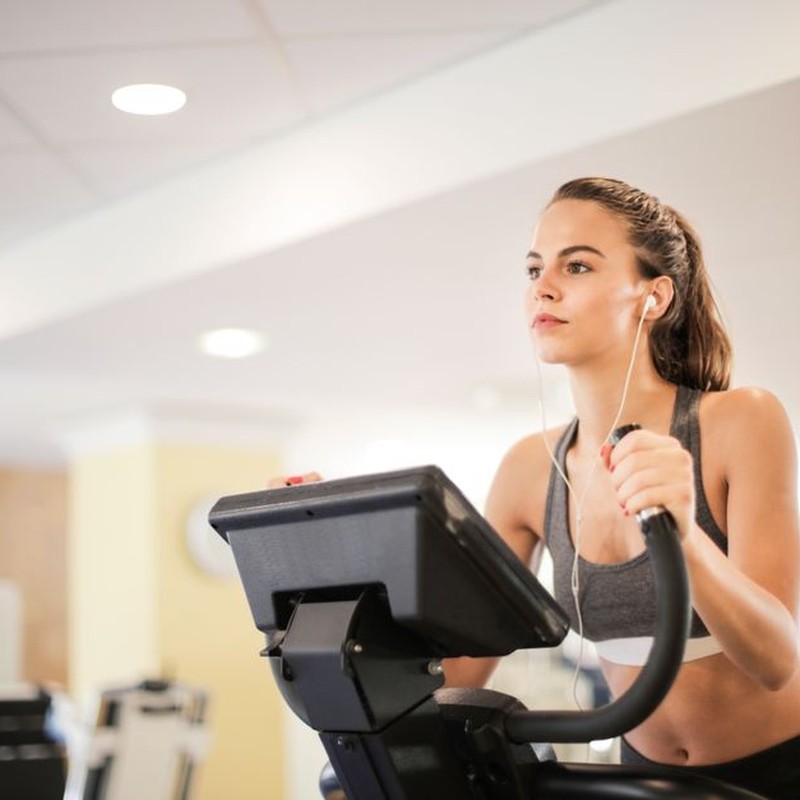
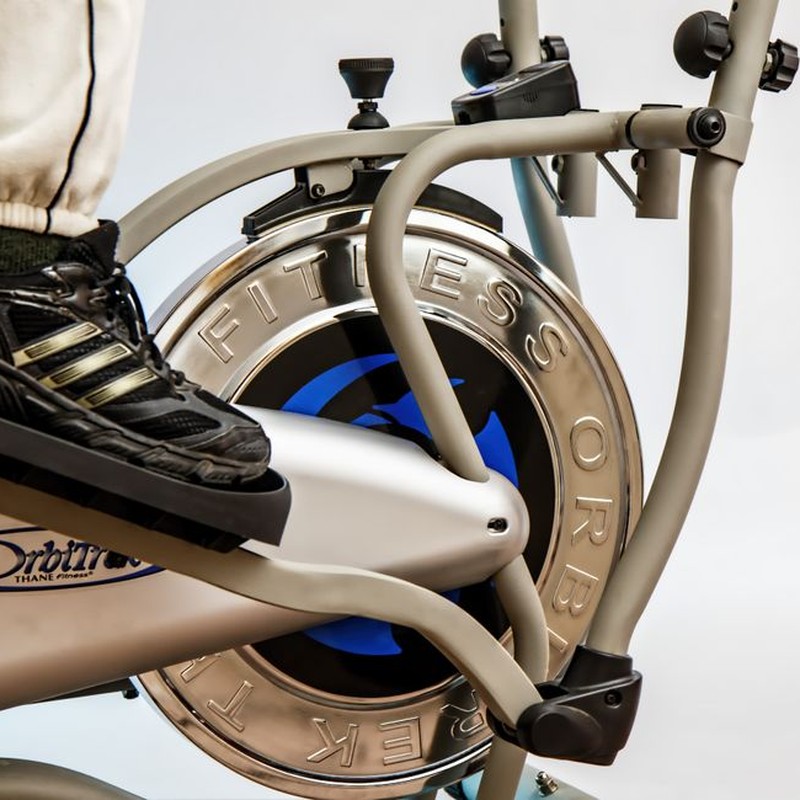
What is working is more specific than most people assume. The pedal path is fixed, so the machine decides the shape of your stride and you supply the force. Quads and glutes drive the front half of each stroke, pushing the pedal down and away. Hamstrings and calves finish the back half as the pedal swings around. Hip flexors lift the leg on the return. The moving handles are not decoration. Push and pull them instead of resting your palms on top, and your arms, upper back, and trunk get pulled into the effort, with your core resisting the side-to-side sway that shows up the second you go hands-free.
Its reputation as the easy machine comes from how people use it, not from what it is. Twenty minutes of gliding at zero resistance while scrolling a phone is not conditioning. Same pedals, same machine, completely different physiological event.
Heart rate responds to three dials: resistance, incline, and cadence. Not brand, not price, not screen size. The New York Times made that point bluntly in an October 2026 piece titled Yes, You Can Break a Sweat On An Elliptical. The headline was the argument, and it holds up. Whether you sweat is a settings question.
The catch is that perceived effort on an elliptical runs lower than actual effort. There is no pounding to remind you, no hills, no outdoor heat or wind to cue you. Left to feel alone, most beginners pace slower than they think they are. Two fixes work well:
- Wear a heart rate monitor. Even a basic chest strap removes the guesswork and shows you the gap between what you felt and what you actually did.
- Use the talk test. For a moderate session you should manage short sentences but not a full conversation. If you can chat for minutes at a time, add resistance or pick up the cadence.
One last thing for anyone shopping: stride geometry matters more than specs. A machine that forces a cramped, choppy stride or pushes your knees inward will feel wrong no matter how good the playlist is. I have watched people talk themselves into a shorter pedal path to save money and regret it inside a week. Ten minutes on a floor model at a store beats an hour of reading spec sheets at home.
Elliptical vs. Treadmill vs. Bike: Which One Fits Your Room and Your Knees
Most machine comparisons fall apart in the first sentence, because they compare matched settings instead of matched effort. A treadmill at 5 mph, an elliptical parked at level 5, and a bike at whatever resistance knob position felt hard are not doing the same work. Line up heart rate and duration instead, and the cardiovascular training from all three looks close to identical. What actually separates them is joint load, skill demand, footprint, noise, and how tolerable the thing feels on a Tuesday night in February.
| Machine | Best for | Joint load | Footprint | Noise | Main catch |
|---|---|---|---|---|---|
| Treadmill | Walkers and runners | Weight-bearing, the only one of the three | Largest | Loudest | Footfall thump travels through floors |
| Bike (upright or indoor cycling) | Small rooms, cranky knees | Lowest impact | Smallest | Quietest | Seated posture, little upper-body work, sit-bone pressure |
| Elliptical | Total-body work without pounding | Low impact, no flight phase | Middle | Middle | Stride length has to match your height |
Treadmill. If your goal is walking or running, this is the most specific tool you can own, and it is the only one of the three that loads your skeleton in a weight-bearing way. That is a genuine training quality, not a marketing line. The cost is practical. It is the loudest machine of the group and it eats the most floor space. In an apartment with thin floors, or a spare room above a bedroom, that footfall thump becomes the deciding factor within about a week.
Bike. Upright or indoor cycling style, a bike wins on footprint and impact. Nothing pounds your knees, and it tucks into a corner a treadmill would never fit. What you give up is posture and upper-body involvement. You are seated, your arms do almost nothing, and long sessions announce themselves at your sit bones well before your lungs are finished. Padding helps, but only so much.
Elliptical. It lands between the other two. More total-body work than a bike because the moving handles pull your arms in, far less joint impact than a treadmill, moderate space, moderate noise. Its known weak spot is fit rather than function. If you sit at the far ends of the height range and the stride length is not adjustable, you will either shuffle in a shortened arc or overreach on every stroke. Elliptical interest has been climbing over the past year according to Google Trends, and the New York Times covered the machine in October 2026 — worth reading before you shop, if only to reset your expectations about what it can do.
Before you buy anything, measure. This step prevents more bad purchases than any review you will read.
- Ceiling height: your standing height plus the pedal rise at your steepest incline, plus a few inches of clearance above your head.
- True footprint: measure with the pedals or belt traveling, not the frame length printed on the spec sheet.
- Doorway and stair clearance: walk the whole path from your door to the room, including any tight turns, with a tape measure in hand.
Then take a ten-minute test ride at a store or a gym. Set some resistance, watch that your heel stays down on the pedal through the stroke, and confirm your knees track forward instead of splaying outward. Let your hands fall where they naturally want to go and see whether the moving handles meet them or force an awkward reach. On a treadmill, walk a few minutes at your real pace and listen to how loud it actually is. On a bike, sit long enough to learn whether that saddle is going to be a problem at minute thirty. I did this years ago with two ellipticals side by side and the difference in feel was obvious within a minute, which no spec sheet would have told me.
Maintenance stays modest across all three — belts, rails, and pivot points want occasional cleaning and lubrication, with treadmills asking slightly more attention — and it should not drive the buying decision.
The spec that predicts your results is not stride length, motor horsepower, or flywheel weight. It is whether you will climb onto the machine on a Wednesday when you do not feel like it. Measure your room, test the machine in person when you can, and let the winner be the one you would genuinely keep using. Already own one of these three? Tell me in the comments which machine survived a full winter at your house and what you would change about it.
Myths About the Elliptical That Won’t Die
Most of the elliptical’s bad reputation traces back to how people use it, not what it can do. Ten minutes coasting at low resistance while scrolling your phone would make any machine look useless.
Myth: no impact means no results
Impact is one training stimulus among many, and it isn’t what trains your heart. Duration, intensity, and consistency are, and an elliptical delivers all three the moment you stop treating the resistance dial as decoration. Set it high enough that minute eight feels like work, then hold a cadence you can sustain for twenty minutes or more. Stack that three times a week and your heart tends to adapt — a lower resting rate usually follows, though how much and how fast depends on you.
Myth: it’s only for people who can’t run
I’ve watched plenty of runners keep one within arm’s reach of the treadmill. It’s a second or third weekly cardio session that adds conditioning without adding pounding. When a cranky knee is threatening to derail a training block, that trade-off is the whole point. Calling it the runner’s backup plan gets the logic backwards. For a lot of people, it’s the plan.
Myth: you can’t build any leg strength on it
It won’t replace squats, and anyone selling it as leg day is overselling. But crank the resistance, use the incline if your machine has it, stand tall, and push through the whole pedal stroke instead of letting momentum carry you — quads, glutes, and calves do real work. File it under conditioning that happens to load the legs. That’s a different category from strength training.
Myth: the calorie readout is accurate
That number is built from your body weight and a rough model of the machine’s mechanics. It isn’t measuring you. Use it to compare this Tuesday to last Tuesday, not to decide how much dessert you’ve earned. Want a real intensity check? A heart rate strap or the talk test beats the console every time.
Where the criticism actually holds up
Leaning on the handles is a fair knock, with a caveat. Gripping them is fine. Propping your forearms on the console and letting the pedals carry your weight turns it into a different, much easier activity. Light grip, tall posture, push rather than drape. That’s a technique problem, not a design flaw, and it’s the single most common thing to fix when someone tells me the elliptical feels too easy.
The other fair point: an elliptical can feel easier than a treadmill at the same heart rate. Beginners default to low resistance and coast. Habit, not hardware. Ten seconds on the resistance dial usually solves it — raise it until the effort matches a jog, recheck your pulse, adjust again.
One safety note before you climb on. If you have a diagnosed joint or cardiac condition, get your doctor’s sign-off first, and stop if you feel pain or pressure that doesn’t belong.
If you’re still weighing an elliptical against a treadmill or a bike, check current prices on Amazon before you commit. And if you already own one, tell me in the comments what finally made it click for you.
A Beginner Elliptical Workout That Actually Makes You Sweat
After all the mechanics talk, the useful question is what you do tomorrow morning. The answer is less complicated than the console’s twelve preset programs make it look. Learn two sessions, run them for a month, and only then start wondering whether you need a fancier machine.
The warm-up, both versions. Five minutes at easy resistance, hands moving on the handles instead of clamped to the fixed rails. Nothing is being accomplished here except getting blood into your quads and calves and letting your breathing find a rhythm. If you’re huffing at minute four, you started too hard.
Steady version: 20 to 30 minutes. Pick a resistance you can hold while talking in short sentences. If you could sing a full verse, add resistance. If one word at a time is all you can manage, back it off. That’s the entire intensity prescription. Add the warm-up and a few easy minutes at the end and you’re looking at 30 to 40 minutes in the room.
Interval version: about 25 minutes total.
- 5 minutes easy warm-up
- 8 rounds: 60 seconds hard, 90 seconds easy
- 3 minutes easy cooldown
Hard means whatever the machine lets you control cleanly, whether that’s resistance on a magnetic or eddy-current model or cadence on one with clunky resistance steps. Don’t fight the design. Do fight the urge to make round one the hardest thing you’ve ever done, because rounds six through eight are where the work lives.
Resistance before speed. This is the mistake I see most on home ellipticals: someone spins at a frantic cadence against almost no load, gets off sweaty but not conditioned, and writes the machine off. Here’s the wrinkle the console doesn’t explain. Most ellipticals display RPM, not steps per minute, so a beginner told to hit a stride rate of roughly 140 to 160 will go hunting for a number their screen can’t show. That stride rate usually lands somewhere in the 70s on an RPM readout, machine depending. If your console shows neither, use the talk test and let the numbers go. Load first, tempo second.
Posture pays off. Stand tall, keep a light grip on the moving handles, and stop hunching over the console or draping yourself on the fixed rails. If you own a front-drive machine with an adjustable ramp, using the incline tends to shift more work into your glutes and calves and give your quads a break. How much depends on the machine, but it’s the closest thing on an elliptical to a hill.
How it fits your week. Two or three elliptical sessions alongside two strength sessions is a sensible beginner structure: strength Monday and Thursday, elliptical Tuesday and Saturday, easy walking or full rest the other days. Keep at least one genuine rest day in there. Recovery isn’t a bonus on top of the plan, it’s part of it. Already playing hockey, running, or lifting heavy volume? Cut the elliptical to one or two sessions rather than stacking it on top of everything else. After two weeks, add five minutes of duration or one extra interval round, not both, then let it settle before you change anything else.
One number to watch. Pick a single progression marker and check it monthly: the same resistance at a lower average heart rate, the same heart rate at a higher resistance, or more total work in the same 25 minutes. Any of the three proves the training is landing. If none has moved in six weeks, add a session before you add complexity.
The Times made the case in early October that you can absolutely break a sweat on an elliptical. The sessions above are the practical version of that argument: load, cadence, consistency, in that order. Still deciding which machine belongs in your garage? Check current prices on Amazon before you commit. And if you already own one, tell us in the comments which setting or habit turned yours from a dust collector into a real workout.