Best Kettlebells for Home Workouts:
By Liam Smith — Fitness enthusiast and founder of Apexfito. I test gear at home and share what actually works.
Why Kettlebells Belong in Your Home Gym
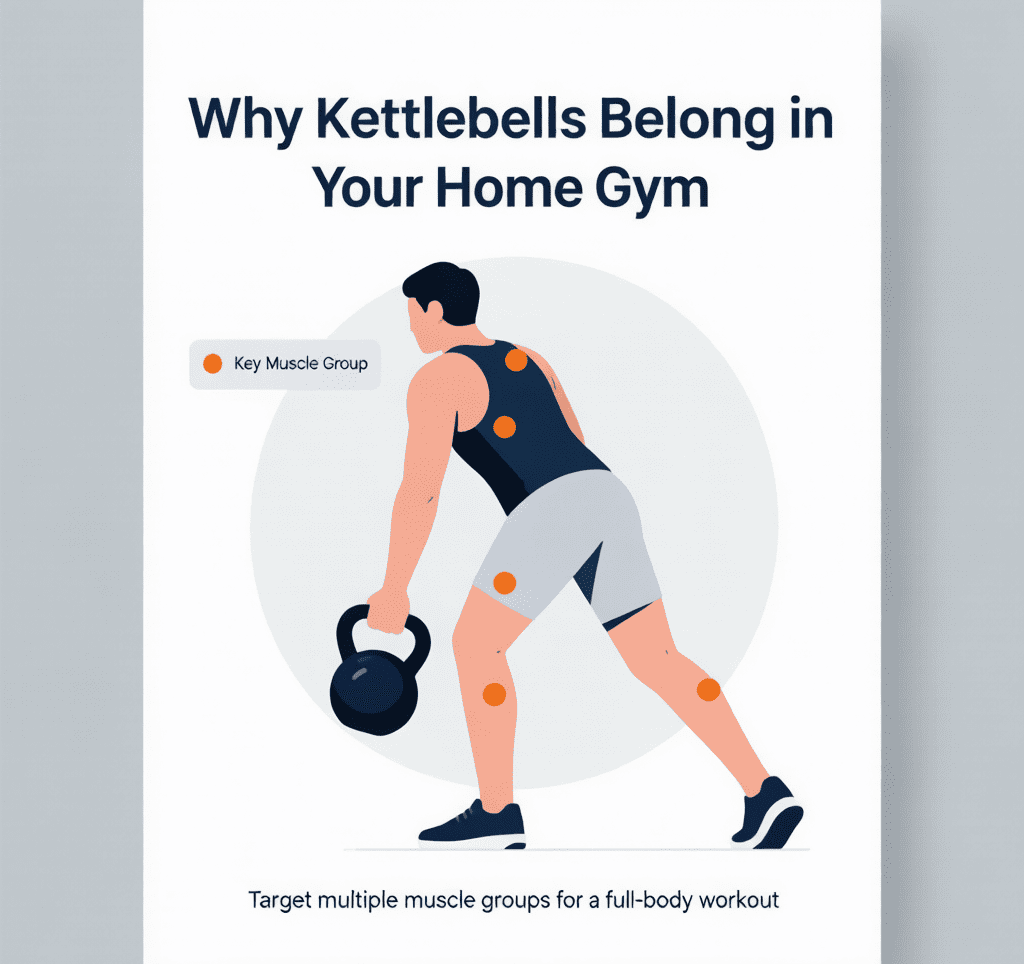
If you’re building a home gym and space is tight, kettlebells solve a problem that barbells and dumbbells don’t. A single 16kg bell takes up about as much room as a basketball, but it can deliver a workout that hits your cardiovascular system, posterior chain, and grip strength all at once. I’ve been training with kettlebells for years, and the first time I did a 20-minute EMOM of swings and goblet squats in my living room, I was sold. No rack, no bench, no heavy deadlifts required. Harvard Health notes that sleep is critical for muscle repair and growth; skimping on sleep limits gains.
Here’s what makes them different: the offset center of mass. When you swing a kettlebell, the weight sits below your hand, which forces your shoulders, core, and hips to stabilize throughout the movement. That’s not something you get with a dumbbell, where the weight is evenly distributed. The result? Better real-world strength and less strain on your lower back, because you’re forced to use your hips and glutes properly.
Kettlebells also let you blend strength and conditioning in a way that’s hard to replicate with other equipment. A set of heavy swings or snatches will spike your heart rate as much as a sprint, while also building explosive power. I’ve had clients who could deadlift 405 pounds but couldn’t finish a 10-minute kettlebell complex without stopping. That’s the kind of conditioning you get from a tool that doesn’t take up more than a square foot of floor space.
For most home gym owners, starting with a single 16kg or 24kg bell is enough to get months of progressive overload. You can go from basic swings to single-arm cleans, presses, and Turkish get-ups without changing the weight. When you do outgrow it, adding a heavier bell or an adjustable model gives you room to grow without cluttering your space. That’s the kind of efficiency that makes kettlebells a no-brainer for anyone serious about training at home.
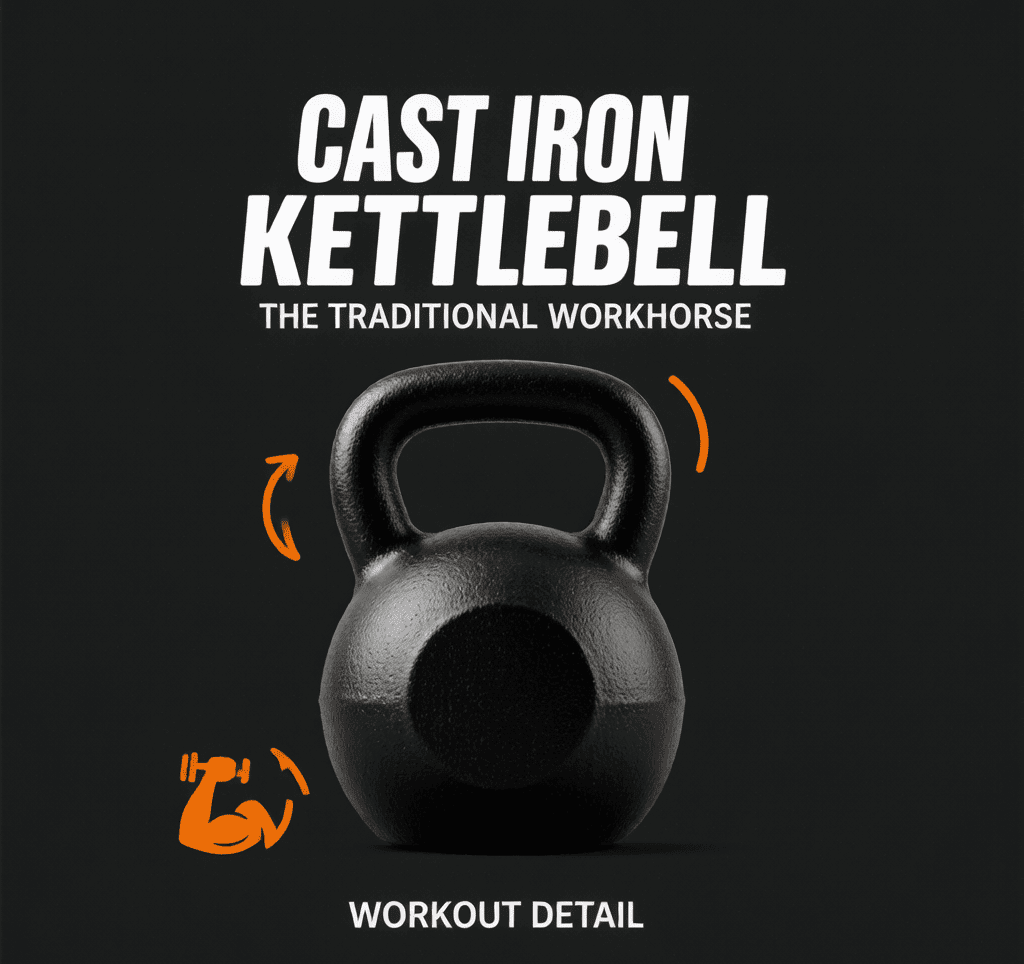
Cast Iron Kettlebells: The Traditional Workhorse
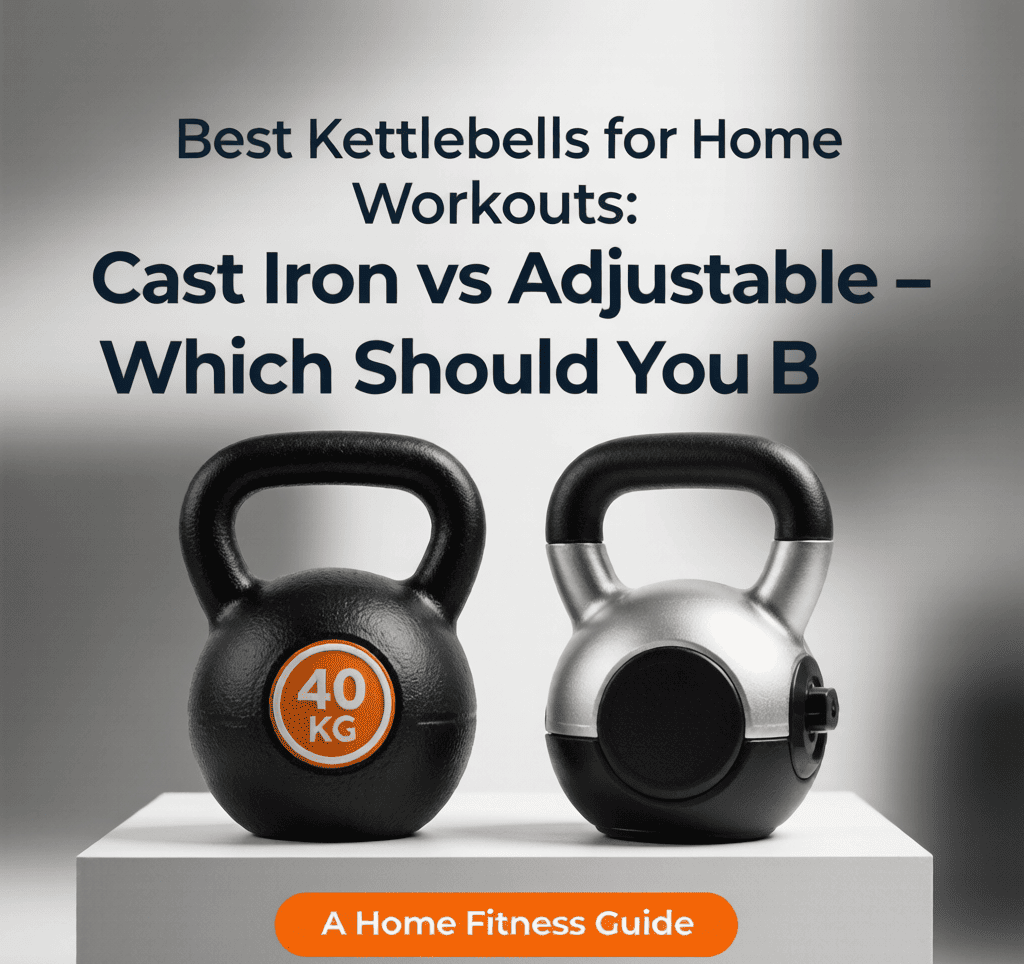
Cast iron kettlebells are the original. No moving parts, no adjustments—just a solid hunk of iron with a handle. That simplicity is their biggest strength. When you swing a cast iron bell, the weight distribution stays constant. There’s no rattling, no shifting plates, nothing to distract you from the movement. It’s just you and the load.
I’ve been using cast iron bells for years, and that consistent feel matters most during high-rep sets or ballistic work like snatches. You don’t think about the bell; you just move it. Brands like Rogue, Kettlebell Kings, and Rep Fitness make some of the best options. Their bells are typically cast from a single mold, then powder-coated or enameled for grip and durability. Drop one on the garage floor? It’ll survive. Your floor might not, but the bell will.
Price is another advantage. A single 16kg (35 lb) bell from a solid brand runs about $50–$80. Compare that to an adjustable model, which can cost $150–$300 for a similar weight range. If you only need one or two bells, cast iron is almost always cheaper. But here’s where the math gets tricky: if you want a full set from 12kg to 32kg (the typical range for most home gym owners), you’re looking at $400–$600 and a lot of shelf space. That’s the trade-off.
Handle thickness varies by brand and style. Competition-style bells (like those used in sport lifting) have uniform handles, usually 35mm in diameter. That’s fine for most people, but if you have smaller hands, single-arm work like cleans or presses can feel awkward. I’ve seen lifters struggle with a 35mm handle on a 24kg bell during a one-arm overhead press. It’s doable, but not ideal. If you’re in that camp, look for bells with a 33mm or 34mm handle—some brands offer them. Or just stick to double-arm work and adjust your grip.
For home gym owners who plan to progress in weight over time, cast iron can be a pain. You either buy a set upfront (expensive and bulky) or buy individual bells as you get stronger (which means more shipping costs and more clutter). I’ve gone both routes. Buying singles as needed works if you have the patience and the budget. But if you’re the type who wants to grab any weight on a whim, a set makes more sense. Just be ready to dedicate a rack or shelf to them.
One practical tip: if you’re buying cast iron, go for a brand that uses a smooth, durable finish. Powder coating is common, but some brands use a rougher texture that can tear up your hands during high-rep sets. I’ve had good luck with Rogue’s powder coat—it’s grippy without being abrasive. Kettlebell Kings uses a similar finish. Rep Fitness offers a slightly smoother enamel that some people prefer. Try a few if you can, or read reviews from people with similar hand size and training style.
Check current prices on Amazon for the latest deals on cast iron kettlebells from these brands. Prices fluctuate, and you might catch a sale. And if you’ve used a specific brand or handle size, drop your experience in the comments—it helps other readers make a better choice.
Adjustable Kettlebells: Space-Saving Versatility
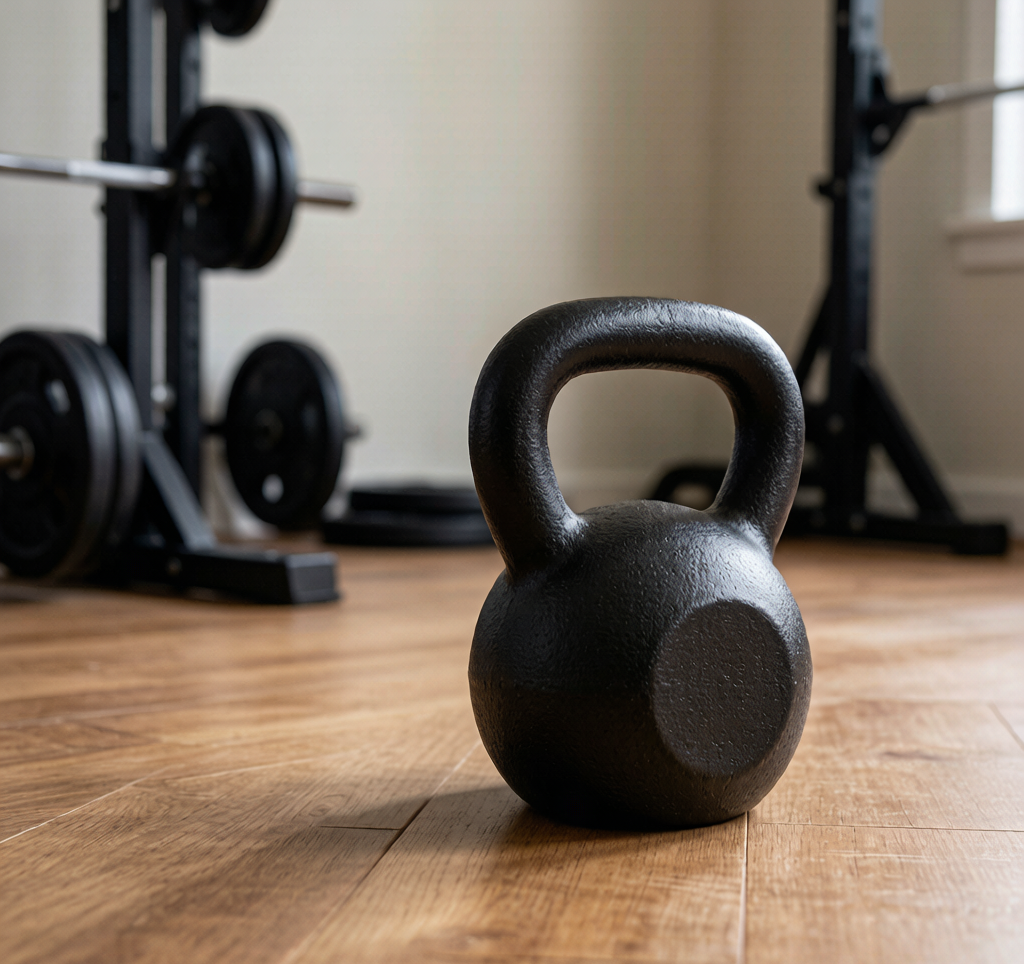
If you’re building a home gym in a spare bedroom, apartment corner, or garage that already holds a barbell, rack, and bench, an adjustable kettlebell might be your smartest buy. Instead of lining up five or six cast iron bells from 12kg to 32kg, you get one unit that covers that entire range. That saves floor space, money, and the hassle of deciding which weight to grab mid-workout.
Most adjustables use one of three systems: a threaded dial that adds or removes weight plates, a screw mechanism that locks plates together, or a plate-stacking design where you slide on weight increments and secure them with a pin or collar. The Titan Fitness adjustable and the Bells of Steel adjustable are two popular models right now. Both let you change weight in small jumps—typically 2kg or 4kg increments—so you can progress more precisely than with standard cast iron bells that often jump 4kg or 8kg at a time.
I tested the Titan adjustable for three weeks, running it through swings, goblet squats, cleans, and snatches. At lighter settings (12–16kg), the bell feels noticeably bulkier than a solid cast iron piece. The handle is wider, and the weight distribution isn’t as centered because the plates sit around a central post. For strict presses and slow lifts, that’s fine. For high-rep snatches or heavy swings, you’ll feel a slight wobble or shift as the plates settle mid-motion. This didn’t prevent me from completing 100 snatches at 16kg, but it’s a noticeable difference—especially if you’re used to a single forged bell that feels locked in your hand.
Durability is the other trade-off. Cast iron kettlebells are one solid chunk of metal. Drop one on a rubber mat and it’s fine. Adjustables have moving parts—screws, dials, locking pins—that can loosen or break over time. The Bells of Steel model uses a heavy-duty locking collar that feels more secure than the Titan’s dial system, but neither is as bombproof as a solid bell. If you plan to do a lot of high-rep overhead work or ballistic movements, factor in that you’ll need to check the lock mechanism before each workout. A quick twist or visual inspection takes ten seconds and can save you from a loose bell mid-swing. For weekly maintenance, give the threads or collar a wipe-down to remove dust or sweat buildup that can cause sticking.
Warranty expectations vary. Titan offers a one-year warranty on its adjustable; Bells of Steel backs theirs with a two-year warranty. Neither matches the lifetime guarantee you’ll get on a quality cast iron bell, so treat the locking parts with care.
Who benefits most from an adjustable? Anyone tight on space or who moves their gear around. If your gym is a corner of the living room and you roll your rack out of the way after each session, one adjustable bell replaces a stack of five or six. Same if you travel with your gear—taking one unit to a friend’s house or to the park is way easier than hauling a set. For garage gym owners with room to spare, a set of cast iron bells might still be the better call for feel and durability. But if you’re starting out or want to cover a wide weight range without the clutter, an adjustable is a practical, cost-effective solution.
Actionable advice: If you buy an adjustable, test the lock mechanism before every heavy set. A loose bell mid-swing is dangerous. Also, stick to one or two weight increments per workout to avoid wasting time adjusting between sets. Set it at 16kg for warm-ups, then jump to 20kg or 24kg for your working sets, and leave it there.
Check current prices on Amazon for the Titan Fitness and Bells of Steel adjustables—they often go on sale. And if you’ve used one, drop your experience in the comments. Did the wobble bother you, or was it a non-issue?
How to Choose the Right Kettlebell for Your Training
Picking the right kettlebell isn’t about brand hype—it’s about matching the tool to your strength, goals, and space. Here’s what I’ve learned from training with these things for years and testing dozens of bells in my home gym.
Weight Selection: Start Smart, Not Heavy
For most men starting out, a single 16kg (35lb) bell is enough for two-hand swings and goblet squats. Women often start at 12kg (26lb). I’ve seen too many people grab a 24kg because it looks impressive, only to struggle with form and risk injury. Intermediate lifters should consider 24kg (53lb) for serious ballistics—once you can clean and press the 16kg for 10 reps per arm, step up.
If you go adjustable, make sure the weight range covers your current and near-future needs. A 12–32kg adjustable bell will serve you for years. Cheaper adjustables that only go to 20kg may leave you wanting more. I bought a 12–20kg adjustable early on and outgrew it in six months—wasted money.
Handle Feel: The Dealbreaker Nobody Talks About
Handle feel matters more than you think. If possible, try a friend’s bell or visit a store to grip a few brands. A too-smooth powder coat can slip with sweaty hands; a too-rough finish can tear up your calluses. My first bell had a slick coating, and I nearly dropped it during a snatch session. I switched to a matte powder coat with a slight texture—perfect grip without sandpaper hands.
Also check the handle diameter. Thicker handles (35mm+) challenge your grip more, which is great for strength but brutal for high-rep work. Standard 33-34mm works for most people.
Material and Construction: Cast Iron vs. Adjustable
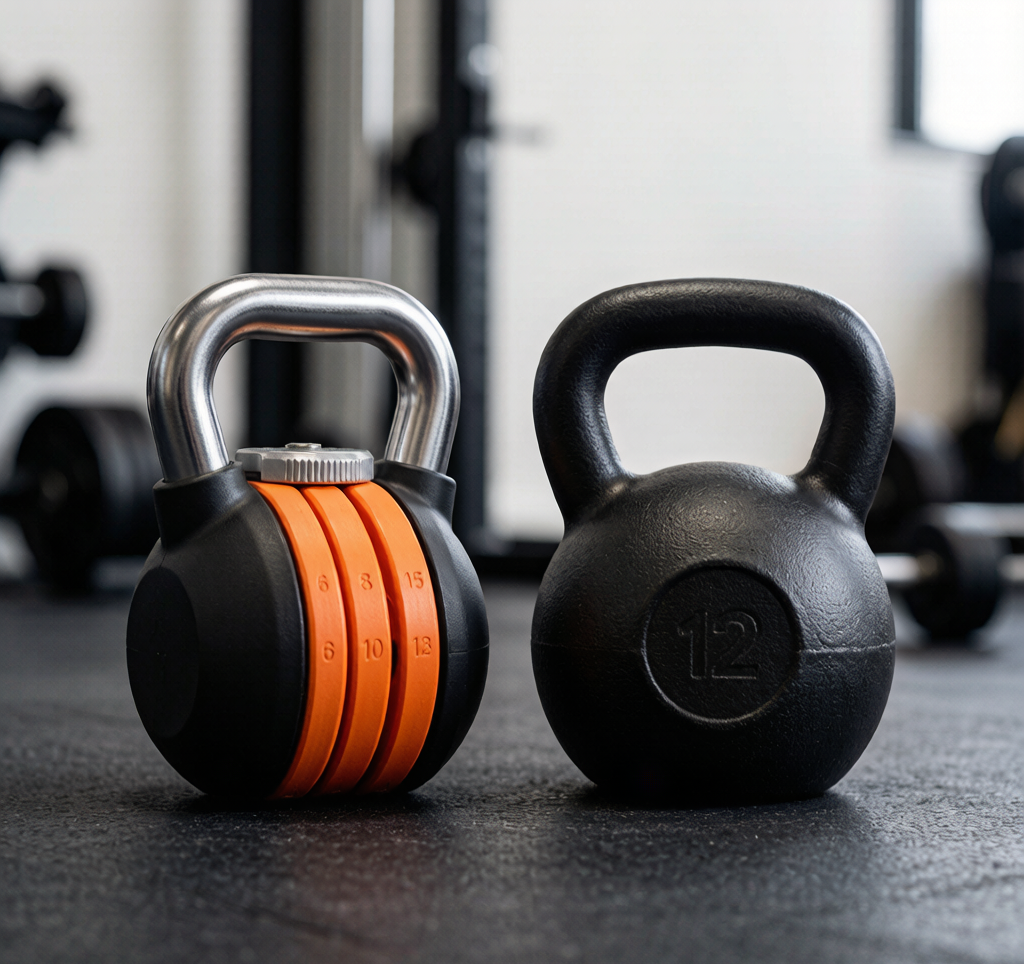
Cast iron bells are simple, durable, and cheap. They don’t break, and you can drop them on concrete without worry. Adjustable bells save space but add complexity—screws can loosen, plates can rattle, and the mechanism might fail over time. I’ve had an adjustable bell that started squeaking after a year; a dab of grease fixed it, but it’s something to watch.
Don’t forget about warranty and return policy. Cast iron bells from reputable brands almost never break, but adjustable mechanisms can fail. Look for at least a 1-year warranty on adjustables. I’ve seen some cheap adjustables crack at the welds within months—not worth the risk.
Budget and Long-Term Use
You can get a solid cast iron bell for $1–$2 per pound. Adjustables run $3–$5 per pound but replace multiple bells. If you have space and plan to lift heavy, buy cast iron in increments. If you’re tight on space and want one bell to grow with you, invest in a quality adjustable. I started with cast iron, then switched to an adjustable for the versatility—no regrets, but I wish I’d bought the wider-range model first.
Decision Summary: Cast Iron vs. Adjustable
If you have space and want simplicity, go cast iron. If you’re tight on space and want versatility, go adjustable. For most home gym owners, a single 16kg cast iron bell is the cheapest way to start. If you’re already hooked, a 12–32kg adjustable will cover everything from warm-ups to heavy swings without cluttering your floor.
Check current prices on Amazon—they fluctuate, and you might snag a deal. And drop a comment below: what weight did you start with, and how did it work out? Your experience helps the next person avoid my mistakes.
Related Reading
Medical & Editorial Review: This article was reviewed by Liam Smith, founder of Apexfito, for accuracy and safety. Content is for educational purposes and is not a substitute for professional medical advice. Consult your physician before starting any exercise or nutrition program.