Walking and Strength Training for Weight Loss: A Beginner’s Weekly Schedule
Full disclosure: Some links in this article are affiliate links. We may earn a small commission at no extra cost to you if you make a purchase through them. Our recommendations are based on what real users report, not on commission size.
Why Walking Plus Strength Training Beats Cardio Alone
I used to think weight loss meant more cardio. I would spend an hour on the treadmill and then feel wiped for the rest of the day. It worked briefly, then the scale stalled, and I didn’t like how my body was changing. Walking wasn’t the problem. The missing piece was strength training.
Walking is a solid baseline. It burns calories, supports your cardiovascular system, and leaves you with enough energy to do other work. If you already walk regularly, you have a real advantage: your endurance is probably fine, and you’re used to moving every day. What you likely haven’t added is the resistance work that tells your body to hold onto muscle.
Strength training does something that steady-state cardio can’t. It builds and preserves lean muscle, and muscle is more metabolically active than fat. The more muscle you keep, the easier it is for your resting metabolism to stay reasonably high while you’re losing weight. You burn more calories around the clock, not just during your workout.
Walking on its own can get you results, but your body gets efficient at it. Over time, the same daily steps may burn fewer calories than they did at first. That’s a general trend, not a universal rule, and weight loss still depends on overall energy balance. But it explains why adding strength matters: it challenges your muscles in a different way and triggers a metabolic response that walking doesn’t.
That’s why this plan uses the two together. You get:
- Daily walking as your baseline for calorie burn, heart health, and active recovery.
- Two or three short strength sessions each week to protect muscle and support fat loss.
- Lower overall fatigue than a pure cardio program, so you can stay consistent.
- Better body composition, even when the scale moves more slowly than you’d like.
A close friend of mine walked five miles a day but still felt soft around the middle. She worried that lifting would make her bulky. I asked her to add two short dumbbell workouts a week for a month and change nothing else. After four weeks, she had lost an inch off her waist and her arms had definition for the first time. She wasn’t bulky. She was just stronger.
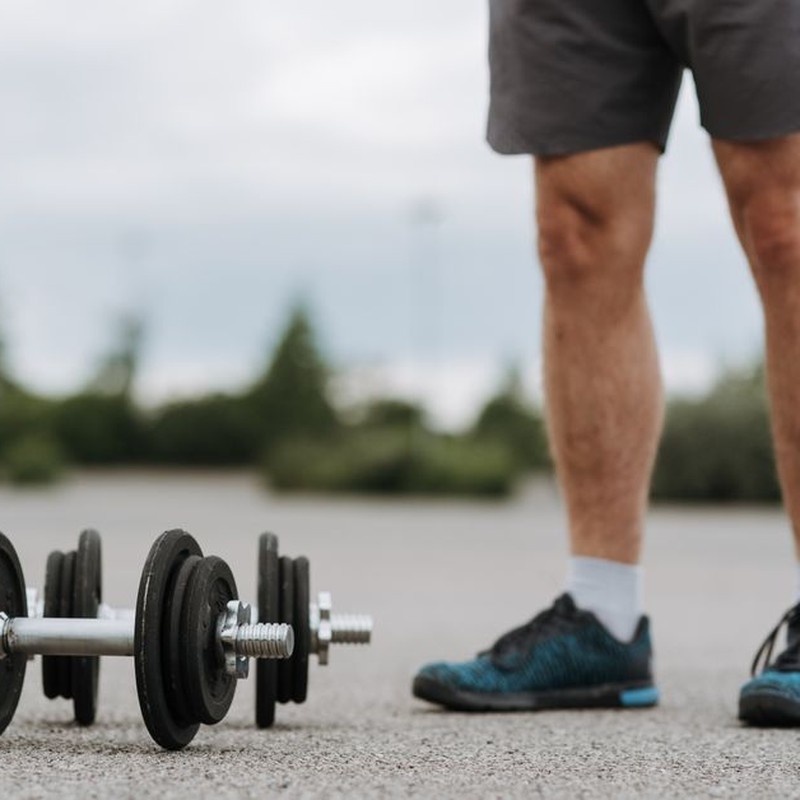
You don’t need heavy barbells for this to work. A pair of dumbbells, a resistance band, or bodyweight movements are enough. The goal is tension and controlled fatigue. If you can do fifteen bodyweight squats and need a short rest before the next set, that’s strength work. If you can do fifty without stopping, make it harder with added weight or a single-leg version.
For the weekly structure, keep it simple: walk most days and schedule your strength sessions so you have at least one day between them. Start with two or three sessions per week, one set of eight to twelve reps per movement. When the last two reps feel smooth, add a set.
So walking isn’t the enemy, and it isn’t the whole answer. It’s your foundation. Strength is the high-leverage addition that helps your body hold onto muscle and lose more fat, and it doesn’t have to be complicated or exhausting. A small pair of dumbbells and a few controlled movements can fit into a normal week.
Your Weekly Workout Split at a Glance
Here is the weekly schedule I put together for a client who walked every day but had never touched a dumbbell. It keeps walking as your daily anchor and layers in two strength sessions to start. That combo moves the needle on weight loss without wrecking your knees or your motivation.
Monday: Full-Body Strength Workout A
20-30 minutes. Squats, push-ups, rows, and a plank finisher. This is your first strength day of the week. Do it after a light 5-minute walk to warm up, or save it for later in the day if mornings feel rushed.
Tuesday: 30-45 Minute Walk
Conversational pace. You should be able to say a full sentence without gasping. This gives your legs easy movement after Monday’s strength work.
Wednesday: 30-45 Minute Walk
Same conversational pace. It’s a second easy day before Thursday’s strength session. If your legs feel heavy, cut it to 20 minutes. The walk still counts.
Thursday: Full-Body Strength Workout B
Different exercises from Workout A — think lunges, shoulder press, and glute bridge. Still 20-30 minutes. You get two recovery days between strength sessions, which is enough for a beginner to feel ready.
Friday: 30-45 Minute Walk
Keep the pace easy. You have two strength sessions in the books, so Friday is about flushing out soreness and staying consistent.
Saturday: Easy Walk or Rest
Take a 15-20 minute stroll if you feel like moving. If your legs are tired, sit on the couch. Saturday is not a training day. Rest is part of the program, not a reward for finishing the week.
Sunday: Active Recovery with Stretching or a Casual Stroll
Light stretching for 10 minutes, a slow walk around the block, or foam rolling if you own one. No heart rate spikes. This resets your body for Monday.
That’s it. Two strength days, three to four walking days, and one full rest window. The total time commitment lands around three to four hours for the entire week. That is less than one afternoon of binge-watching, and it gets you both fat loss and muscle preservation.
If you are brand new to strength training, start with only the Monday workout for the first week. Keep the Tuesday and Wednesday walks easy, skip Thursday’s strength session, and walk Friday. On week two, add Thursday’s Workout B. After two full weeks, if your joints feel fine and your energy is steady, you can add a third strength day on Saturday — just swap it with that easy walk. I have seen dozens of beginners make this exact progression without burning out.
One rule applies to every walk on this schedule: unless the plan says to push harder, all walks stay at a conversational pace. That means you can talk in full sentences. If you are huffing, slow down. Walking faster is not the goal in the first month. Showing up daily is the goal, and letting the strength sessions do the heavy lifting.
I used this split with a 47-year-old beginner who had been walking 10,000 steps a day for years but couldn’t lose the last 15 pounds. After three weeks, she told me the strength days were tough but the walks felt like a treat. That is exactly the balance you want.
Strength Workout A and B: Simple Moves That Work
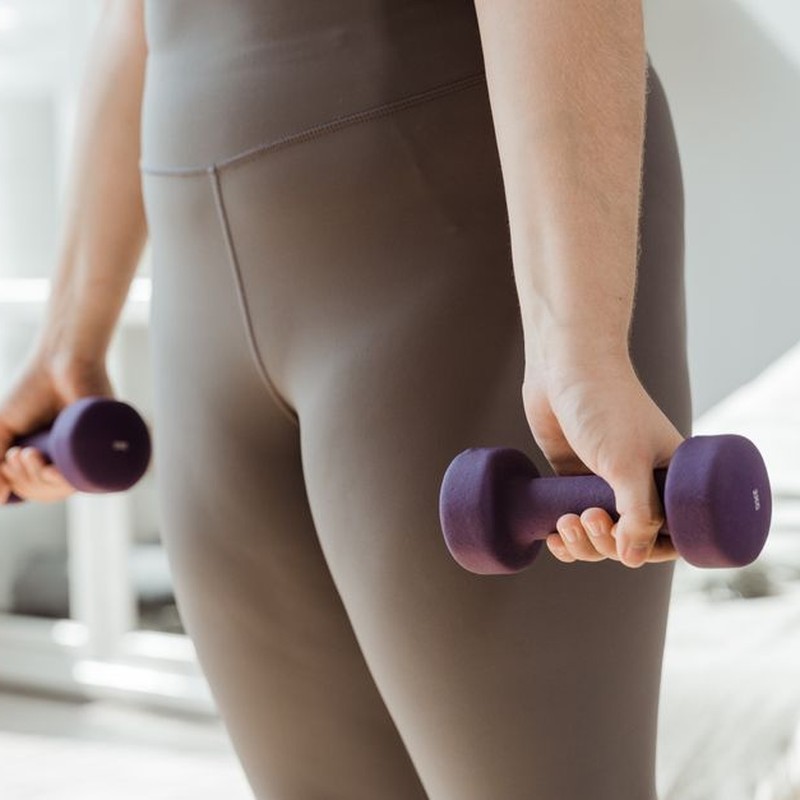
Here are the two strength sessions that will anchor your week. Each one hits your whole body in about 20 to 30 minutes, and you only need a pair of dumbbells and a little floor space. Do one of these two or three days a week, with at least one rest day between sessions. If two days is all your schedule allows, that still works.
Try this rhythm: Monday Workout A, Tuesday walk, Wednesday Workout B, Thursday walk, Friday walk, Saturday rest or easy movement, Sunday active recovery. Tweak the days to fit your life. Just avoid strength sessions back to back because your muscles need time to rebuild. Before each lifting session, warm up with a five-minute walk followed by a few bodyweight squats, leg swings, and arm circles.
Workout A: The Foundation
Workout A uses five moves: goblet squats, push-ups, single-arm rows, glute bridges, and planks. This combo covers your legs, chest, back, glutes, and core without any complicated setup. I started with this exact session in my living room, and it took two or three rounds before I stopped needing to check my form in a mirror.
- Goblet squats — 3 sets of 10 reps. Hold one dumbbell vertically against your chest, with your feet shoulder-width apart. Sit your hips down and back, keep your chest up, then drive through your heels to stand. If your hips feel tight, lower onto a chair or box at first.
- Push-ups — 3 sets of 8 to 12 reps. Keep your body in a straight line from head to heels. Drop your chest toward the floor and press all the way up. If you can only manage three clean reps on your toes, do the rest from your knees. That still counts.
- Single-arm rows — 3 sets of 10 reps per side. Place one hand and one knee on a bench, or stand with a slight hinge at your hips. Pull the dumbbell toward your hip, not your armpit, and lower it slowly. This move builds your back without needing a heavy barbell.
- Glute bridges — 3 sets of 12 to 15 reps. Lie on your back with your feet flat on the floor and knees bent. Squeeze your glutes to lift your hips until your body forms a line from shoulders to knees. Pause for one second at the top, then lower with control.
- Plank — 3 sets of 20 to 40 seconds. Keep your hips level, your core tight, and your neck neutral. Stop the set the second your hips start to sag.
Workout B: The Next Layer
Workout B leans on reverse lunges, dumbbell overhead presses, deadlifts, bird dogs, and side planks. It pairs well with Workout A because it shifts the emphasis to single-leg work and overhead pressing, so nothing gets overused.
- Reverse lunges — 3 sets of 8 to 12 reps per leg. Step backward into a lunge, lower your back knee toward the floor, then push through your front foot to return. If balance is tricky, hold onto the back of a chair for the first week.
- Dumbbell overhead presses — 3 sets of 8 to 12 reps. Stand with your feet hip-width apart and press both dumbbells from shoulder height to straight overhead. Keep your ribs down, not flared. This movement is humbling at first, so choose a lighter weight than you think you need.
- Deadlifts — 3 sets of 10 reps. Hold two dumbbells in front of your thighs, push your hips back, and lower them along your shins while keeping your back flat. Squeeze your glutes to stand. This is the move I would spend extra time practicing because form matters more than weight.
- Bird dogs — 3 sets of 8 to 10 reps per side. Start on all fours. Extend your right arm and left leg until they are level with your torso, pause, then return. Keep your hips square to the floor. This move looks easy on paper and fools everyone the first time.
- Side planks — 3 sets of 15 to 20 seconds per side. Lie on your side with your elbow under your shoulder, lift your hips, and keep your feet stacked or staggered. Drop a knee to the floor if your shoulder complains.
Sets, Reps, and How Hard to Push
For the main lifts, do 2 to 3 sets of 8 to 12 reps, with 60 to 90 seconds of rest between sets. For the timed core moves, add about five seconds each week instead of chasing more weight. Pick a dumbbell weight that leaves you about two reps shy of failure. That means the last rep should be genuinely tough, but you still know you could manage two more with clean form.
If you are new to strength training, stick with two sets for the first two weeks. Add the third set when the last rep of each set feels manageable. Progress by adding 2.5 to 5 pounds to the dumbbells, not by swinging the weights. I used a pair of 12-pound dumbbells for about a month, then switched to 8s for overhead presses until my shoulders caught up. That kind of adjustment is normal.
Equipment Options and Swaps
You can do these sessions at home with a pair of dumbbells, or at the gym with machines if that is what you have. The movement pattern matters more than the equipment. If you are at a gym, swap goblet squats for a leg press, push-ups for a chest press, and single-arm rows for a seated cable row. For reverse lunges, you can use a barbell, but dumbbells are easier for beginners. Deadlifts work just as well with a kettlebell. I have built two fully different workouts from the same set of adjustable dumbbells in a hallway, so don’t worry about having a tricked-out home gym.
Putting Strength and Walking Together
Walk on the days between strength sessions. Strength work doesn’t replace your daily walking; it adds load so your body holds onto muscle while you lose fat. On strength days, you can still take a shorter walk or do your walk after lifting. On the other days, keep your normal walking distance.
Don’t turn every walk into a power workout. Your legs need recovery after strength sessions. Save speed intervals or hill repeats for the day before a strength session, not the day after. This simple sequencing kept me from feeling wrecked and made it easier to stay consistent.
How to Schedule Walking Around Your Strength Days
If you already walk most days, adding strength training feels less like a routine overhaul and more like a scheduling puzzle. Your walking habit is already solid. The only question is where the gym sessions should land so they don’t leave you exhausted or make your legs feel like bricks for half the week.
Before I started combining the two, I tried to do both in one morning. A thirty-minute dumbbell workout followed by a brisk two-mile walk sounded efficient. It worked for about three days. Then my performance on the dumbbell work began to slip, and my easy walks started to feel hard. The fix wasn’t doing more. It was placing my strength sessions on days when walking could stay easy, and keeping a buffer between heavy lower-body work and any fast walking.
Here is a simple way to arrange the week that works for most beginners who already walk regularly.
- Keep easy walks on separate days from strength sessions for most of the week. This gives your legs a chance to recover from the gym without forcing you to give up your daily movement. A common setup is strength on Monday and Thursday, then easy walks on Tuesday, Wednesday, Saturday, and Sunday. Friday becomes the rest day. On strength days, your only intentional activity is the workout plus some light walking around the house or office.
- If your schedule forces you to train and walk on the same day, do strength first and save the walk for after. Strength training needs full effort from your muscles. Walking first may not feel hard, but it still drains a bit of energy from the same muscles you are about to ask for heavy reps. If you do the strength workout first, a short walk afterward can help you cool down and settle your nervous system. Try a twenty-minute easy walk after dinner if that is the only option.
- Take a full rest day after the second strength session if your legs feel heavy or sleep suffers. If your second strength day is Thursday, give yourself Friday as a true rest day. You can still take a short mental-health walk, but keep it under twenty minutes and keep the pace gentle. If you notice your sleep quality dropping after a week of this schedule, that is another sign to shift the rest day to after the hardest strength session of the week.
- Don’t turn every walk into a power walk. Walking hard before leg day can blunt your strength output. That extra-fast walk on the day before a squat session tends to leave your legs slightly fatigued, so your form suffers and you cannot push as many reps. Save your intentional fast walking or hill intervals for the day after a lower-body workout, or put them on a day that follows two easy walking days.
Here is a sample week that follows the same Monday/Thursday strength split used in the main plan:
Monday: Strength session A, no long walk.
Tuesday: Easy 25-minute walk.
Wednesday: Easy 30-minute walk.
Thursday: Full-body strength session B, no long walk.
Friday: True rest day. Take a short walk only if it feels good, but keep it under 20 minutes and at a gentle pace.
Saturday: Longer walk at an easy-to-moderate pace.
Sunday: Easy 20-minute walk or rest, depending on how your legs feel.
If your plan calls for a third weekly strength session, place it on Saturday morning, then move the long walk to Sunday and keep it gentle. Use this schedule as a starting point, not a rule set in stone. If you work a physical job, you may need an extra rest day after a hard strength session. If you sit most of the day, your easy walks may need to last longer than thirty minutes to get the same calorie burn. Pay attention to the heavy-leg feeling and adjust the order accordingly.
One thing that helped me stick with this setup was keeping my dumbbells near the door. I can do a strength session before heading out for a walk, and if I am short on time, I can still get both done without a long commute. That small convenience removed most of the friction from the week.
Progressing Safely and Making Weight Loss Stick
Most people don’t fail because they picked the wrong workout. They fail because they tried to do too much at once, felt wrecked, and quit. The schedule in this article works for regular walkers because it respects your energy levels. But if you keep doing the exact same walks and the exact same lifts, your body adapts. Results stall. Here’s how to push forward without burning out.
Start with your walking time. Add five minutes to your longest walk each week. If your longer days are 40 minutes now, go to 45 next week, 50 the week after, and keep that rhythm until you hit 60-minute walks. That steady increase adds up to a couple of extra miles over a month. I tried this setup at home with my own walking routine, and it felt manageable because I never jumped too far at once.
Then look at your strength moves. Increase the weight, or add one rep, when the last rep feels smooth for two weeks straight. If you’re doing 10 bicep curls with 10-pound dumbbells and rep 10 feels like you could do three more, it’s time to move to 12-pound weights. If you don’t have the next size yet, add a single rep instead. That extra challenge is enough to keep your muscles working.
After two weeks, add one hillier or slightly faster walk per week. You don’t need to sprint. Pick a route with a few hills, or spend ten minutes of a flat walk at a brisker pace. This raises your heart rate and calorie burn without adding extra miles or extra joint stress. One faster walk a week is plenty.
Recovery is where the results actually stick. Put your head down for seven to eight hours of sleep each night. That rest repairs your muscles and keeps your hunger signals from screaming. And aim for roughly 0.7 grams of protein per pound of body weight. If you weigh 170 pounds, that’s about 120 grams of protein per day. Spread that across your meals, and you’ll feel fuller while holding onto your muscle.
Once you’re ready to add more resistance, check current prices on Amazon for adjustable dumbbells or resistance bands. They’re compact, and a good set will carry you through months of strength workouts. When you hit your first 60-minute walk or move up in weight on a lift, come back and tell us which walk pace worked best for you. Was it the steady 50-minute stroll, the hill route, or the ten-minute brisk stretch? Drop your answer in the comments. Consistency beats perfection, and this plan is built so you can keep showing up.
Medical & Editorial Review: This article was reviewed by Liam Smith, founder of Apexfito, for accuracy and safety. Content is for educational purposes and is not a substitute for professional medical advice. Consult your physician before starting any exercise or nutrition program.