Hydration for Exercise: How Much Water to Drink Before, During, and After Workouts
Full disclosure: Some links in this article are affiliate links. We may earn a small commission at no extra cost to you if you make a purchase through them. Our recommendations are based on what real users report, not on commission size.
Your Body’s Fluid Needs: More Than Just Thirst
I used to finish gym sessions with a dry mouth and a headache, then assume I just needed a nap. Actually I needed a glass of water an hour earlier. That mistake is common because thirst is a late signal. By the time your mouth is dry, you’re already behind on fluid.
Water is the main component of blood plasma. When you’re short on fluid, blood volume shrinks. Your heart has to work harder to deliver oxygen to working muscles, and your body has a harder time moving heat away from your skin. That adds strain to every rep and set. Research from the American College of Sports Medicine’s position stand on fluid replacement shows that even a 2 percent drop in body weight from water loss can slightly reduce strength, endurance, and focus during a workout. For a 180-pound lifter, that’s 3.6 pounds of sweat. You don’t need to be running outdoors in July to hit that number; a hard circuit in an air-conditioned gym can do it.
How much fluid are we actually losing? During moderate to intense exercise, most people lose somewhere between 1 and 2 liters of sweat per hour. That’s about 34 to 68 ounces, or two to four standard water bottles. The exact number depends on the temperature, how hard you’re pushing, your clothing, and your genetics. One person might sweat enough to soak a shirt in 30 minutes while their training partner stays nearly dry. Two people doing the same workout in the same room can have completely different fluid needs.
Thirst makes this harder because it switches on late. Your body’s thirst signal is triggered mainly when blood osmolality rises enough that you’re already a few percent dehydrated. If you wait until you feel thirsty, you’re trying to catch up, not stay ahead. Thirst can also be satisfied before your body is fully rehydrated, so you stop drinking too soon.
So use signs that work better. Two tests are quick and free:
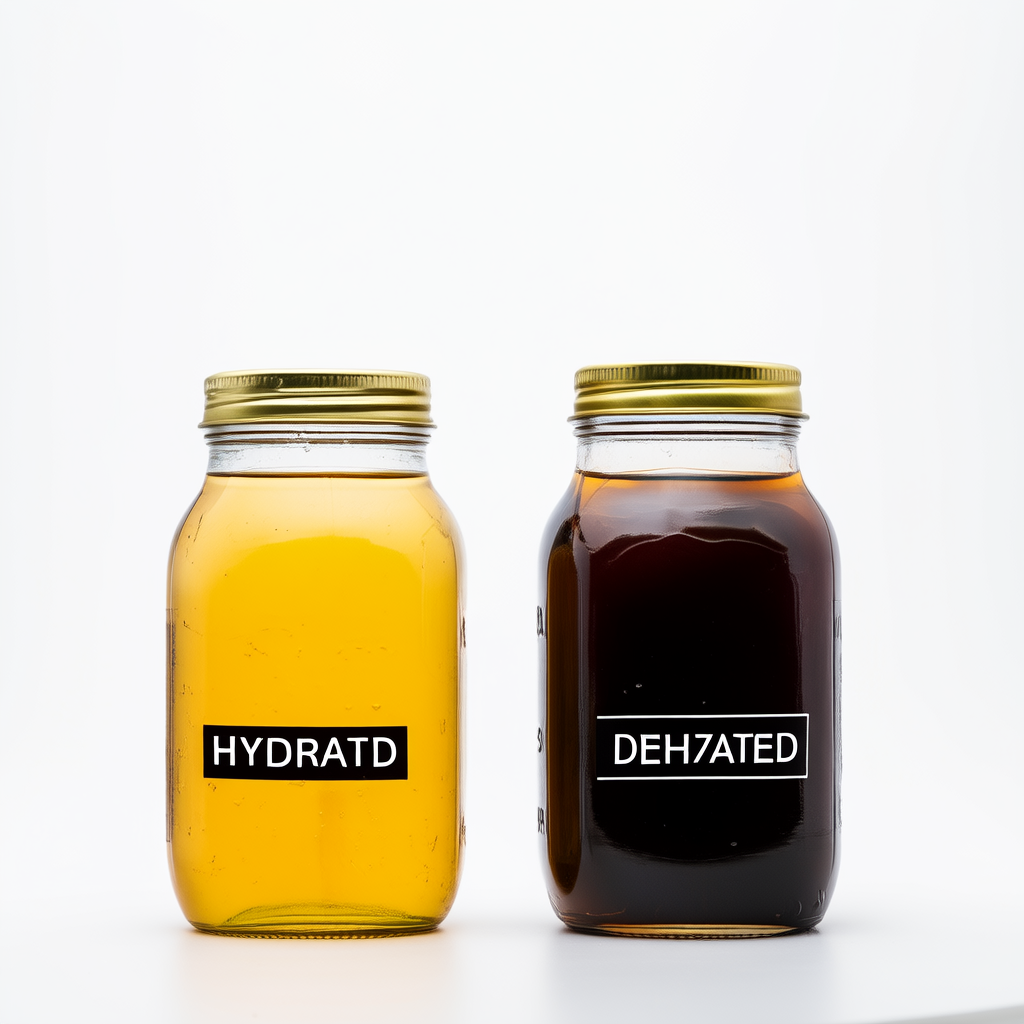
- Urine color. Check your first pee of the day or right before you train. Pale yellow, like light lemonade, is a good sign. Dark yellow or amber means drink more over the next hour or so. Clear all day usually means you’re drinking more than you need, which isn’t harmful but doesn’t help performance.
- Sweat rate test. Weigh yourself naked before a workout, then again after, after toweling off dry. If you drank water during the session, add that weight to the difference. Say you start at 180 lb, finish at 179 lb, and drank 16 ounces (1 lb) of water. You lost 2 lb of sweat, which is about a liter. Divide by the hours you trained to get your hourly sweat rate. That information is more useful than any generic 8 glasses a day advice.
Once you know your sweat rate, you can set a schedule instead of guessing. A reasonable strategy is to drink water steadily through the day, have 16 to 20 ounces in the two hours before training, sip during the session as your sweat rate suggests, and afterwards rehydrate with enough fluid to replace what you lost. Don’t chug a gallon right before you walk into the gym; you’ll feel sloshy and spend half the workout in the bathroom. Consistent hydration beats last-minute dumping.
One caveat: for long sessions, heavy sweating, or hot environments, plain water may not be enough. Sweat isn’t just water; it contains sodium, potassium, and chloride. If you drink large amounts of water without replacing sodium, you can dilute your blood sodium level and feel dizzy or nauseous. For sessions under an hour, water alone is usually fine. For longer or very sweaty workouts, add electrolytes or use a sports drink with enough sodium. A simple pinch of salt in your water bottle plus a normal meal after training often does the job.
Hydration doesn’t have to be complicated once you know your numbers. Check your urine color, do a sweat-rate test a few times, and drink accordingly. Thirst can stay in the back seat, but it shouldn’t be your only gauge.
Want to know which water bottles, hydration packs, and electrolyte products are worth the money? Check current prices on Amazon before your next order, and leave a comment with your favorite way to stay hydrated during training.
How Much Water Should You Actually Drink Before, During, and After a Workout?
You don’t need a hydration formula that requires a calculator. You need a simple starting point that fits your body and your training session. The targets below come from sports science research and work well for most lifters, runners, and gym-goers across the US and Canada.
| When | How much | Notes |
|---|---|---|
| Before workout | 16–20 ounces (500–600 mL) in the 2–3 hours leading up, then 8 ounces (240 mL) about 20–30 minutes before you start | Gets you hydrated without leaving you sloshing during your first set |
| During workout | 7–10 ounces (200–300 mL) every 10–20 minutes | A few swallows at each rest interval; use the higher end in heat or hard conditioning |
| After workout | 16–24 ounces (500–700 mL) for every pound of body weight lost | Weigh yourself before and after to estimate sweat loss |
Here’s what those numbers look like in practice.
Before training: Drink 16 to 20 ounces over the 2–3 hours leading into your session. Then take in another 8 ounces about 20–30 minutes out. This solved a problem I kept running into at the gym. I used to chug a full bottle right before squatting and then feel like a water balloon during my first set. Spreading it out fixed that completely.
During your workout: Aim for 7 to 10 ounces every 10 to 20 minutes. In real terms, that’s a few good swallows at the start of each rest interval. If your gym gets hot or you’re doing a conditioning circuit that has you dripping, go with the higher amount and the shorter interval. In an air-conditioned room with moderate lifting, the lower end is usually plenty.
For sessions under 60 minutes, plain water does the job. Your body already holds enough sodium and other electrolytes for that kind of effort. Once you push past the hour mark—or if you’re sweating through a heavy session—add an electrolyte drink or a small pinch of salt to your water. That helps your body keep the fluid and keeps your muscles firing normally.
- Under 60 minutes or light sweating: plain water.
- Over 60 minutes or heavy sweating: water with electrolytes.
- Hot environment or high-intensity intervals: drink at the higher end and include sodium.
After your workout: The most accurate way is to weigh yourself before and after. For every pound (0.45 kg) of body weight you lose during the session, drink 16 to 24 ounces (roughly 500–700 mL) of fluid. I used to skip this step because it felt like extra fuss, but trying it for a week showed me that my typical lifting session cost less than half a pound—so my usual one-size-fits-all intake was way off. It made my energy steadier and my recovery better.
If you don’t want to weigh yourself, check your urine color within a couple of hours after training. Light yellow means you’re on track. Dark yellow or low output means you’re behind.
One thing I don’t recommend is relying on thirst alone during intense exercise. Thirst lags behind your actual fluid needs, especially when you’re focused on heavy reps. Drink at the start of each rest interval, or set a small timer on your phone. After a week, it becomes automatic.
Treat these numbers as a baseline, not a tight rule. Adjust them based on how fast you sweat, how warm the gym is, and how your performance feels. If you’re looking for a water bottle or electrolyte mix that fits your setup, checking current prices on Amazon is a quick way to compare. And if you’ve found a hydration routine that works for you, share it in the comments below.
Sports Drinks vs. Plain Water: When Do You Really Need Electrolytes?
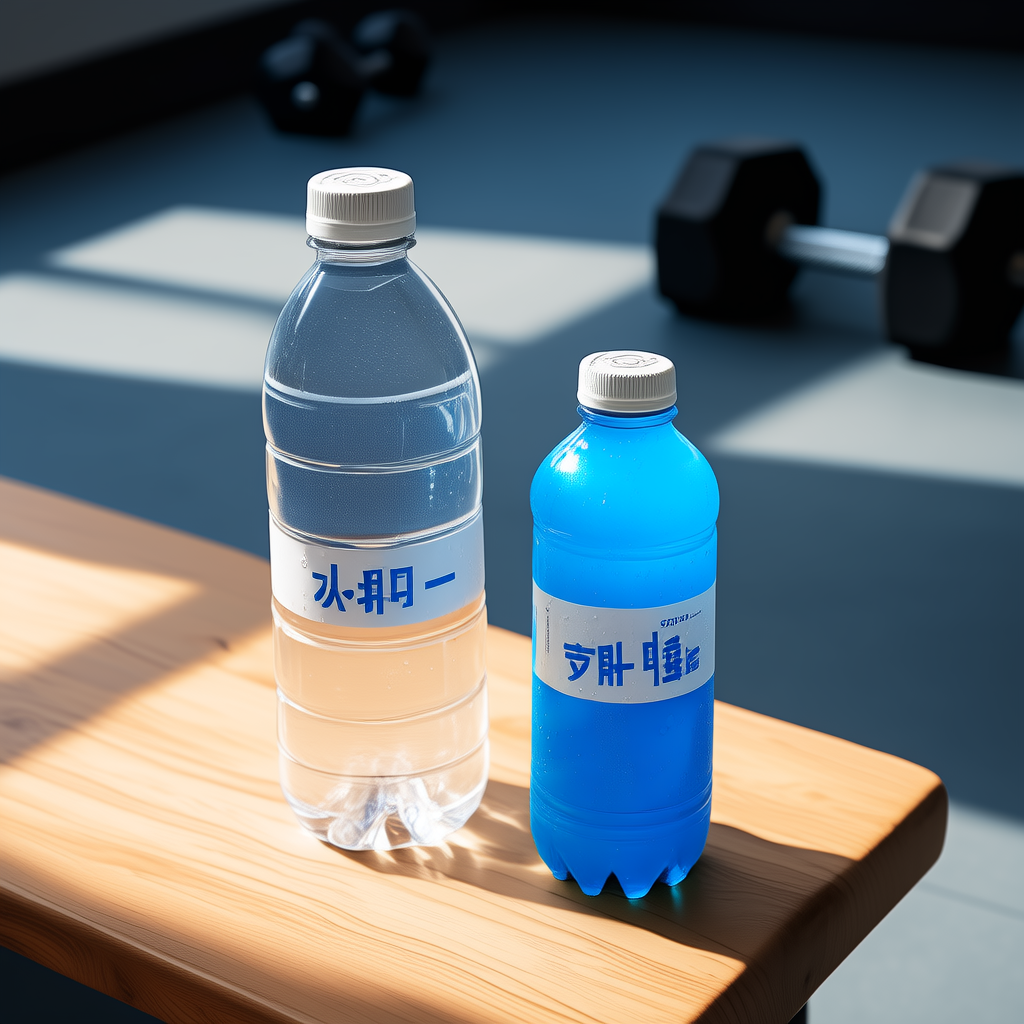
You grab your water bottle, set up on the treadmill, and the person beside you opens a 32-ounce blue sports drink. For a 45-minute incline walk, does that difference matter? In most cases, no. Your water bottle will do the job just fine.
Sports drinks were not designed for everyday gym visits. Gatorade was created for football players practicing in the Florida heat. A 20-ounce bottle of a typical sports drink contains roughly 34 grams of sugar. To put that in perspective, a 12-ounce can of Coke has about 39 grams. The sports drink bottle is bigger, and you are drinking it slowly over an hour, but that still works out to a lot of empty calories for a session where your main goal is fluid replacement. If you sip that during a one-hour moderate workout, you are likely taking in more sugar than you need.
For an hour of moderate gym work or brisk cardio, plain water hydrates you just as well as a sugary sports drink at a fraction of the cost. That covers most weight workouts, treadmill sessions, elliptical workouts, and stationary bike rides. Skip the neon bottle until your session gets longer or hotter.
Sweat is mostly water, and the main electrolyte you lose through sweat is sodium. Heavy sets, hot gyms, and salty sweaters all increase your need for extra sodium. But for a short gym session, your biggest hydration risk is dehydration, not an electrolyte deficiency. If you eat a regular diet that doesn’t avoid salt, your sodium stores are already full before you open your water bottle.
Salty sweater isn’t a fashion label. It means your sweat contains an unusually high amount of sodium. A small percentage of people lose a lot more salt than others. I am one of those. After a summer run, I see white stripes on my shirt and my eyes sting until I rinse them. If that sounds familiar, you need more sodium than someone whose sweat runs clear.
Hot gyms change the calculation too. In a room with poor air movement, the same workout can produce far more sweat. High-intensity interval training, heavy sets, and sprint intervals generate a lot of heat, and that heat has to leave your body somehow. Pair that with a warm indoor space and you can lose a liter of fluid in an hour or less.
That is where sports drinks actually shine: endurance sessions longer than 60 to 90 minutes and outdoor training in high heat and humidity. Long efforts drain muscle glycogen, and the sugar in a sports drink gives your brain and working muscles a quick fuel. The sodium helps your body hold on to the water you drink and speeds up absorption. At mile 12 or after 90 minutes of summer cycling, that bottle makes a real difference.
Use this as a practical check before you reach for a colorful bottle:
- Continuous effort longer than 60 to 90 minutes? Bring electrolytes.
- Hot, humid gym or summer outdoor sessions? Even a shorter effort can use some sodium.
- Salt stains on your skin or clothing after a workout? You are a heavy sodium loser.
- Typical 45- to 60-minute moderate session in a cool gym? Plain water wins.
DIY electrolyte drink
If you want to skip the neon colors and the price per bottle, make your own. In a 24-ounce bottle, combine:
- 1/8 teaspoon table salt (about 300 mg sodium)
- Juice of half a lemon or lime
- 1 to 2 teaspoons sugar or honey (only if the session is longer than 90 minutes)
- Water to fill the bottle
Shake it before each sip. It won’t taste like a commercial sports drink, but it gives you sodium and a little carbohydrate without artificial colors.
If you decide that a commercial drink belongs in your gym bag for long cardio days, check current prices on Amazon before you buy. A tub of powder usually costs less per serving than single bottles at the convenience store. And if you have a hydration method that works for you, share it in the comments. Another reader may have the same sweat pattern and could use the idea.
Practical Hydration Tools and Habits That Work
Forget exact ounce counts and complicated schedules. The most reliable hydration tools are free, take ten seconds, and fit into a normal day. Here are the ones worth building into your routine.
Check your urine color
Your urine color gives you a fast, direct read on hydration status. Light straw or pale yellow means you’re well hydrated. Dark amber means you’re probably behind on fluids. This isn’t a medical diagnostic, but for daily training it’s as reliable as any app I’ve tried.
One catch: some supplements and vitamins change urine color. B vitamins can turn it neon yellow even when you’re doing everything right. Treat this check as a starting point, not the final word.
Weigh yourself before and after a workout
The scale is a more precise tool than most people expect. Weigh yourself before and after a workout a few times to learn your personal sweat rate. If you lose one pound during an hour of lifting, you need roughly 16 ounces (500 mL) of fluid to replace that loss. Sweat rates vary widely enough that some lifters lose double that amount. Knowing your own number lets you plan fluid breaks instead of guessing.
Use the same scale, wear the same minimal clothing, and only do this on normal training days. After a few sessions you’ll have a baseline that beats any generic recommendation. If you know you lose two pounds per hour of hard conditioning, you can set a 32-ounce bottle and aim to finish it across the workout.
Keep a reusable water bottle visible
I keep a one-liter bottle on my desk from the time I wake up until after dinner. Not because I’m chasing a specific number, but because it naturally grabs my attention during a call or between tasks. Those small automatic sips add up to more of my daily intake than anything I do at the gym.
The same trick works in your training space. Put the bottle on the floor near your rack or in the cup holder, not in your bag. If it’s hidden, you won’t drink.
Build hydration triggers
Chugging a gallon in the morning just turns you into a faucet for the next few hours. Smaller anchors are easier to maintain. Link water to habits you already have:
- A glass when you wake up
- A glass with each meal
- A glass before bed
- One more during your commute or after brushing your teeth
That gives you four or five glasses before you even think about training. Regular beats heroic.
Try the urine check every day for a week. Do the weigh-in after your next two or three training sessions. Keep the bottle on your desk for a full work week. After that, you won’t need to think about the tools as much—they’ll just become part of the routine.
A simple bottle and a basic scale are all you need to get started; check current prices on Amazon if you want to make it easier, and share which habit worked best for you in the comments.
Medical & Editorial Review: This article was reviewed by Liam Smith, founder of Apexfito, for accuracy and safety. Content is for educational purposes and is not a substitute for professional medical advice. Consult your physician before starting any exercise or nutrition program.