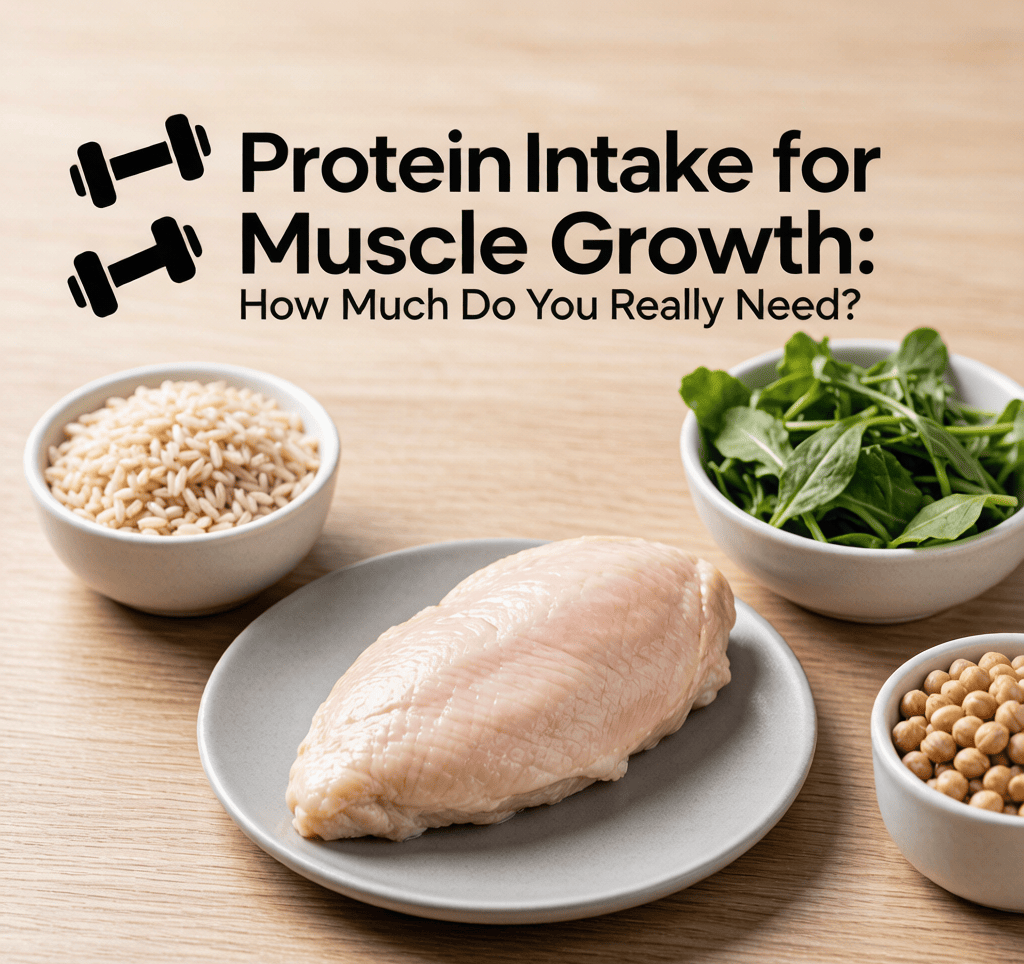
Protein Intake for Muscle Growth:
By Liam Smith — Fitness enthusiast and founder of Apexfito. I test gear at home and share what actually works.
Why Protein Matters for Muscle Growth
Walk into any gym and you’ll hear conflicting advice about protein. One guy swears you need a shake within 30 minutes of your last rep. Another says you should eat a gram per pound of body weight — minimum. The supplement labels scream at you to drink more, more, more. It’s confusing, and honestly, most of it is wrong. Harvard Health notes that your metabolism determines how many calories you burn each day; building muscle can increase it.
Let’s start with what actually happens inside your body when you train. Every time you lift a weight, you create tiny tears in your muscle fibers. Your body repairs those tears by stitching them back together stronger than before. That repair process is called muscle protein synthesis (MPS), and it requires a steady supply of amino acids — the building blocks that come from protein.
But here’s the part that trips up most people: muscle growth isn’t just about building. It’s a constant tug-of-war between muscle protein synthesis and muscle protein breakdown (MPB). When MPS exceeds MPB over time, you gain muscle. When MPB wins, you lose it. Protein tips that balance in your favor.
I used to think slamming a protein shake after every meal would turbocharge my gains. Turns out, your body has a limit on how much protein it can actually use for synthesis in one sitting. Anything beyond that gets oxidized for energy or stored as fat. That’s why the old-school bodybuilder approach of eating a whole chicken every three hours isn’t just unnecessary — it’s counterproductive.
Here’s what the research actually shows: for most people, 20–40 grams of high-quality protein per meal is enough to maximize MPS. Spread that across four meals, and you’re looking at roughly 1.6 to 2.2 grams per kilogram of body weight per day. That’s the sweet spot — not a bottomless pit of chicken breasts.
The myth that you need massive amounts of protein to grow muscle just won’t die. I’ve had guys tell me they eat 400 grams a day because they think more equals more. But the science says otherwise. Once you hit that ceiling, extra protein doesn’t build more muscle — it just adds calories. And those extra calories can end up as fat, which is probably not what you’re after.
So what does this mean for you? Stop worrying about hitting some insane protein number. Focus on getting a solid serving of protein at each meal — think eggs at breakfast, chicken or tofu at lunch, fish at dinner, and maybe a shake after your workout. That’s enough to keep MPS humming all day without wasting food or money.
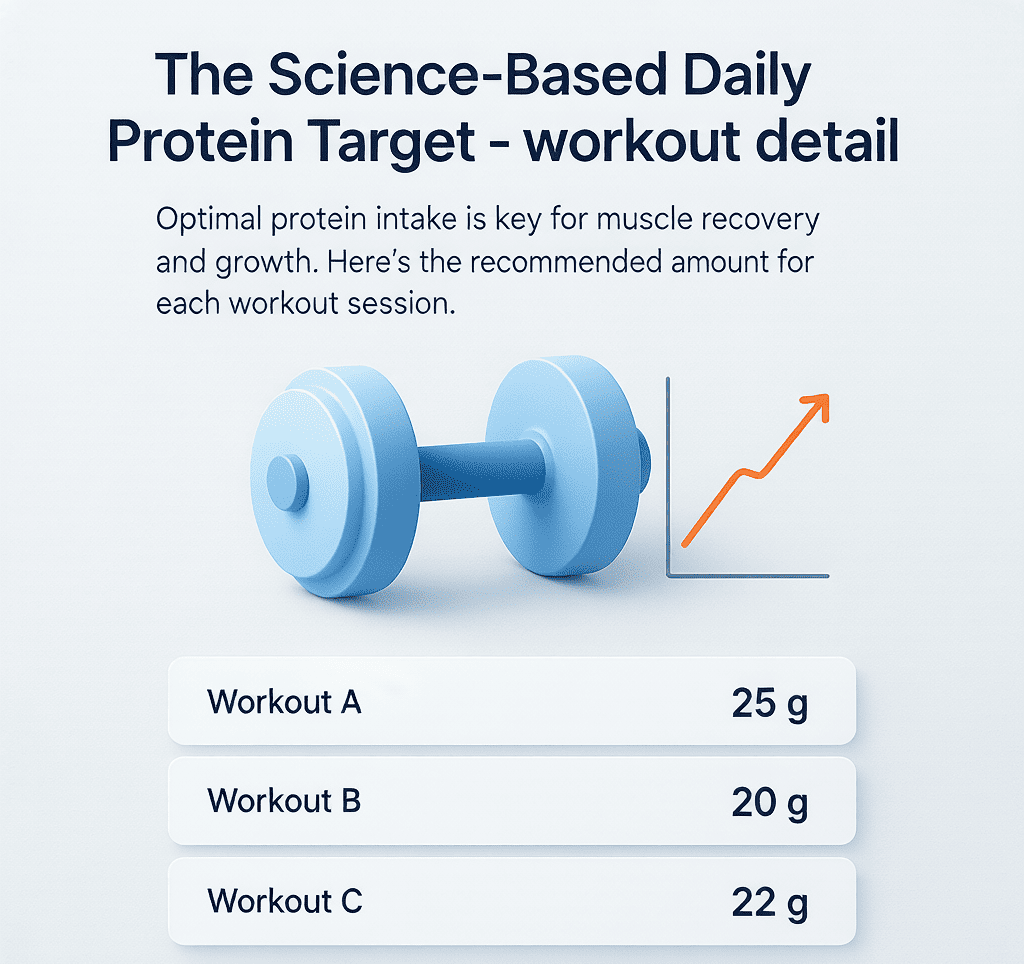
The Science-Based Daily Protein Target
If you’ve spent any time in a gym or scrolling fitness forums, you’ve probably heard everything from “you need a gram per pound of body weight” to “just eat more chicken.” The research, though, is more specific — and more forgiving than you might think.
For most people trying to build muscle, 1.6 to 2.2 grams of protein per kilogram of body weight per day is the sweet spot. That’s roughly 0.73 to 1 gram per pound. I’ve seen clients get great results anywhere in that range, and the lower end works fine if you’re not in a steep calorie deficit.
Let’s make this real. A 175-pound person — about 80 kilograms — needs roughly 128 to 176 grams of protein daily. That might sound like a lot if you’re used to grabbing a sandwich for lunch, but it’s totally doable with smart food choices. A typical day could include eggs at breakfast, a chicken breast at lunch, Greek yogurt as a snack, and a piece of fish or lean beef at dinner. Throw in a shake post-workout, and you’re there.
Now, if you’re also trying to lose fat — meaning you’re eating in a calorie deficit — aim for the higher end of that range, around 2.2 g/kg. Why? When calories drop, your body is more likely to break down muscle for energy. Extra protein helps preserve that hard-earned tissue. I’ve coached several people through cuts where they kept strength and even added lean mass by keeping protein high.
One thing that trips people up: they think more is always better. But studies show that beyond about 2.2 g/kg, extra protein doesn’t boost muscle growth further. It’s not harmful, but it’s also not helping. So don’t stress about hitting 300 grams if you’re 175 pounds. Focus on consistency within that range.
Here’s a quick cheat sheet for common body weights:
- 150 lbs (68 kg): 109–150 g/day
- 175 lbs (80 kg): 128–176 g/day
- 200 lbs (91 kg): 145–200 g/day
- 225 lbs (102 kg): 163–224 g/day
To hit these numbers without overthinking, start with a protein source at every meal and snack. If you’re falling short, a quality protein powder can fill the gap. I keep a tub of unflavored whey around for mornings when breakfast is rushed — just stir it into oatmeal or a smoothie.
Check current prices on Amazon for popular protein powders and share your experience in the comments — what’s worked for you to hit your daily target?
Protein Timing and Meal Distribution
You’ve probably heard that you need to slam a protein shake within 30 minutes of finishing your last rep, or your muscles will waste away. That idea — the so-called “anabolic window” — has been repeated so often it’s become gospel in gyms across North America. But the science tells a different story.
Your body doesn’t work on a stopwatch. Muscle protein synthesis (the process that repairs and builds muscle tissue) stays elevated for at least 24 hours after a resistance training session. That means you have plenty of time to get protein in, not just a narrow window. A 2013 review in the Journal of the International Society of Sports Nutrition concluded that the post-workout window is wider than once thought — more like 2 to 3 hours, not 30 minutes.
What actually matters more than timing is how you spread your protein across the day. Research consistently shows that consuming roughly 0.4 grams of protein per kilogram of body weight per meal — spread across three to five meals — stimulates muscle protein synthesis more effectively than eating most of your protein in one sitting.
Here’s a quick example: if you weigh 80 kg (about 176 lbs), that’s around 32 grams of protein per meal. That could look like:
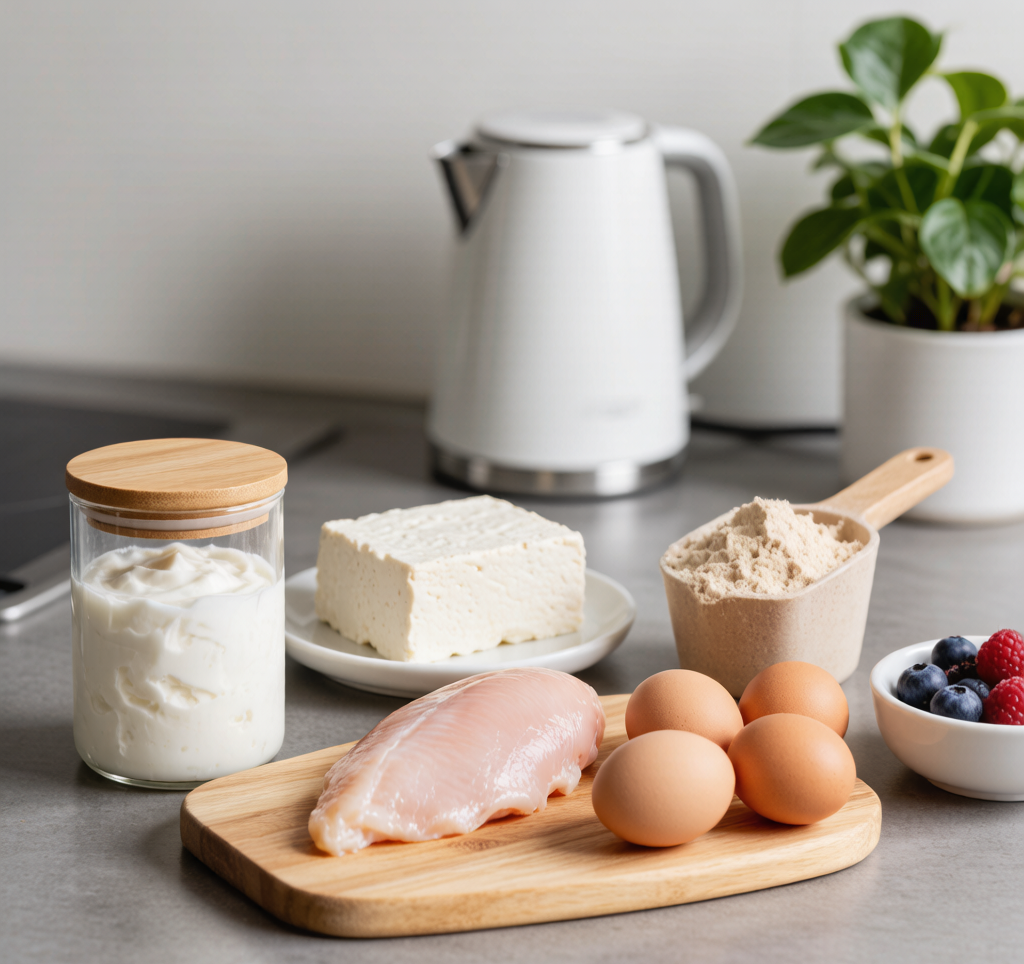
- Breakfast: 3 eggs (18g) + 1 cup Greek yogurt (15g) = 33g
- Lunch: 4 oz chicken breast (35g) + quinoa
- Dinner: 5 oz salmon (30g) + vegetables
- Snack: 1 scoop whey protein (25g) or a handful of almonds
When I started paying attention to meal distribution instead of just total daily protein, I noticed I felt fuller throughout the day and had more consistent energy during workouts. The numbers backed it up: my recovery felt faster, and I stopped stressing about that post-workout shake.
The practical takeaway is simple: aim for a protein source at breakfast, lunch, dinner, and one snack. That four-meal pattern naturally hits your daily target without needing to obsess over timing. If you do have a shake after training, great — but don’t panic if you eat dinner two hours later instead of 30 minutes later. Your muscles will be fine.
Now, here’s the real-world application: if you’re someone who skips breakfast or eats a carb-heavy lunch, you’re missing an opportunity to stimulate muscle protein synthesis earlier in the day. I’ve worked with clients who shifted just 10 grams of protein from dinner to breakfast and saw better progress in four weeks. Small changes add up.
Have you tried adjusting your protein timing or distribution? Check current prices on Amazon for quality protein powders or meal prep containers to make this easier. And drop a comment below sharing what’s worked for you — I read every one.
Putting It Into Practice: Simple Steps to Hit Your Protein Goal
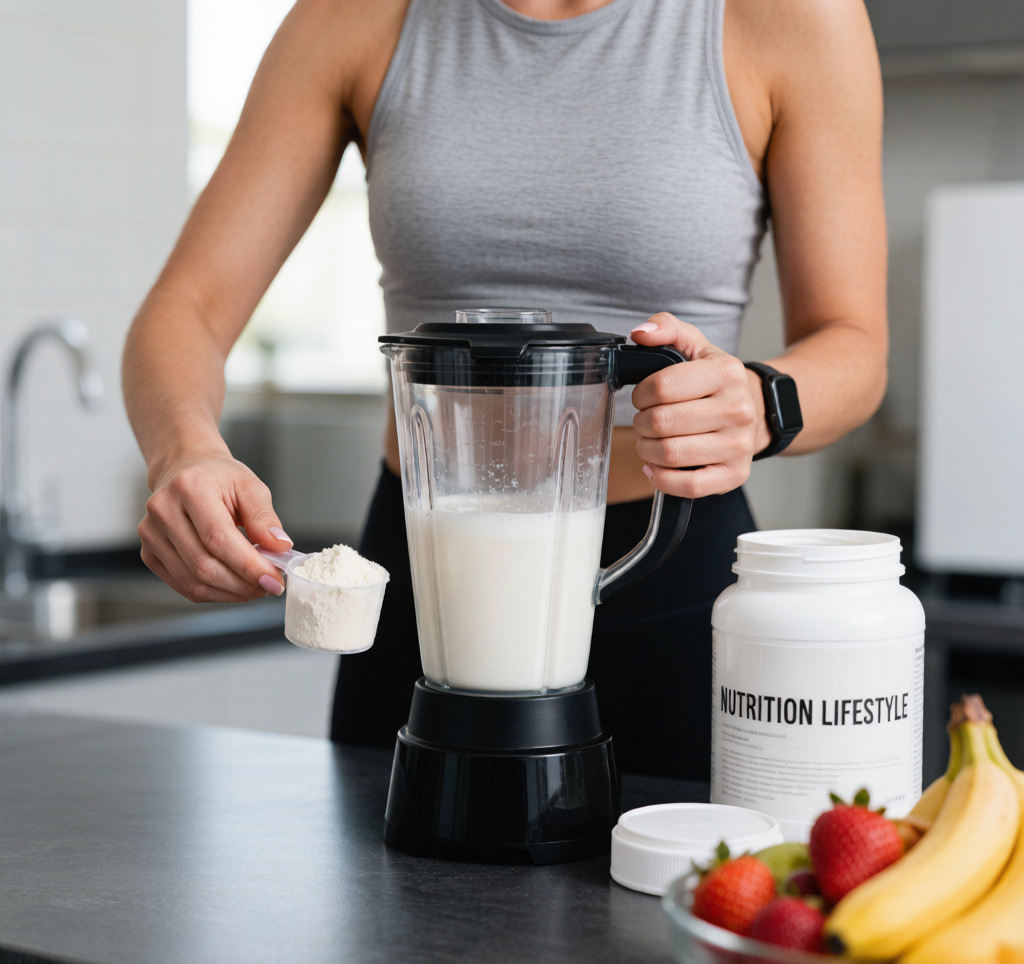
You now know the science: around 1.6–2.2 grams of protein per kilogram of body weight daily is the sweet spot for muscle growth. But knowing and doing are two different things. Here’s how to make it happen without turning your kitchen into a lab or your wallet into a ghost.
Start with Whole Foods
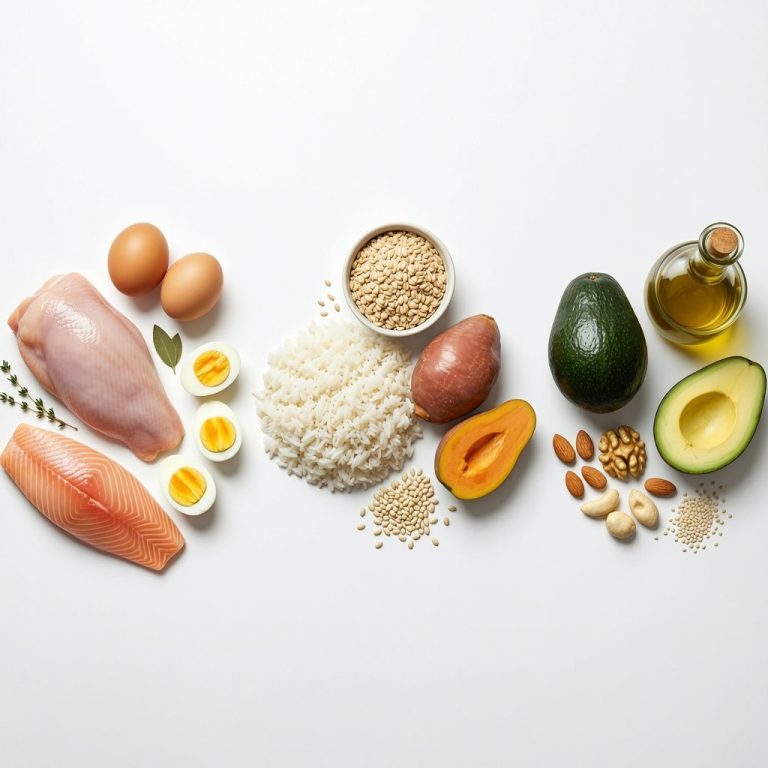
Whole food protein sources are your foundation. They come with vitamins, minerals, and fiber that powders can’t match. Here are the heavy hitters:
- Chicken breast — 31g protein per 100g cooked. Cheap, easy, and versatile.
- Eggs — 6g per large egg. Hard-boil a dozen on Sunday for grab-and-go protein.
- Greek yogurt — 15–20g per 170g serving. Plain, not flavored (flavored is sugar city).
- Cottage cheese — 14g per ½ cup. Great before bed due to slow-digesting casein.
- Lentils — 18g per cup cooked. Fiber bonus keeps you full.
- Tofu — 10g per 100g. Press it, cube it, pan-fry it with soy sauce.
I keep a bag of frozen chicken breasts and a tub of Greek yogurt in the fridge at all times. When I’m lazy, that’s my lunch: chicken + yogurt + hot sauce. Done.
When Whole Food Isn’t Enough, Use Powder
Protein powder is a tool, not a crutch. If you’re short on time or appetite, a shake can fill the gap. One or two scoops per day is plenty. Whey is fast-digesting and great post-workout. Plant-based blends (pea + rice) work just as well if you’re dairy-free.
I’ve tried a dozen brands. The cheap stuff often tastes like chalk mixed with regret. Spend a few extra bucks on a brand that mixes smooth. Your taste buds will thank you.
Track for Three Days — Then Adjust
You don’t need to track forever. But for three days, use an app like MyFitnessPal or Cronometer. Log everything you eat. At the end of day three, look at your average protein intake. If you’re under 1.6g/kg, you know where to add.
Most people I’ve coached are shocked at how little protein they actually eat. One guy thought he was getting 150g a day. He was at 80g. Tracking fixed that in a week.
Simple Meal Template
Here’s a rough day that hits around 150g protein for a 180lb (82kg) person:
- Breakfast: 3 eggs + 1 cup Greek yogurt (35g protein)
- Lunch: 6oz chicken breast + 1 cup lentils (55g protein)
- Dinner: 6oz salmon or tofu + veggies (40g protein)
- Snack: 1 scoop whey in water (25g protein)
That’s 155g total. Adjust portion sizes up or down based on your weight.
For vegetarians and vegans: Swap the chicken for extra tofu or tempeh (tempeh has 20g per 100g). Replace eggs with a tofu scramble or a scoop of plant-based protein powder in your oatmeal. Use pea protein or a vegan blend instead of whey. The numbers still work — just plug in your preferred sources.
No Need for Expensive Supplements
You don’t need BCAAs, collagen peptides, or “anabolic” blends. Stick with the basics: whole food first, powder second. Your wallet and your muscles will be fine.
If you want to stock up on a quality protein powder, check current prices on Amazon — they often have deals on tubs that beat the grocery store. And if you’ve tried any of these strategies, drop your experience in the comments. I read every one.
Medical & Editorial Review: This article was reviewed by Liam Smith, founder of Apexfito, for accuracy and safety. Content is for educational purposes and is not a substitute for professional medical advice. Consult your physician before starting any exercise or nutrition program.



One Comment