Best Gifts for Home Gym Enthusiasts Under $50: Practical Picks That Actually Get Used
Full disclosure: Some links in this article are affiliate links. We may earn a small commission at no extra cost to you if you make a purchase through them. Our recommendations are based on what real users report, not on commission size.
Why Practicality Beats Novelty for Home Gym Gifts
My home gym setup is small: a folding rack, a bench, a few plates, and a pull-up bar. Over the years, friends have given me things they saw online — a phone clip for my barbell, a vibrating muscle roller, and a set of grip trainers with a mobile app. I used each one about twice. The gear I grab every week is the boring stuff: a lacrosse ball, a resistance band, and a jump rope that cost under $30.
That pattern repeats with a lot of other home athletes. They already have the main equipment. What they need are small tools that fix an actual annoyance. Most of these tools land between $10 and $45. When you shop this way, the gift stops being a novelty and starts being part of their routine.
Before you pull out your credit card, think about three things.
- What does their workout actually look like? Heavy lifting, daily stretching, bodyweight circuits, or short cardio sessions all need different accessories.
- What do they complain about after training? Tired grip, tight hips, sore calves, or a boring warm-up.
- What do they have already? A lifter with a full set of plates will get more use out of chalk or grips than a new bar attachment that duplicates something they own.
Use those answers to guide your choice. If they lift heavy, grip fatigue is usually the first thing to limit a workout. A two-pack of grips or a block of liquid chalk fixes that for any lift. If they spend mornings stretching, a long resistance band gives their hips and shoulders something to pull against, and it travels well. If they only have 15 minutes to move, a jump rope with smooth bearings can replace an expensive cardio machine.
I learned this lesson the hard way. A few years ago I bought a gadget that promised to shorten recovery time with a specific pattern of pulses. It came with a charging cable, a carrying bag, and a manual I never read. It sat in my closet until I gave it away. Meanwhile, a $4 lacrosse ball has rolled around my gym mat for years. It is ugly, it is simple, and it works.
Avoid anything with ‘as seen on TV’ in the description. The ones that claim to burn fat with electrical pulses, massage away cellulite, or build abs while you sit on the couch are not part of a real training routine. Those items get used twice, then end up at the bottom of the closet. The smart alternative is to spend your money on a consumable that naturally wears out, like chalk, grip aids, or a set of exercise bands. Because they know the item will need replacing, they will use it instead of saving it.
One more piece of advice: when you compare prices on Amazon, filter the results for your recipient’s exact setup. A cheap band set is fine for light stretching, but a lifter moving serious weight needs grips with a thick wrist wrap, not a basic cotton pair. Read the reviews for the specific materials and weight rating, not just the star count.
When you pick a practical gift, you show that you paid attention to how they train. That beats another piece of glossy equipment they have to find room for. After they open it, come back and tell us which training complaint it actually solved. Those firsthand reports help other shoppers make the same call.
Strength Gear Under $50: Bands, Grips, and Core Tools
Some gifts look good propped on a shelf but never make it into a workout. This strength gear is different: it gets used for warm-ups, heavy sets, and finishers, and none of it needs a dedicated training room. You can stay under $50 with any single item, or bundle two pieces if you split the budget.
Loop Resistance Bands: About $15 to $40
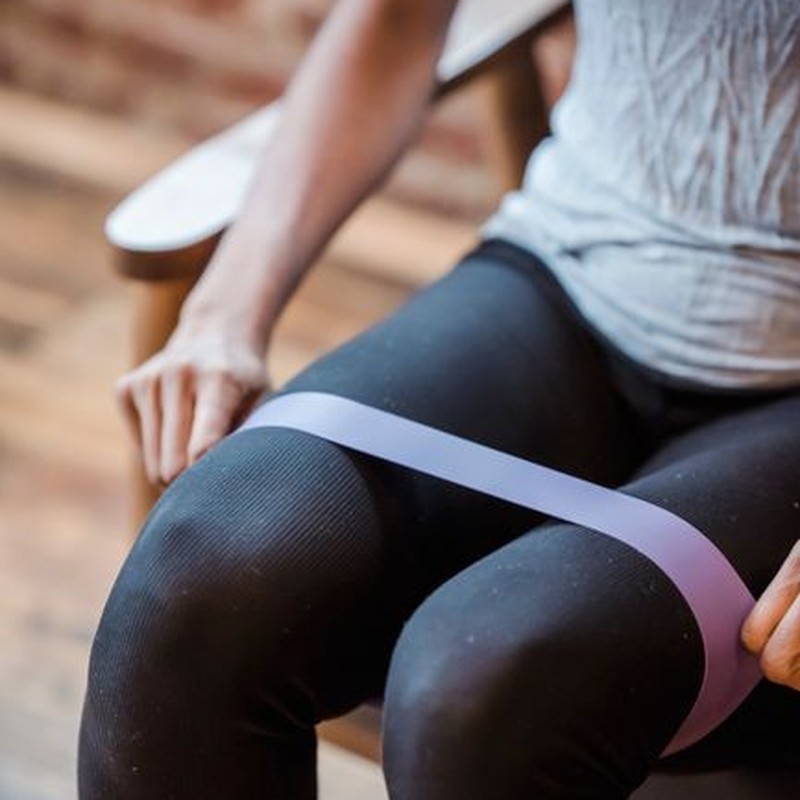
Loop bands are the closest thing to a home gym in a drawer. A set of three or five loops provides progressive resistance for squats, lateral walks, glute bridges, hip thrusts, and assisted pull-ups. The Fit Simplify Fabric Loop Band Set is the model I see most in starter gyms; the five-pack runs about $20 and includes a carry bag and workout guide, which makes it feel like a complete gift.
Fabric loops cost more but sit better on bare legs and don’t roll the way rubber does, especially during glute work. Rubber loops are cheaper and give sharper resistance for pressing and pulling. For a lifter who already has a band collection, a heavy single loop like the Rogue Monster Light Band (around $25) makes pull-up assistance and loaded carries feel more serious.
- Fabric loop band set: $25 to $40, stays put on shorts or bare skin.
- Rubber loop band set: $15 to $30, more snap for upper-body work.
- Heavy single loop: $20 to $30, useful for assisted pull-ups and loaded carries.
Don’t buy a set by color alone. Read the pound rating on the package because a medium from one brand can feel like a light from another. If the recipient trains legs hard, lean toward the heavier end of the range; if they are just starting out, a light-to-medium set is enough. Most fabric loops are latex-free, which matters for anyone with a latex allergy; rubber loops can also be latex-free, but you have to check the label.
Lifting Straps and Grip-Assist Wraps: About $10 to $45
Straps solve a boring but real problem: the grip gives out before the working muscles do. A good pair lets someone hold heavier deadlifts, rows, shrugs, and farmer carries without the bar slipping or calluses tearing. The Harbinger Padded Cotton Lifting Straps, usually around $15, are a safe starter pair—the neoprene wrist pad keeps the strap from digging in, and the cotton tail wraps around the bar with a solid lock.
Figure-eight straps are easier to put on and built for heavy pulling; Iron Bull Strength Figure 8 Lifting Straps cost about $20 to $25 and get a lot of use in garage gyms. If the recipient likes high-rep pull-ups or fat-bar work, padded grip-assist wraps add extra support around the thumb and can protect tired hands.
- Cotton straps: $10 to $25, easy to use and easy to replace.
- Figure-eight straps: $20 to $40, faster to put on, built for heavy pulling.
- Padded grip-assist wraps: $25 to $45, best for pull-ups or fat-bar work.
Check the strap length and Velcro closure before buying. Smaller wrists work better with a shorter Velcro section; larger wrists need extra material. Product dimensions matter more than S/M/L tags, so measure the recipient’s wrist if you can.
Ab Wheel and Push-Up Rotation Handles: About $10 to $40
The ab wheel is one of the oldest core tools around, and it still makes lifters curse within thirty seconds. The Perfect Fitness Ab Carver Pro runs about $30 and adds a resistance cord to an already effective wheel; the Vinsguir Ab Roller is closer to $14 and does the same job with no frills.
Push-up rotation handles serve a similar small-and-brutal role for the upper body. They turn a push-up into a more shoulder-friendly movement and add a core twist at the top. Anyone with wrist pain often finds these easier than a flat palm on the floor.
- Basic ab wheel: $10 to $20, simple core work with no setup.
- Resistance ab wheel: $25 to $40, extra push for stronger lifters.
- Push-up rotation handles: $25 to $40, easier on wrists and add a core twist.
The wheel’s width matters most. Look for a wheel at least 1.5 inches wide; anything narrower feels tippy for beginners. If the recipient has wrist issues, a rotation handle or a neutral-grip ab wheel is a better choice.
Tell them to start with one or two sets of five or eight slow reps. The wheel rewards control, not speed; twenty sloppy reps just build lower-back tension.
Before you buy, check current prices on Amazon because band sets and straps change price often. And if you’ve used any of these tools, share your experience in the comments. Real-world feedback helps other home gym people pick the gear that actually gets used.
Cardio and Recovery Picks Under $50 That Actually Get Used
Plenty of home gym gifts look good sitting in the box. These are the ones that get pulled out week after week because they fix a real gap: the slow five minutes before a workout, the parts of conditioning that are easy to skip, and the soreness that shows up a day later.
A speed rope fixes the I-don’t-have-time excuse
A ball-bearing speed rope is one of the most efficient cardio tools you can own. At $25 to $40, it packs into a gym bag, and a coffee break becomes a 10-minute conditioning session. I keep one in my car and use it at the park when I’m early for an appointment. It delivers more sweat per minute than a jog and doesn’t need batteries, Wi-Fi, or space.
When you’re shopping, skip the plastic-cable jump ropes from the drugstore. Look for a nylon-coated steel cable and smooth ball bearings in the handles. That combo spins fast and doesn’t tangle. Rope length matters: grab the handles and step on the middle of the cable. The handles should reach about your armpits. If the rope is too long, most models let you cut and re-thread the cable, but a beginner-friendly option with an adjustable strap is easier.
My first speed rope was a $15 indoor model with plastic handles. It worked, but the bearings ground down after two months. A $30 rope from a brand like RX Smart Gear or Elite Surge has lasted over a year of weekly use. Paying a little more on the front end beats replacing a cheap one by spring.
Recovery tools you’ll actually put on your legs
After lifting, the difference between staying consistent and skipping the next session often comes down to how tight your calves and quads feel. A massage stick, a lacrosse ball, or a 36-inch foam roller fills that gap for $20 to $45. No outlet required, no noisy vibration, no learning curve.
I bought a cheap massage stick after a friend left one at my house, and it now lives next to the couch where I watch basketball. When my quads feel like sandpaper after leg day, two minutes of rolling up and down the front of my thighs beats lying on a hard foam roller. It also reaches the calves and shins, and it is forgiving enough that you don’t have to brace yourself.
For tighter spots, a lacrosse ball is as cheap a deep-tissue tool as you’ll find. It’s firm enough to dig into a knot without being as aggressive as a cricket ball. For back work, skip the little rubber attachments that screw onto a massage stick—they tend to slip or press into the wrong spot. Instead, use a lacrosse ball or a slightly softer therapy ball against a wall. I lean into the wall and roll it around my shoulder blades and upper back. It’s much easier to control the pressure, and you can target a spot without bending into an awkward position.
A 36-inch foam roller gives you more surface area than a massage stick. It works better for back and hamstring work because you can lie on it and move without constantly repositioning. Prices range from $25 to $45. A dense white or black roller is better for those who want pressure; a hollow or textured one is more forgiving for beginners. I own both, and I reach for a smooth, firm one most often.
A jump rope mat protects more than the floor
A jump rope mat is the unsung gift in this category. If the person works out in a basement or garage, the floor is likely concrete. Repeated rope slams fray the cable, and the impact travels into knees and shins. A mat under $30 solves both problems, and it doubles as a kneeling pad for ab work.
I tried skipping without a mat on a concrete floor for a week. The cable developed a bent section near the middle, and my left Achilles complained. A quarter-inch rubber mat changed that. You could spend more on a horse stall mat, but for jump rope, the thinner, portable versions are easier to store and roll out when needed.
When buying a mat, check the thickness. A 6-millimeter mat is enough for jump rope and still easy to roll. A 12-millimeter mat absorbs more shock but folds awkwardly and takes up space. I use a 6-millimeter one from Target, and it has held up for a year of moderate skipping. The same mat doubles as a knee pad for planks, ab wheel rollouts, and kneeling push-ups, which makes it a gift that works twice a week even when the rope stays in the bag.
Prices on Amazon shift around more than you might expect—the same $30 rope often drops into the low twenties for a week or two. If a set catches your eye, a quick current-price check before checkout can save you a few bucks. And if you already train with any of these, please share your experience in the comments. The details about what wore out, what slipped, and what you reach for every session help other shoppers pick the version that will actually get used.
How to Pull the Trigger: Prices, Reviews, and the Final Wrap
You’ve got the list, you know the gear, and now it’s time to actually order something. This is the easiest part to overthink. Here’s the quick system I use when I buy for my own garage gym or for a gift.
Check the live price before you hit add to cart
Home gym prices on Amazon move around more than you’d think. I’ve seen a good speed rope sit at $42 for weeks, drop to $27 during a Prime event, and then climb back up to $49. Resistance bands, massage balls, and lifting grips do the same thing.
Before you check out, open the listing on Amazon and look at the price on the page itself, not the search results. Search-page prices are often stale. Then scroll slightly down to the offer box and look for the coupon checkbox or a “Save 5% with coupon” link. One click can knock $8 to $15 off a single item.
Read the reviews that talk about months, not the unboxing
The 5-star reviews on fitness gear are usually written Day One. “Looks great, arrived fast, feels sturdy.” That tells you almost nothing about whether the product still works in month six.
That’s why I go straight to the 3- and 4-star reviews. On each review section there’s a search box. Type in the word “after” or “months” and read what people say about the product over time. “The band snapped after six weeks of daily use” is worth more than twenty “came quickly” reviews.
I also look for reviews that mention the person’s size or setup. If the gift is a massage ball for a tall friend, I want to see whether someone over six feet said it was too small for their back. If it’s grip pads, I look for reviewers with sweaty palms or wide hands who describe how the material held up.
A quick buying strategy to keep by your phone
- Compare the current Amazon listing price with the price you remember from our list. If it’s lower, buy it. If it’s higher, save the item and check back in a day or two.
- Open the coupon box before you check out. A “Save 5%” or “Save 10%” checkbox is often buried in the offer section.
- Read the 3- and 4-star reviews first, and use the review search box to look for the words “after,” “months,” or “replacement.”
- Buy one item, maybe two. A thoughtful $35 gift beats a pile of overlapping gear from the same category.
That’s the whole plan: confirm the price, check how the gear performs over time, and keep it simple. Wrap it up, hand it over, and let the workouts speak for themselves.
Then come back and tell us in the comments which pick you chose and how often the home gym nut actually used it. Did the $12 grip pad make it into their daily session? Has the massage ball been passed around the house? Did something sit in the corner after two weeks? Say that too. It helps the next person stop second-guessing and just hit buy.
Medical & Editorial Review: This article was reviewed by Liam Smith, founder of Apexfito, for accuracy and safety. Content is for educational purposes and is not a substitute for professional medical advice. Consult your physician before starting any exercise or nutrition program.