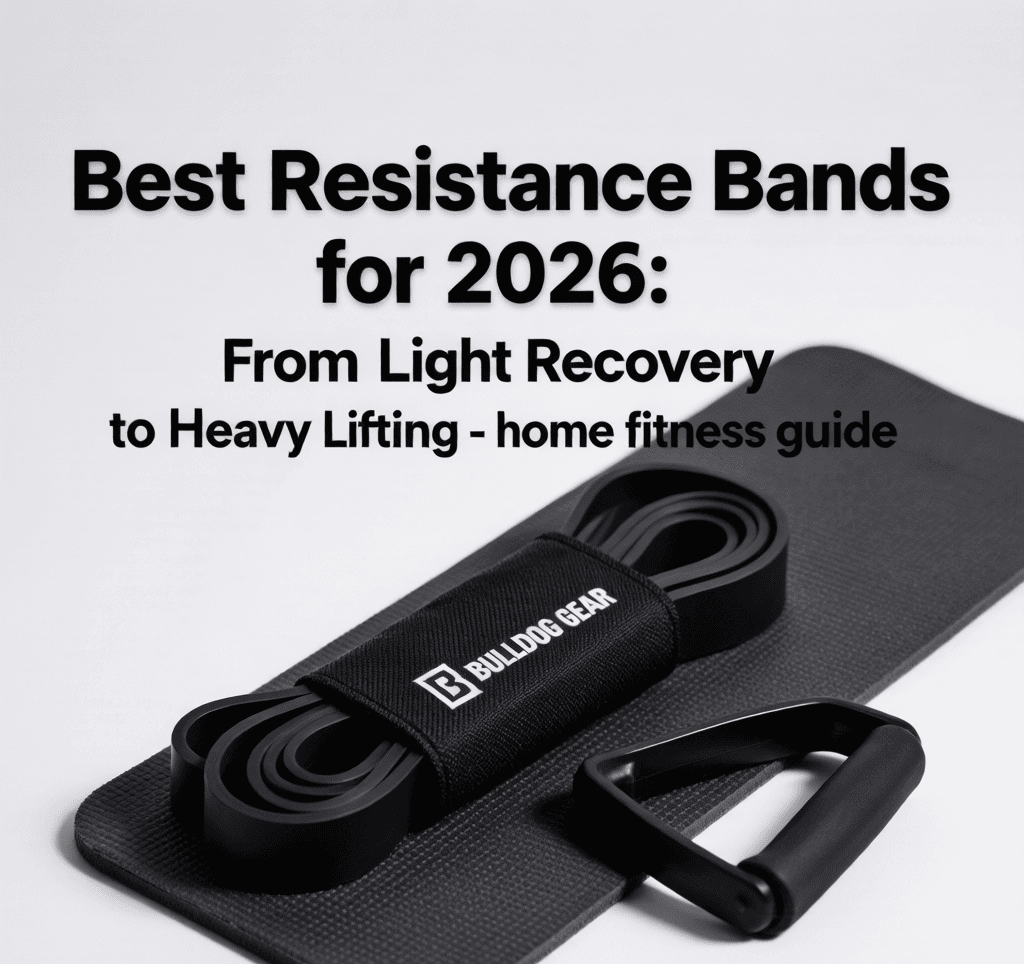
Best Resistance Bands for 2026:
Full disclosure: Some links in this article are affiliate links. We may earn a small commission at no extra cost to you if you make a purchase through them. Our recommendations are based on what real users report, not on commission size.
By Liam Smith — Fitness enthusiast and founder of Apexfito. I test gear at home and share what actually works.
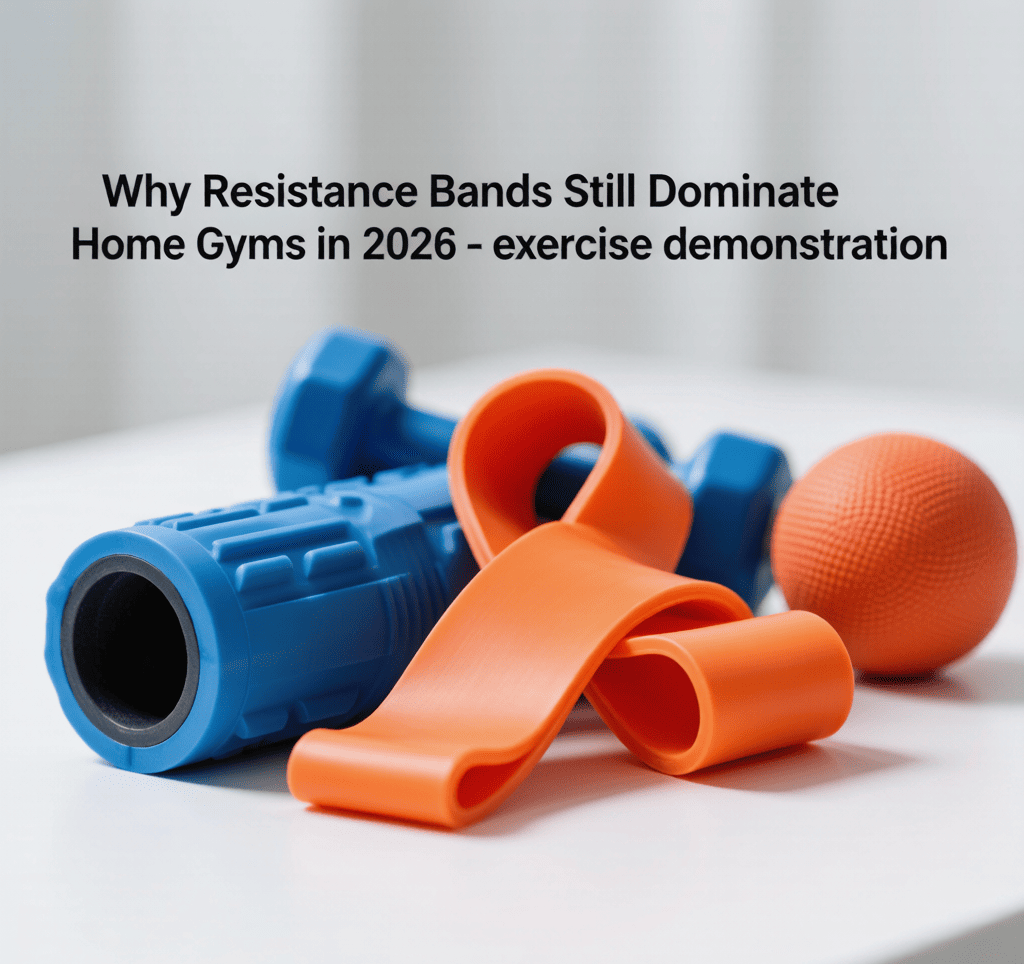
Why Resistance Bands Still Dominate Home Gyms in 2026
If you’re building a home gym on a budget or just trying to avoid turning your living room into a cluttered weight room, resistance bands are a smart choice. I’ve tried both setups — I had a set of adjustable dumbbells that took up a corner of my bedroom, and I’ve also used bands that I could toss in a drawer. The bands win for space and cost, hands down. A full set of quality bands runs you $30 to $80, while a decent pair of adjustable dumbbells can cost $300 or more. And barbells? Forget it — you need a rack, plates, and floor space. Harvard Health notes that consider your space, goals, and budget before investing in home fitness equipment.
But price and storage aren’t the only reasons bands work. They offer something free weights can’t: variable resistance. As you stretch a band, the tension increases. That means the hardest part of the movement — like the top of a bicep curl or the peak of a squat — gets the most load. With dumbbells, the resistance is constant; the hardest part is often the start, where you have the least mechanical advantage. Bands force your muscles to work harder through the full range of motion, which can lead to better strength gains and less joint strain.
I’ve used bands for warm-ups before heavy deadlifts, and they’re perfect for getting blood flowing without fatigue. They’re also a go-to for rehab — I know a few people who used them after shoulder injuries to rebuild rotator cuff strength safely. And if you travel, you can pack three bands in a bag and have a full-body workout anywhere.
That said, bands aren’t a perfect replacement for heavy free weights. If your goal is to squat 400 pounds, you’ll eventually need a barbell. But for most home exercisers — people who want to stay fit, build muscle, and not spend a fortune — bands are the smarter buy. They take up almost no space, they’re portable, and they add a unique training stimulus that dumbbells can’t replicate.
Practical advice: If you’re just starting, buy a set with light, medium, and heavy bands. Use the light band for warm-ups and rehab, the medium for main lifts, and the heavy for adding tension to bodyweight moves like push-ups or pull-ups.
Check current prices on Amazon to find a set that fits your budget, and drop your experience in the comments — I’d love to hear how bands have worked for you.
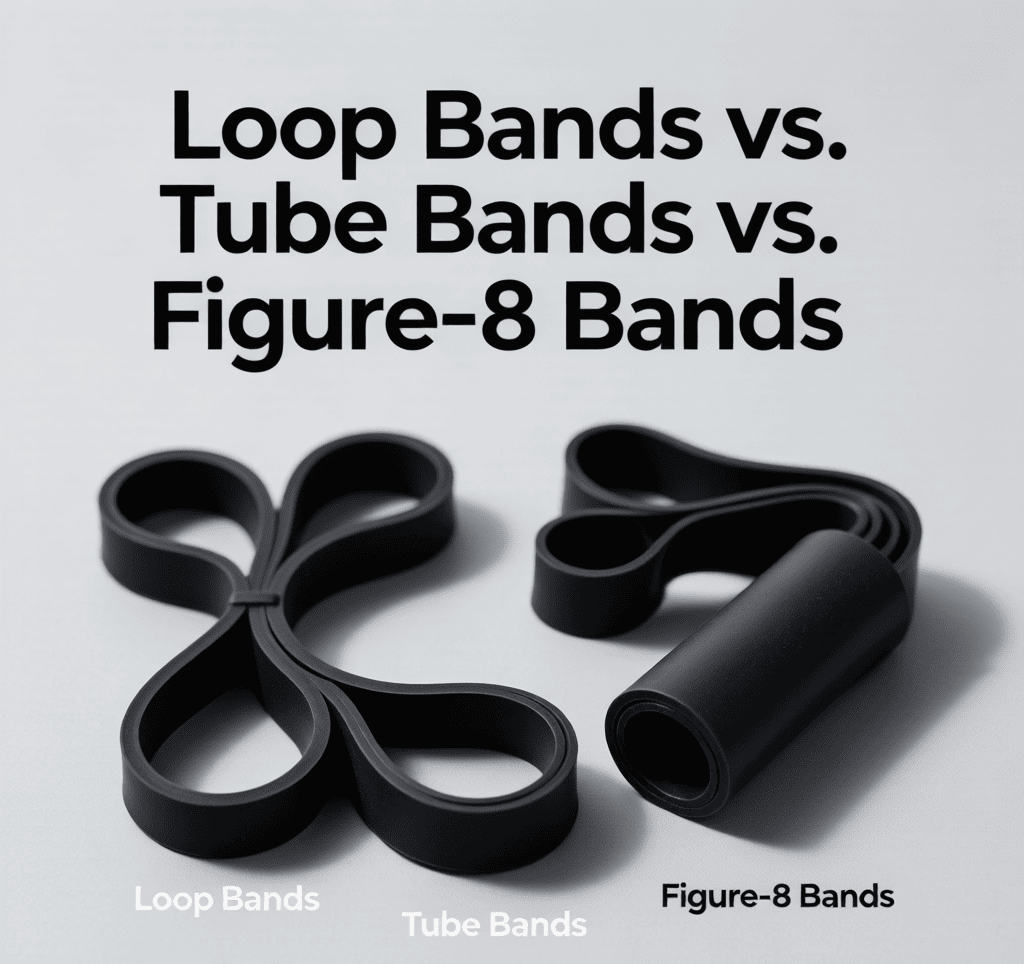
Loop Bands vs. Tube Bands vs. Figure-8 Bands: What’s the Difference?
If you’ve shopped for resistance bands recently, you know the options can be overwhelming. Loop bands, tube bands with handles, figure-8 bands — they all look different and claim to do different things. But which ones actually belong in your home gym? I’ve tested dozens of bands over the years, and here’s the breakdown of what each type does best, and where they fall short.
| Band Type | Best For | Not Ideal For | Price Range |
|---|---|---|---|
| Loop Bands | Glute activation, squats, lateral walks, hip thrusts | Upper-body pulling exercises (rows, curls) | $10–$25 per set |
| Tube Bands with Handles | Bicep curls, rows, chest presses, triceps pushdowns | Lower-body lateral movements | $15–$40 per set |
| Figure-8 Bands | Assisted pull-ups, triceps extensions | Versatile full-body training | $10–$20 each |
Loop Bands: The Glute and Lower-Body Workhorse
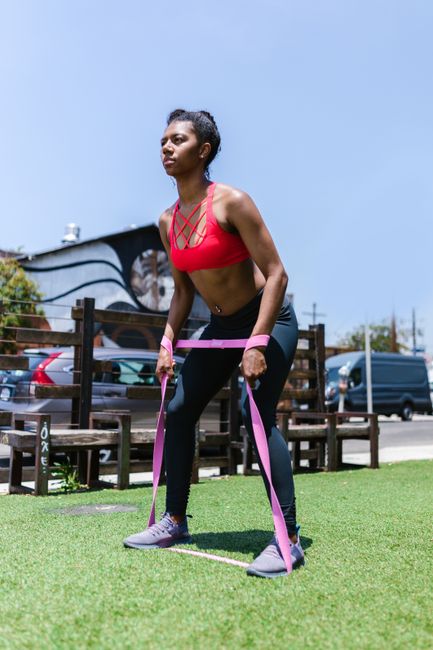
Loop bands are flat, continuous rings of rubber. They come in various thicknesses and are designed to be worn around your legs or anchored under your feet. These are my go-to for glute activation before squats, lateral band walks, and glute bridges. The constant tension from the band forces your glutes and hips to work harder throughout the entire range of motion.
I’ve used loop bands for years during warm-ups and lower-body days. They’re also great for adding resistance to bodyweight squats, hip thrusts, and even push-ups (loop them around your back and under your palms). The downside? They’re not ideal for upper-body pulling exercises like rows or bicep curls — the band tends to roll or pinch. If you’re focused on lower-body strength and glute development, a set of loop bands is essential.
Tube Bands with Handles: The Cable Machine Substitute
Tube bands are exactly what they sound like: rubber tubes with molded handles on each end. Many sets include a door anchor, which lets you attach the band to a door frame and perform exercises that mimic cable machine movements. Think bicep curls, triceps pushdowns, rows, chest presses, and even lat pulldowns. I’ve used tube bands at home when I couldn’t get to the gym, and they’re surprisingly effective for maintaining strength.
One thing I’ve noticed: the handles can be hit or miss. Cheaper sets often have hard plastic handles that dig into your palms during curls. Look for bands with foam or rubber-coated handles — they’re much more comfortable. Also, the door anchor is a must. Without it, you’re limited to standing exercises where you step on the band, which reduces the range of motion. For home exercisers who want a versatile setup for both upper and lower body, a tube band set with a door anchor is the most practical choice.
Figure-8 Bands: Fixed Path, Specific Use
Figure-8 bands are two loops connected by a central strap, forming a figure-8 shape. They’re designed for specific exercises like pull-ups (loop one end over a pull-up bar and put your knees in the other loop) and triceps extensions. The fixed resistance path means you can’t adjust the angle — you’re locked into a straight up-and-down or side-to-side motion.
I’ve found figure-8 bands useful for assisted pull-ups and triceps pushdowns, but they’re not as versatile as loop or tube bands. They’re also harder to adjust for different body sizes. If you’re a beginner or intermediate lifter, I’d skip the figure-8 bands and invest in a good set of loop bands and a tube band with a door anchor. You’ll get more bang for your buck.
Which Set Should You Buy?
Most home users benefit from a set that includes multiple loop bands (light, medium, heavy) and a tube band with a door anchor. This combination covers lower-body activation, upper-body pressing and pulling, and core work. I’ve used this exact setup for months and it’s all I need for full-body workouts. If you’re just starting out, grab a set with at least three loop bands and one tube band — you’ll have everything you need for under $40.
Check current prices on Amazon to see what’s available. And if you’ve tried a particular brand or setup, share your experience in the comments — I’d love to hear what works for you.
Our Top Picks for 2026: Best Resistance Band Sets Tested
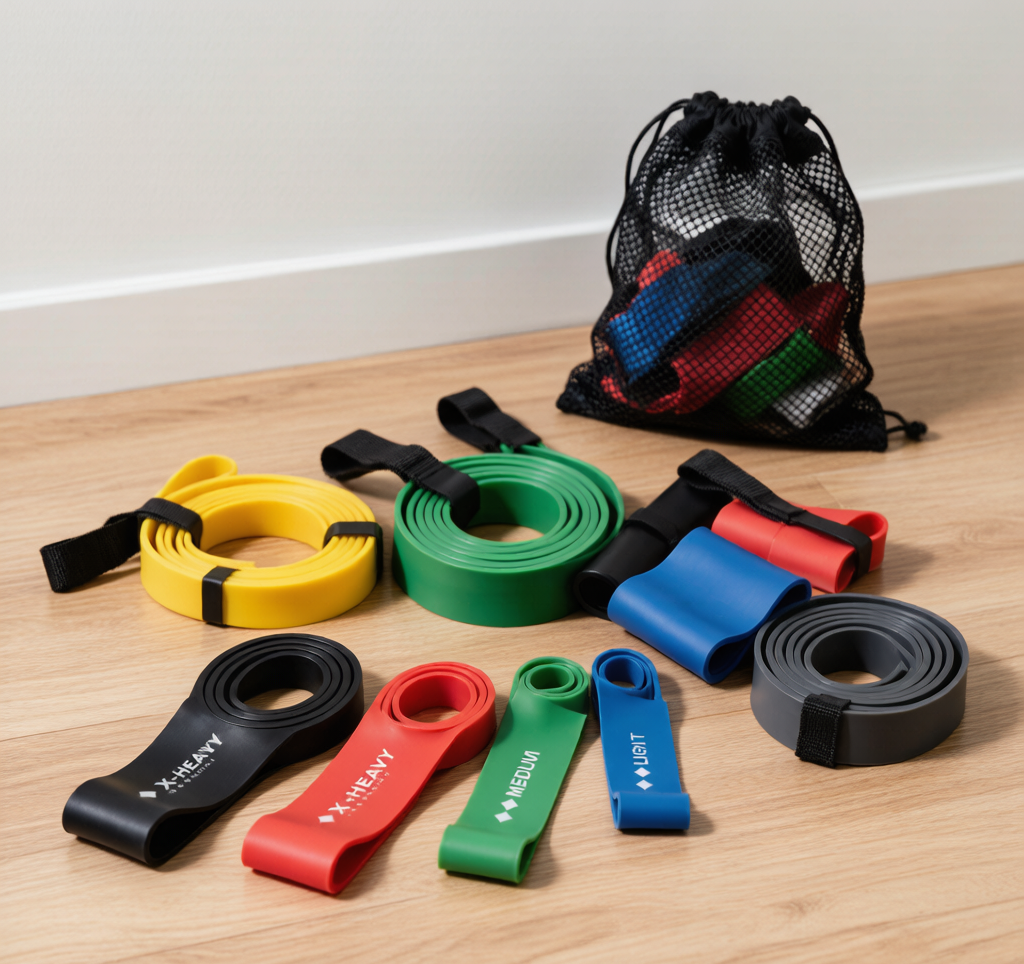
After months of pulling, stretching, and snapping our way through dozens of bands, here are the five sets that earned a spot in our home gym. Each was tested for durability, resistance feel, and real-world usefulness—not just for a single workout, but over weeks of regular use.
WODFitters Power Resistance Bands: Best for Heavy Lifting
These 41-inch loops are thick and grippy, with a smooth resistance curve that mimics a barbell through the full range of motion. I used the heaviest band (around 100 lbs of tension at the top) for deficit deadlifts and felt my glutes and hamstrings working just as hard as with iron. One honest downside: after eight months of heavy use three times a week, one band snapped during a warm-up. WODFitters offers a replacement policy, but it’s not instant. For the price (around $30 for a set of four), the value is still solid—just buy a backup if you train heavy.
TheraBand CLX: Best for Rehab and Light Recovery
TheraBand’s CLX is a continuous loop design—basically one long band that you can anchor at different heights. It’s perfect for shoulder prehab, glute activation, and low-impact mobility work. I used it for banded face pulls and clamshells after a shoulder tweak, and the tension was consistent without any pinching. The catch: it costs $60, which is steep for a single band. If you’re only doing rehab or light recovery, it’s worth it. If you want to also train legs or back, you’ll need something heavier.
Bodylastics Stackable Tube Bands: Best Value Set
This set comes with six tube bands ranging from 2 to 50 lbs, plus metal carabiners, a door anchor, and ankle straps. The stackable design lets you combine bands for up to 100 lbs of resistance. I used them for banded rows and bicep curls at home, and the carabiners held up fine—no rust or bending after three months. The handles feel cheap (thin foam that compresses easily), but they work. For $40, this is the most versatile set for a beginner who wants to try everything from curls to squats.
Serious Steel Heavy Bands: Best for Pull-Up Assistance
These 2-inch wide latex loops are built for serious weight. The heaviest band supports up to 200 lbs of assistance, making them ideal for weighted pull-ups or banded dips. I looped one around my pull-up bar and used it for assisted reps—the tension was strong and even, no sudden slack. The downside: the latex smell is strong. It took about a week of airing out in the garage before it faded. If you’re sensitive to smells, keep them outside for a few days. At $25 for a set of three, they’re a steal for anyone working on pull-ups.
Tribe Resistance Bands Set: Best for Beginners
Tribe’s set includes five bands (from extra light to heavy), a carrying bag, and a workout guide. It’s a no-brainer for someone just starting out. The bands are flat loops, not tubes, so they’re better for lower-body moves like glute bridges and lateral walks. I handed these to a friend who had never used bands before, and she had no trouble following the guide. The problem: after four months of twice-weekly use, the lightest band started fraying at the edges. Not a safety issue yet, but it won’t last forever. For $20, it’s a great entry point—just expect to upgrade after half a year.
All prices and availability are from Amazon as of early 2026. Click through to check current prices and see what’s in stock. Tried any of these sets yourself? Drop a comment below and share your experience.
How to Choose the Right Resistance Band Set for Your Goals
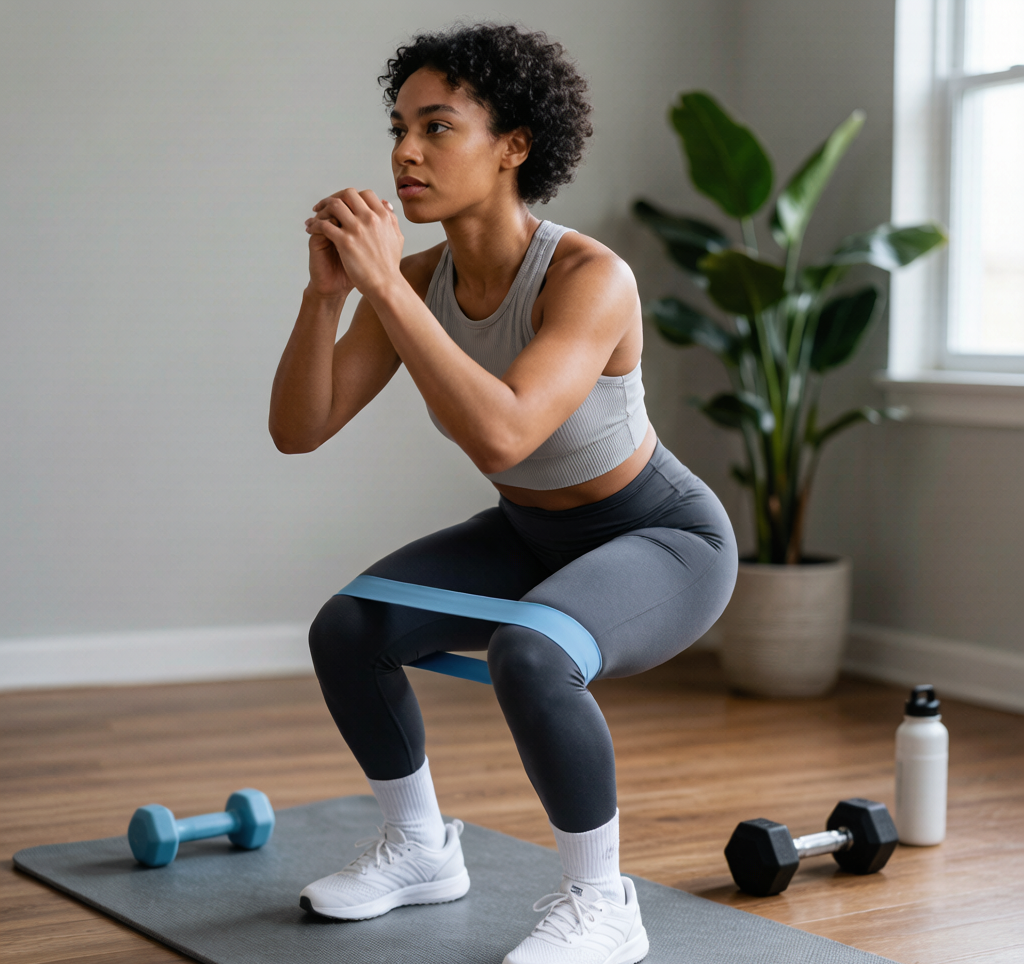
Picking the right resistance band set can feel overwhelming with so many options. I’ve tested dozens over the years, and the choice really comes down to your training level and the space you have. Here’s how to narrow it down.
For Heavy Strength Training
If your goal is to build serious muscle at home, skip the flimsy starter sets. For lower body work—squats, deadlifts, hip thrusts—loop bands (also called mini bands or booty bands) are your best bet. Look for a set where the combined resistance hits at least 100 lbs. That might sound like a lot, but when you’re loading up a barbell or doing single-leg work, you’ll be glad for the tension.
For upper body heavy work, tube bands with handles are usually a better fit. They let you do presses, rows, and pull-downs with a full range of motion. I keep a heavy tube band (around 50-70 lbs) for chest presses and lat pull-downs at home.
Also, pay attention to band width. Anything under 1.5 inches will dig into your skin and roll up during exercises. I’ve had cheap bands snap mid-rep — not fun. Go with bands that are at least 1.5 inches wide, preferably with a fabric cover. They stay put and feel more solid.
Safety check: Before each use, inspect your bands for small tears, fraying, or stretched-out spots. If you see any damage, replace the band immediately. A snapped band can whip back and hurt you.
For General Fitness and Toning
If you just want to stay active, tone up, or add resistance to bodyweight moves, a tube band set is your best bet. These come with handles and a door anchor, so you can do bicep curls, chest presses, and rows without needing a gym. A set with 3 to 5 bands (light, medium, heavy) gives you enough variety for most workouts.
I keep a tube band set in my living room closet. It takes up zero space, and I can pull it out for a quick 15-minute session. The door anchor is key — make sure the set includes one, or buy it separately.
Check the Band Length
This is a detail most people overlook, but it matters. Short bands (12 to 20 inches) are designed for small movements like glute bridges or lateral walks. They won’t stretch enough for overhead presses or pull-downs. Long bands (41 inches or more) let you do full-body exercises like banded push-ups, rows, and even assisted pull-ups.
If you’re buying a set, look for a mix of lengths. That way, you’re covered for both isolation moves and compound lifts.
Latex vs. Fabric vs. TPE
Most bands are made of latex, which offers the best elasticity and durability. But latex allergies are real — about 1 in 50 people react to it. If your skin gets itchy or red after using latex bands, switch to fabric-covered or TPE (thermoplastic elastomer) bands. Fabric bands are gentler on the skin and less likely to roll, but they don’t stretch as much. TPE is a good middle ground: no latex, decent stretch, and usually cheaper.
I personally use fabric-covered loop bands for lower body work and latex tube bands for upper body. The fabric ones stay put on my thighs, and the latex tubes give me the range I need for presses.
Storage and Longevity
Bands are simple, but they die fast if you treat them poorly. Keep them away from direct sunlight — UV rays break down the rubber. Also, avoid storing them near sharp objects like keys or scissors. I used to toss mine in a gym bag, and they’d get nicked by a buckle. Now I keep them in a cool, dark drawer, and they last years.
If you’re short on space, a small cloth pouch or a plastic bin works fine. Just don’t leave them in a hot car — that’s a recipe for snapped bands.
Once you’ve picked your set, check current prices on Amazon — they fluctuate a lot. And if you’ve tried a brand you love (or hate), drop a comment below. Your experience helps other readers skip the trial and error.
Medical & Editorial Review: This article was reviewed by Liam Smith, founder of Apexfito, for accuracy and safety. Content is for educational purposes and is not a substitute for professional medical advice. Consult your physician before starting any exercise or nutrition program.