Micro-Workouts: Do 5-Minute Sessions Spread Through the Day Actually Work?
Full disclosure: Some links in this article are affiliate links. We may earn a small commission at no extra cost to you if you make a purchase through them. Our recommendations are based on what real users report, not on commission size.

What Counts as a Micro-Workout (and What Recent Reporting Actually Says)
Working definition for this whole plan: a micro-workout is one continuous five-minute block of deliberate bodyweight work, done as five rounds of 40 seconds on and 20 seconds off. Pick one movement or alternate between two, and keep moving for the full five minutes. No equipment. No floor space beyond an arm’s reach. No changing clothes if you don’t want to.
That last part matters more than it sounds. Five minutes is short enough to do in work clothes in an empty conference room, and that’s exactly why it survives a busy calendar when a 45-minute gym trip does not.
What it is not: a stretching break. A hamstring stretch at your desk is a movement snack, and movement snacks are worth doing, but they don’t build the same thing. A movement snack breaks up sitting. A micro-workout spikes your heart rate, loads your muscles, and leaves you breathing hard for a minute or two afterward. Different input, different output. I count both. I just don’t pretend they’re the same.
It’s also not a full HIIT session. Structured interval training usually runs 20 to 30 minutes of work with planned work-to-rest ratios and a warm-up built in. Five minutes of bodyweight squats is a micro-workout. It is not a stand-in for a 25-minute interval session.
What the reporting actually says
On September 17, 2026, the South China Morning Post ran a piece headlined ‘No time for the gym? Micro-workouts may be the answer for busy professionals.’ The framing was blunt: for people whose calendars won’t hold a 45-minute block, short daily sessions are the realistic option. Not the ideal option. The realistic one. That’s the angle this plan is built around.
Search data lines up with the chatter. Google Trends for the US over the past 12 months shows ‘micro workout’ averaging 25.1 over the most recent 30 days, against 18.9 for the full year. The line points up rather than sideways.
Now the part I won’t blur. Rising search interest is not evidence that five minutes builds a strong body. It’s evidence that a lot of people are looking for something that fits. Two different claims.
What five minutes can do for a beginner
- Accumulate weekly volume. Three five-minute blocks a day, five days a week, lands at 75 minutes of deliberate movement. That beats what most beginners actually get out of a gym membership they use twice a month.
- Interrupt long sitting stretches. If you’re at a desk from 9 to 5, three short breaks spread across the day chop up your longest unbroken blocks of stillness.
- Build the habit loop. Probably the biggest win of the three. Five minutes is easy enough that you rarely skip it, and a habit you keep beats a plan you quit in three weeks.
What it can’t do
It won’t build a heavy squat. Load drives strength, and bodyweight squats inside a five-minute window never get you under a loaded barbell. It won’t replace sleep, and it won’t out-train a bad diet. If you can find 30 minutes once a week, keep that longer session. Micro-workouts supplement it rather than replace it.
General fitness is the target here: feeling better, moving more, carrying groceries and climbing stairs without thinking about it. Chasing a 300-pound deadlift or a marathon makes this format filler between real training days, not the program itself.
One practical note before you start. I ran this at home with zero equipment and a free interval timer app, and the timer ended up mattering more than I expected. Counting 40 seconds in your head drifts, and drifting turns a workout back into a stretch break. Set a timer. Any free one works.
If you’d rather add a mat or a dedicated timer of your own, check current prices on Amazon before you buy. And if you try the five-minute format this week, drop a comment with how many blocks you actually finished.
The 5-Minute Session Blueprint: Four Moves, No Equipment
Stop hunting for the perfect follow-along video. You need four jobs done in five minutes. I run this on my living room floor with a phone timer, a couch, and about four feet of open space, and it fits in the gap between two meetings.
The South China Morning Post covered micro-workouts for busy professionals in September 2026, and Google Trends shows searches for “micro workout” climbing over the past month in the US. That matches what I hear from readers: people want a formula they can repeat tomorrow, not another 40-minute commitment they’ll skip by Thursday.
Every session covers the same four jobs:
- One push. Incline push-up against a counter or sturdy table. Hands shoulder-width, body in a straight line, chest to the edge, press back.
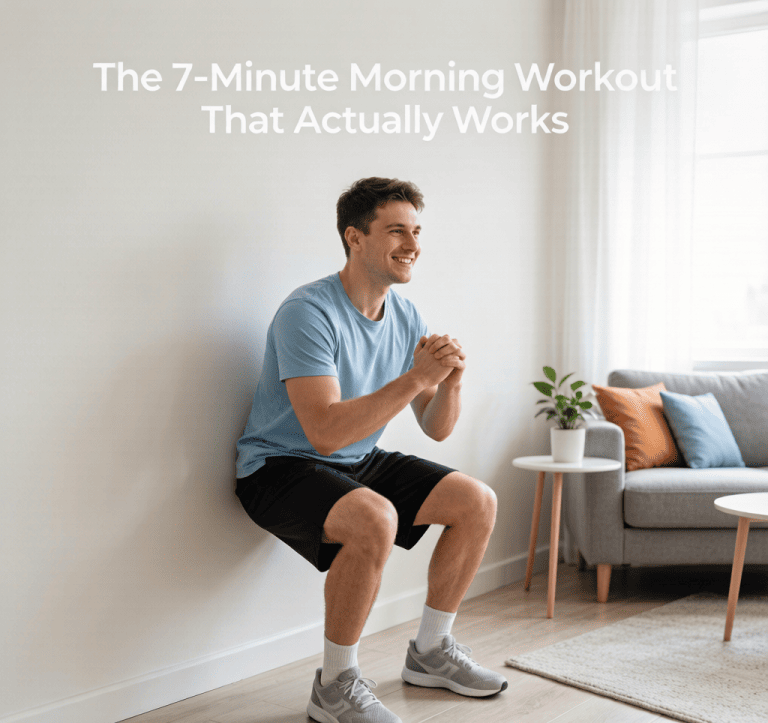
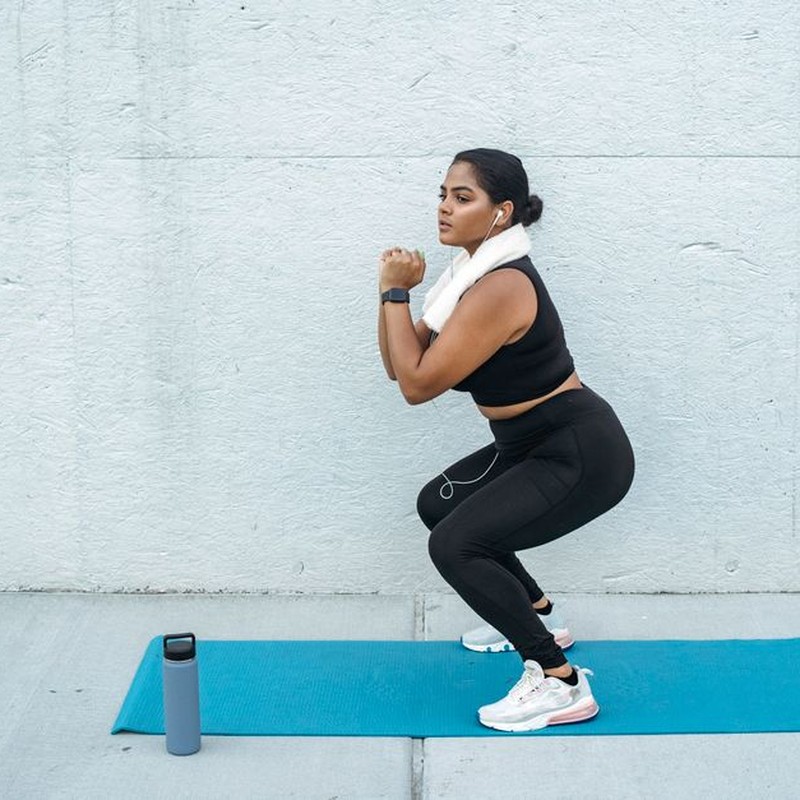
- One squat or hinge. Chair squat (sit down, stand up without using your hands) or hip hinge to a couch (push hips back, touch the cushion, drive up).
- One core. Dead bug (on your back, opposite arm and leg extend low and slow) or a plank from your knees.
- One cardio burst. March in place, quick step-ups on a bottom stair, or fast feet.
Push, legs, core, heart rate. Swap variations later if you want. The four jobs stay put, and that’s what keeps you from standing around deciding what to do next.
Two timing formats that work for beginners
Format A: 40 seconds work, 20 seconds rest. Five rounds, one move per round. Round one is the push, round two the squat, round three the hinge, round four the core, and round five is a repeat of whatever felt hardest. Sixty seconds per round, five minutes flat.
Format B: 30 seconds work, 30 seconds rest. Cycle all four moves twice, then finish with one core hold. Same five minutes, gentler on the lungs. I use Format A on days when my legs feel fresh and Format B on days when I’m dragging and just need to move something.
Keep transitions under 10 seconds. The five minutes is the entire session, so a trip to the kitchen or a quick text check eats a third of it. Set the timer, put the phone face down, and leave it there until the last beep. Watching the clock turns five minutes into a negotiation you will lose.
Three interchangeable templates to rotate
Don’t run the same session every day. Rotate these three across your week and let each one hit you a little differently:
- Strength Stack: incline push-up, chair squat, couch hinge, plank from knees.
- Cardio Spike: fast feet, step-ups on a bottom stair, jumping jacks if your knees agree, marching. If jumping jacks bother your knees, swap in high knees or a fast march.
- Mobility Reset: hip flexor stretch, thoracic twist, hamstring reach, ankle rocks, slow bodyweight squat. Hold each for 40 seconds, rest 20.
A week that works: Monday Strength Stack, Tuesday Cardio Spike, Wednesday Mobility Reset, Thursday Strength Stack, Friday Cardio Spike, Saturday Mobility Reset, Sunday off or a walk. Six short sessions, zero equipment, nothing to schedule around a gym.
Skip the warm-up and the cooldown on a session this short. Start round one at about 70 percent effort and let rounds two and three carry the load. By round four you’ll be breathing harder than you expected, and round five is where the real work lives.
How to progress without adding time
Once a template feels easy for a full week, change one variable and only one. Elevate your feet for the push-up. Lower the squat over a three-second count. Extend the plank hold by 10 seconds. Cut the rest to 15 seconds on the cardio day. You never add minutes. Five minutes stays five minutes, which is exactly why this survives a packed calendar.
Pick one template, set your timer, and run it before you talk yourself out of it. If you want a cheap interval timer or a mat for the floor work, check current prices on Amazon. Then come back and tell me in the comments which template you actually stuck with after a week.
Weekly Structure: Three Sessions a Day, Four to Five Days a Week
A project manager I know trains for half marathons in the gaps between calls, and her week is not organized around workouts at all. It is organized around three triggers: the coffee maker, the lunch break, and the shower. That is the entire system. When the South China Morning Post asked in September 2026 whether micro-workouts are the answer for busy professionals, the framing matched what I keep seeing in real schedules. Nobody needs a better training philosophy. They need a structure that survives a Tuesday full of meetings.
So anchor each session to something you already do. A trigger you cannot forget beats a reminder you will swipe away. After you pour your first coffee. Right before lunch. Before you shower at night. Three anchors, three sessions, zero alarms.
The standard week
- Monday and Thursday: Micro-workout A (Strength Stack) at 8 a.m., Micro-workout B (Cardio Spike) at noon, Micro-workout C (Mobility Reset) at 6 p.m.
- Tuesday and Friday: swap the order. Cardio first thing, strength at midday, core and mobility in the evening. Same three sessions, different sequence.
- Wednesday: two movement snacks only, a 5-minute walk plus a 5-minute mobility reset. This is a recovery day, not a rest day. You are keeping the habit warm while your tissues catch up.
- Saturday: one longer session if the week allowed it, 15 to 20 minutes of the same four movement patterns, three rounds each. Sunday: walk, stretch, or nothing. Genuinely nothing is fine.
Why flip the order between Monday/Thursday and Tuesday/Friday? Because running the identical three slots every day turns into a ritual you start negotiating with by week three. Changing the sequence keeps you from treating the noon slot as the important one and the other two as optional.
Space them out
Three to four hours between sessions works best. Stack all three back to back and you have not done three micro-workouts. You have done one mediocre 15-minute workout with worse form at the end. I tried the compressed version for two weeks out of curiosity, and by round three my squats had turned into a slow, wobbly lean. The point of the short format is arriving at each session fresh enough to actually push.
Two sessions beat three on a packed day. A 7:30 a.m. strength stack plus a 12:15 p.m. cardio spike is a complete day for a beginner. Add the mobility reset only if the evening genuinely has room in it.
The minimum viable week
Some weeks the calendar wins. Travel, a sick kid, a launch, whatever it is. Here is your floor: two 5-minute sessions, with at least one before noon. That still counts, it keeps the streak intact, and it means Monday does not feel like starting over. I have run that two-session week during deadline crunches and come back to the full schedule without losing ground. Skipping a week entirely is what ends the experiment.
Get the pre-noon session done even if the second one never happens. Early sessions survive the day most often, and once one is banked, you rarely feel like you blew it.
Track it with paper
Print a month calendar and put an X on every day you hit your target. That is it. I have tried three habit apps and each one turned tracking into a second task I could fail at, complete with notifications I eventually muted. A paper calendar on the fridge does not ping you and has no settings menu. It just sits there being honest.
Set the target at the start of each month: five days at three sessions is the goal, three days is a good month, the two-session floor is a win on a bad week. Mark the wins you actually earned.
Pick the version of this week you can honestly repeat, run it for two weeks, and tell me how it went in the comments. If you want a mat or a foam roller for the mobility reset, prices swing a lot on Amazon, so it is worth checking before you buy.
Progression: Adding Difficulty Without Adding Minutes
Five minutes is the constraint, and that is the entire point. So when a session starts feeling easy, you don’t lengthen it. You make the same five minutes harder.
I ran this at home for a month: two five-minute push-up and squat sessions a day, one before coffee and one before dinner. By day 12 I could finish the whole thing without breathing hard. The fix wasn’t a sixth minute. It was counting to three on the way down.
Four dials you can turn without touching the clock
- Slow the lowering phase. Take three seconds to descend on push-ups, chair squats, and split squats instead of dropping fast. Most beginners can’t control a three-second descent at first, which is exactly why it works.
- Cut rest from 20 seconds to 15. Same reps, tighter rest. Your heart rate stays up and you’ll feel it by round three.
- Elevate your feet. Push-ups with your hands on the floor and your feet on a couch cushion shift more load onto your chest and shoulders.
- Go single-leg. A one-leg chair squat or a staggered-stance push-up roughly doubles the load on one side with no equipment at all.
None of these take longer than what you’re already doing. That’s the trick.
The two-week rule
Score effort on a simple 1-to-10 scale. If every session for 14 straight days lands around a 4 out of 10, change exactly one variable. Not two.
I know the urge to change three things at once. Resist it. Slow the descent, shorten the rest, and elevate your feet in the same week and the sessions get brutal, but you have no idea which change caused it or whether the other two were even needed. One variable, two weeks, then reassess. It’s slow, and it’s how you learn what your body actually responds to.
The other half matters just as much. If a session feels like an 8 or 9 out of 10, you’ve jumped too far. Back off one dial and let it settle for a week before pushing again.
Cheap gear extends the runway
Bodyweight work has a ceiling for most people, and it shows up faster than you’d expect, often somewhere between weeks six and ten. Two inexpensive pieces push that ceiling back by months.
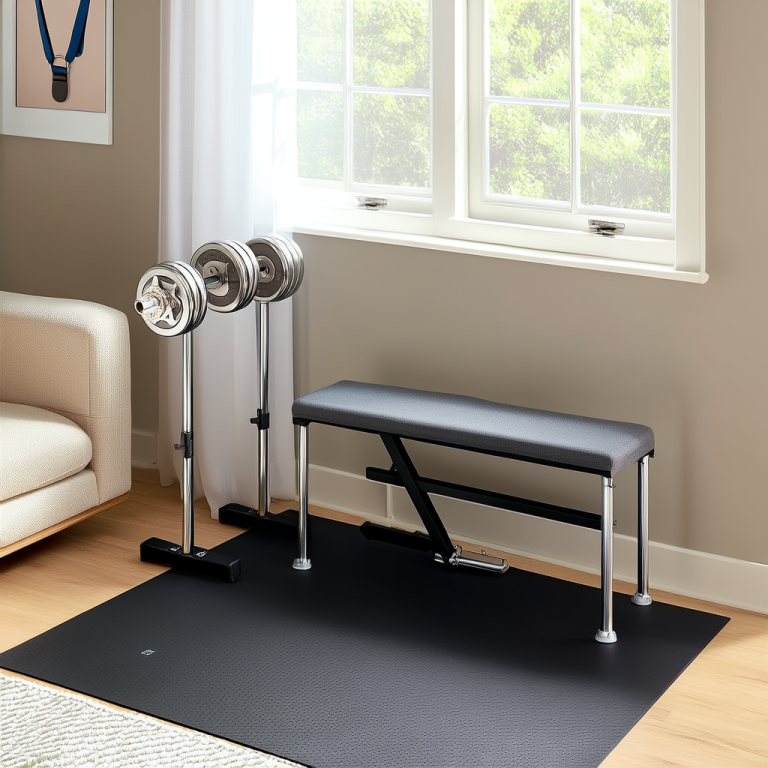
- A light resistance band covers band rows, band pull-aparts, and assisted push-ups. One band will carry a beginner for a long stretch.
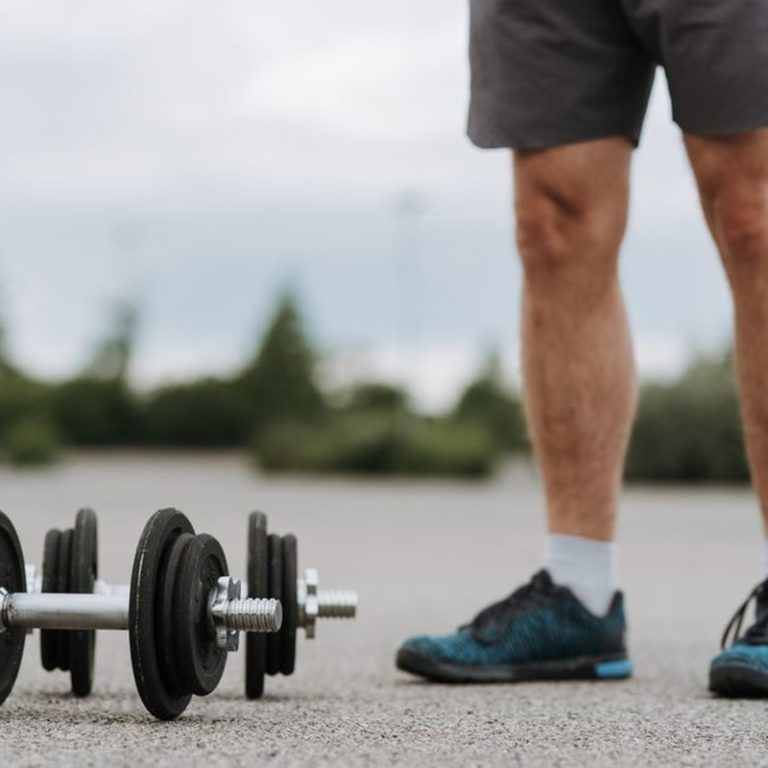
- A pair of 3- to 5-pound dumbbells covers overhead presses, rows, and lateral raises.
Band and dumbbell pricing swings a lot month to month, so check current prices on Amazon before buying anything. You don’t need a set or a rack. One band and one pair of light weights is plenty for a year of five-minute sessions.
When to add a longer session
At some point micro-workouts alone stop covering everything. When that happens, fold in two 20- to 30-minute sessions a week and keep the daily five-minute ones running.
Two real sessions plus daily micro-workouts covers noticeably more ground than micro-workouts by themselves. You get enough volume for genuine strength gains, and you keep the daily consistency that carries you through the weeks when life gets loud.
Strength versus cardio: run the 2-to-1 ratio
General fitness needs both, and there’s a predictable failure mode here. Cardio spikes feel like the hardest work, so beginners drift toward them. By week six the schedule is all burpees and mountain climbers and zero strength work. That’s a bad trade. Speed and sweat aren’t the same thing as getting stronger.
Run two strength-flavored micro sessions for every one cardio-spike session. On a two-a-day schedule, a week lands near nine strength sessions and four or five cardio spikes. Strength here means push-ups, squats, rows, split squats, anything where you resist a load for a handful of controlled reps. Hold the ratio and you build the muscle that makes every other kind of movement easier.
Cardio for heart health doesn’t have to fit inside the five minutes, either. A brisk 10-minute walk counts, and it’s far easier to repeat on a stressful Tuesday than a session that requires changing clothes and finding a mat. That flexibility matters more than intensity for most busy professionals, and the South China Morning Post made a similar case in a September 2026 piece on micro-workouts for people who can’t fit in a gym visit. The walk isn’t a consolation prize. It belongs in the plan.
One last thing about progression in this format: it’s supposed to feel slow. You’re not chasing dramatic jumps. You’re turning one small dial every couple of weeks, then looking back in three months to find the push-ups got easier, the chair squats got deeper, and the whole thing still takes five minutes. Before you pick up a band or a set of light dumbbells, check current prices on Amazon, since they move around a lot, and if you’ve already tried one of these progressions, tell us how it went in the comments.
Recovery, Soreness, and Keeping the Habit Through a Busy Month
Your first week will probably leave you a little sore, mostly in your quads and shoulders. That’s what bodyweight squats, lunges, and push-ups do. Expect it the day after, and expect it to fade within 48 to 72 hours.
If it’s mild, keep going. If you’re wincing on the stairs, drop to two sessions a day until it passes. Do not quit for the week. The pattern I see most often is one sore day turning into seven off days, and that’s how the whole routine quietly dies.
Five minutes of bodyweight work doesn’t create much recovery debt. It won’t drain your glycogen or break down muscle the way a heavy lifting session does, so you don’t need to eat more or sleep longer to compensate. Sleep and protein still do the heavy lifting for how you feel day to day. If you’re sleeping seven to eight hours and getting protein at meals, you’re covered. A protein shake after a five-minute circuit is overkill — save it for the days you actually push hard.
The habit usually dies from decision fatigue, not from lack of motivation. You wake up motivated. By noon you’re hungry, behind on email, and negotiating with yourself: now, or after this meeting, or maybe later. That negotiation is where routines fall apart.
So stop deciding in the moment. Pick your three slots on Sunday night and write them on your calendar like meetings. Mine are 7:15 a.m., 12:30 p.m., and 6:00 p.m. When the time hits, you do the five minutes. No debate, no re-scheduling.
Watch for the all-or-nothing slide. Three rules keep it from snowballing:
- Missing the noon session doesn’t cancel the 6 p.m. one.
- A missed day doesn’t reset the week. Pick up with the next scheduled session.
- Two sessions in a day is still a win. Two beats zero, and it beats restarting next Monday.
I’ve had weeks where I hit two sessions most days and skipped Thursday entirely, and it still counted. Keep the chain going instead of restarting it.
If you do add a band or a set of light dumbbells, check current prices on Amazon so you’re not paying peak pricing. Prices bounce around, and waiting a week for a dip often saves you a few dollars. Start with the lightest option that still challenges the last 10 seconds of a round. Ten pounds feels easy on rep one and a lot less easy by the fourth round. You can always go heavier later.
The South China Morning Post ran a piece on September 17, 2026 calling micro-workouts a possible answer for busy professionals, and Google Trends shows searches for “micro workout” up over the past month in the US. Plenty of people are trying to fit training into a schedule that has no room for it.
Now tell us how your week went. Which anchor times held up, which one slipped, and did the third session of the day ever actually happen? Post it in the comments — the specifics help everyone else figure out what survives a real week. And if you’re ready to add gear, check Amazon for current prices before you buy.