Creatine Without Lifting? What the 2026 ‘Strength Without Exercise’ Studies Actually Mean
Full disclosure: Some links in this article are affiliate links. We may earn a small commission at no extra cost to you if you make a purchase through them. Our recommendations are based on what real users report, not on commission size.

What the 2026 Headlines Actually Said
Three fitness headlines landed in my feed inside two weeks last September, and all three said some version of the same thing: creatine builds strength without exercise.
- GQ, Sept. 14: “Creatine Can Make Aging Adults Stronger—Even Without Exercise”
- Men’s Journal, Sept. 15: “Popular Muscle Supplement Made Adults Over 45 Stronger Without Exercise, Study Finds”
- ScienceAlert, Sept. 26: “Popular Supplement Increases Strength Even Without Exercise, Study Shows”
Read those side by side and the pattern is hard to miss. Every one leans on the same four words. That’s the phrase people screenshotted, forwarded to group chats, and dropped into lifting forums next to a photo of a creatine tub.
Notice what two of them also included, though: the population. GQ said aging adults. Men’s Journal said adults over 45. ScienceAlert left that detail out of the headline, which is probably why it’s the version I saw shared most.
Not one of the three described college athletes, or guys in their 20s chasing a bigger bench. The coverage centered on older adults, many of whom weren’t doing structured resistance training at all. That’s a very different group from a 28-year-old who already trains three days a week.
Then there’s the word “strength.” In research on that population it usually means a functional measure—grip strength, a chair-stand test, timed walking—not a one-rep max. A strength gain in a 68-year-old who doesn’t train is worth measuring and worth reporting. It’s also a different animal from adding 20 pounds to your squat.
Here’s the part I keep coming back to. A single statistically significant result from a small group, measured over a short stretch, on one outcome, is still small, short, and narrow. The finding isn’t fake. The headline just borrowed more meaning from it than the data can carry.
So when you see “without exercise,” read it as “in addition to whatever movement these people were already doing.” For most readers, it does not mean “instead of exercise.” If you’re 30 and you lift, creatine still works alongside your program, not in place of it. If you’re 65 and you don’t train, the story gets more interesting, but nothing in that reporting suggests skipping movement is a good idea.
Before you buy a tub off a headline, do what I do now. Pull up the actual study and answer three questions:
- Who was in it? Age range, health status, and whether they already exercised.
- What did they measure? A lab strength test is not the same as a deadlift PR.
- How long did it run? A few weeks tells you far less than a year.
I ran those three questions against the ScienceAlert write-up and the story shifted in my head from “creatine replaces lifting” to “creatine may help older adults who aren’t lifting much.” Same study. Very different takeaway.
That’s a real result, and a narrow one. The rest of this article pulls apart what the trials actually measured, who was in them, and how to use creatine sensibly if lifting isn’t part of your week.
Why Creatine Might Help Without Lifting – and Where the Effect Stops
Start with the biology, because it explains the headline and the gap between the headline and the study.
Your muscles hold a small pool of ATP, enough for roughly two seconds of all-out work. When that runs dry, phosphocreatine recycles it. Supplementing with creatine raises how much phosphocreatine sits inside your muscle, which lets you refill ATP faster during repeated short, hard efforts. A heavy set of five. A 30-second hill sprint. Standing up out of a deep chair without pushing off the armrests.
That last one is why the September 2026 coverage landed the way it did. ScienceAlert, GQ, and Men’s Journal all ran stories within about two weeks of each other describing the same finding: adults over 45 got stronger on creatine without a structured exercise program. Look at what the studies measured, though. Grip strength. Leg press strength. A chair-stand test. Those are 5-to-15 second efforts, exactly the window phosphocreatine fuels. The result is real. It just isn’t the result the headlines implied.
Here’s what the write-ups left out: who was in the room. Not college athletes or people with ten years of barbell time. Middle-aged and older adults, many untrained, plenty starting from a genuinely low baseline. When you start low, almost anything moves the needle, and a percentage change sounds dramatic. A real jump in grip strength for someone who struggles to open a jar matters for that person’s life. It says nothing about whether a guy benching 225 can add 20 pounds to his max by swallowing capsules.
I’ve taken 5 grams of creatine monohydrate daily for years. My report is boring. It helps me grind out one or two extra reps on my last set. No visible change, no shortcut past the work.
Creatine does not build muscle on its own
This is where the story got mangled worst. Hypertrophy needs mechanical tension: muscle fibers loaded and stretched against resistance, repeated over weeks and months. Creatine amplifies that signal by letting you perform more quality reps before failure. Remove the resistance training and you remove the signal. No tension, no growth.
The one thing that does change fast is water. Creatine pulls fluid into muscle cells, so the scale can creep up a pound or two in the first couple of weeks. That’s intracellular water, not new tissue. Weigh yourself in the morning, take a waist measurement, and keep photos if you want something honest to compare.
Three things the internet keeps mashing together:
- Strength test scores can improve with creatine alone, especially in older or untrained adults.
- Visible muscle size won’t change meaningfully without resistance training. That part isn’t negotiable.
- Fat loss is not a creatine effect. Any body-composition change in these studies came from something else.
Nor is creatine a general athletic switch. It helps repeated explosive efforts. It won’t shave time off your marathon, won’t hold a six-minute-mile pace for you, and won’t do much for a long soccer match beyond the sprinting bouts. Aerobic sports see the least from it.
How to use it if you don’t lift
A lot of readers landed here after seeing a headline and wondering whether the gym is optional. It isn’t. But you can start smaller than you think.
- Dose: 3 to 5 grams of creatine monohydrate daily. Any time of day. Consistency beats timing by a wide margin.
- Form: monohydrate. Cheapest, most heavily researched. HCl, buffered blends, and gummies cost more and don’t buy you anything measurable.
- Loading: optional. A higher dose in week one saturates your muscles faster. Skip it and you get there in three or four weeks instead of one.
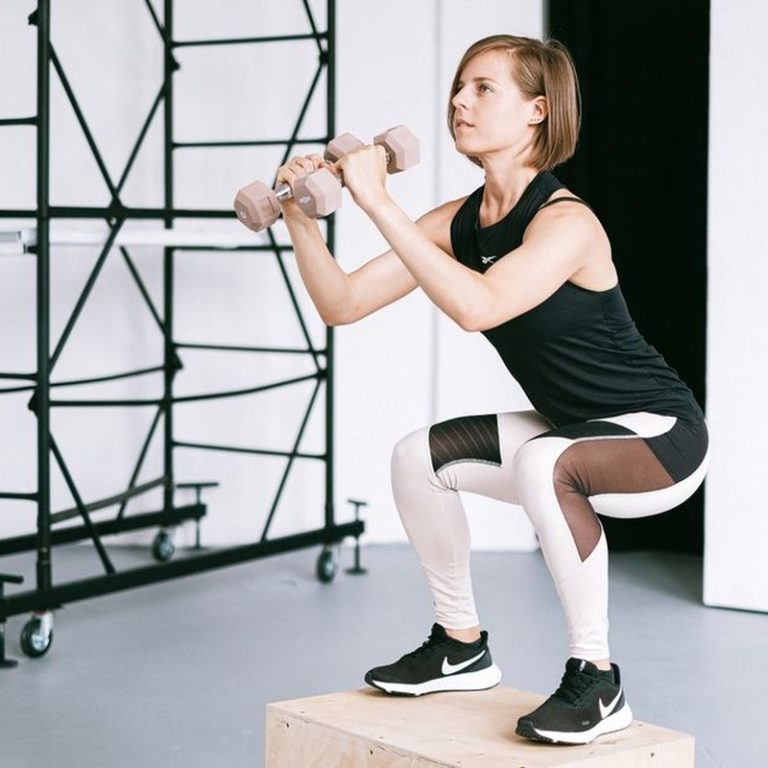
- Pair it with something: if you’re over 45 and not training, add two 20-minute full-body sessions a week. Squats to a chair, push-ups against a counter, a band row, a hinge with a kettlebell. That’s where the creatine earns its keep.
- Track one number: a 5-rep leg press, a 30-second chair-stand count, or a grip dynamometer reading. Retest every four to six weeks.
- Health check: if you have kidney disease or take medications that affect kidney function, clear it with your doctor first.
Where does the effect stop? At the edge of anything long, anything fat-burning, and anything that requires real muscle damage and repair. Creatine gives your body a bigger battery for short bursts. It doesn’t install a bigger engine, and it doesn’t do the lifting for you.
If you’ve tried creatine and noticed nothing, you’re not broken. You probably weren’t doing short, hard efforts often enough for it to register. Check current prices on Amazon before you buy, and share your own experience in the comments, especially if you fall into the over-45 group these studies looked at.
How to Read a Creatine Study Without Getting Fooled
Three headlines about the same research dropped in September 2026. ScienceAlert ran ‘Popular Supplement Increases Strength Even Without Exercise.’ GQ framed it as creatine making aging adults stronger without exercise. Men’s Journal put the number 45 right in the headline.
None of them were lying. Headlines compress a narrow finding into something that sounds like it applies to you, and that gap is where people waste money.
Here is the checklist I run before I get excited about a supplement study. It takes about two minutes. I keep it in a note on my phone because I have talked myself into buying plenty of useless powder over the years.
1. Check who was actually in the study
Read the participants line first. Adults over 45, older adults, and untrained beginners are not interchangeable with college athletes or someone who has trained for a decade. The 2026 coverage leaned on older and untrained groups, and that detail does a lot of work. Those groups have the most room to improve, so a small nudge produces an impressive-looking jump.
If you are 24 and have lifted since high school, a result from a group of 60-year-olds tells you almost nothing about your next squat session. That is not a knock on the research. It is how generalization works.
2. Ask what the word ‘strength’ meant in that study
This is where most readers get tripped up. In a lab, strength usually means one specific measured test: grip strength on a dynamometer, the time it takes to stand up from a chair five times, a leg press one-rep max, or an isometric pull against a fixed sensor.
Those are real measurements. They are also narrow. A faster chair-stand time does not mean you will notice a difference hauling groceries up the stairs, and it says nothing about how you look in the mirror. Find the sentence in the abstract that names the test, then ask whether that test measures something you actually care about.
3. Verify the ‘no exercise’ claim, and check how long the trial ran
‘Without exercise’ almost never means what readers assume. Participants in these trials still walk, climb stairs, do chores, and carry things. Researchers mean they followed no structured training program. Daily-life movement is still a stimulus, and it varies a lot from person to person.
Duration matters just as much. A trial that runs eight weeks can catch early changes that fade, or that reflect fluid shifts and simply getting better at the test. Building measurable muscle takes longer than most of these studies run. Treat a short trial as a snapshot, not a permanent outcome.
4. Look at the dose and the product
Two studies can use the same molecule and land in different places because one group loaded and the other did not. Loading usually means about 20 grams a day split into smaller doses for roughly a week, then settling into a maintenance dose of about 3 to 5 grams daily. That maintenance number is the one that matters long term for most people.
Form is the other half of this:
- Creatine monohydrate has the deepest body of research behind it, and it is the cheapest option on the shelf.
- Fancier forms like HCL, buffered, and nitrate get marketed hard and studied far less. That does not make them fake, but it does make them a bet on marketing rather than evidence.
- Third-party testing is the detail I care about most. Look for NSF Certified for Sport, Informed Sport, or a brand that publishes a certificate of analysis. A no-name tub from a marketplace listing with no testing claim is a gamble on whatever else is in there.
One practical note for beginners: creatine is cheap and well studied, but it does not replace a training stimulus. If you are not lifting yet and you want to get stronger, the better spend is creatine plus two short full-body sessions a week. Push-ups, rows, and squats for 30 minutes twice weekly will move your strength more than any powder taken from the couch.
One habit worth building: find the actual paper before you act on a headline. Search the journal name plus creatine, or paste the study title into Google Scholar. Read the participants line, the outcome measure, and who funded it. If you cannot find the paper at all, treat the headline as entertainment and get on with your day.
If you already take creatine or you are thinking about starting, check current prices on Amazon before you buy. A 60-serving tub of plain monohydrate from a tested brand usually costs less than the flavored blends, and you can put the difference toward a gym membership. Then tell me in the comments what you have tried and whether you noticed anything.
Practical Takeaways: Should You Take Creatine If You Don’t Lift?
I’ve cycled creatine monohydrate on and off since my college lifting days, and I’ve watched the supplement aisle turn into a circus of gummies, blends, and “advanced” formulas that cost three times as much for no extra benefit. The 2026 coverage — ScienceAlert in late September, plus GQ and Men’s Journal earlier that month — made it sound like a scoop of powder could stand in for the squat rack. Read the studies and the picture gets smaller. They tested creatine in older adults, some over 45, who weren’t following a structured training program. Strength measures improved modestly. Nobody walked out with a new body.
That result makes sense once you know how the stuff works. Creatine tops up phosphocreatine in your muscles, the fuel system that fires during short, hard efforts. Skip the training stimulus and you’re pouring fuel into an engine nobody is asking to rev. The ceiling drops.
So here’s how I’d sort it out in the aisle.
If you already lift: creatine monohydrate is one of the best-supported supplements for strength and lean mass, with decades of research behind creatine plus resistance training. Treat it as an add-on, not a replacement for showing up. I take 5 grams daily, training day or rest day, and the difference shows up most on the last set of a hard exercise.
If you don’t lift and you’re an older adult watching your strength slide: the new data suggests a small edge. That’s the whole claim. Walking, eating enough protein, and eventually adding some form of resistance work — bands, machines, bodyweight — still carry the long-term function benefits. Creatine is a side dish.
Dosage that actually matters:
- 3-5 grams of creatine monohydrate daily. Plain monohydrate. The fancy versions don’t beat it.
- Consistency beats timing. Take it whenever you’ll remember. Mine sits next to the coffee maker.
- Loading is optional. The classic protocol (20 grams split into four doses for 5-7 days) saturates muscles faster but can cause bloating and stomach upset. At 3-5 grams a day, most people get there in a few weeks anyway.
- Buy third-party tested. NSF Certified for Sport or Informed Choice are the labels I check. A tub that lasts a couple of months typically runs $20-$40 on Amazon.
Talk to a clinician first if you have kidney disease, take prescription medications, are pregnant or breastfeeding, or manage another health condition. Creatine is well tolerated in healthy people, but “healthy” isn’t universal. I’m not a doctor and this isn’t medical advice.
Expectations, kept honest. Track strength, energy, and daily function over 4-8 weeks. A note on your phone works: push-up count, how the stairs feel, whether yard work wipes you out. If you’re not lifting and not eating enough protein, creatine is a nudge, not a makeover. Don’t expect it to change your physique on its own.
Check current prices on Amazon, and if you’ve tried creatine without training, drop your experience in the comments. I want to know whether the older-adult study results match what people actually feel.