Grip Strength and Longevity: Why This Simple Test Matters
Full disclosure: Some links in this article are affiliate links. We may earn a small commission at no extra cost to you if you make a purchase through them. Our recommendations are based on what real users report, not on commission size.
What Grip Strength Actually Tells You About Your Health
Grip strength looks like a hand measurement. It isn’t.
When researchers track it, they’re usually using it as a stand-in for something bigger: how much muscle you carry, how well your nerves and muscles communicate, and how much reserve you have when illness, surgery, or a fall knocks you off course.
That distinction matters. A strong handshake doesn’t mean you’re immune to heart disease, and a weak one doesn’t mean your time is up. Population studies show correlations, not fate.
The correlation is still hard to ignore.
In October 2026, the Lifespan Research Institute published a report titled ‘The Biomarkers That Predict Mortality Risk.’ Grip strength made the list of practical measures researchers track. Practical is the right word. No blood draw, no scan, no lab visit. You can test it in your living room with a device that costs less than a decent pair of running shoes.
What your hand is doing is reporting on your whole body. Grip involves the forearm flexors, sure, but it also reflects how efficiently your nervous system recruits motor units and how much lean muscle you’re carrying overall. Large observational studies have found that people with lower grip strength tend to have higher rates of cardiovascular disease, disability, and all-cause mortality. Those studies show association. They don’t prove that squeezing a rubber ball longer adds years to your life. They do suggest grip is a useful canary.
Why would hand strength track with health? A few reasons, and none of them cancel the others out.
- Muscle is metabolically active tissue. More of it usually means better glucose handling and less frailty.
- Grip depends on nerve function, so a decline can flag something systemic.
- Measuring grip often reflects how active you are. People who move more tend to have stronger hands and healthier hearts.
Compared with blood panels or DEXA scans, grip strength is cheap and repeatable. You can test it weekly or monthly without a doctor’s order. That makes it rare among longevity markers: a number you can collect yourself, trend over time, and actually do something about.
One clarification on equipment. If you own a hand grip trainer, use it to train. For testing, you want a hand dynamometer if you can get one. A dynamometer gives you a number in pounds or kilograms. A squeeze ball doesn’t.
Google Trends data for the US over the past 12 months shows search interest in ‘grip strength’ has stayed flat. The recent 30-day average sat at 8.0 against a 12-month average of 9.7. Interest in ‘longevity’ is low but steady, with a recent 30-day average of 1.0 against 1.7 across the year. This isn’t a viral trend with a thousand influencers pushing a gadget. It’s a quiet marker researchers have studied for decades. That calm is a feature. You’re checking a gauge, not chasing a fad.
Testing at home takes about two minutes.
- Warm up by opening and closing your hands a few times.
- Sit or stand with your elbow bent to roughly 90 degrees, your arm tucked to your side, wrist neutral.
- Squeeze as hard as you can for 3 to 5 seconds. Two attempts per hand.
- Write down your best score from the dominant hand. That’s your baseline.
Skip testing right after a heavy workout, a bad night’s sleep, or when you’re dehydrated. Any of those can drag your number down and make you worry for nothing. Test at the same time of day, under similar conditions, once a month. The trend tells you more than any single reading.
There’s no universal cutoff that applies to everyone. Norms shift with age, sex, height, and body size, so a 30-year-old man and a 70-year-old woman shouldn’t be compared. What you want is your own line on your own chart. A steady slide over several months is worth a conversation with your doctor. One low reading isn’t.
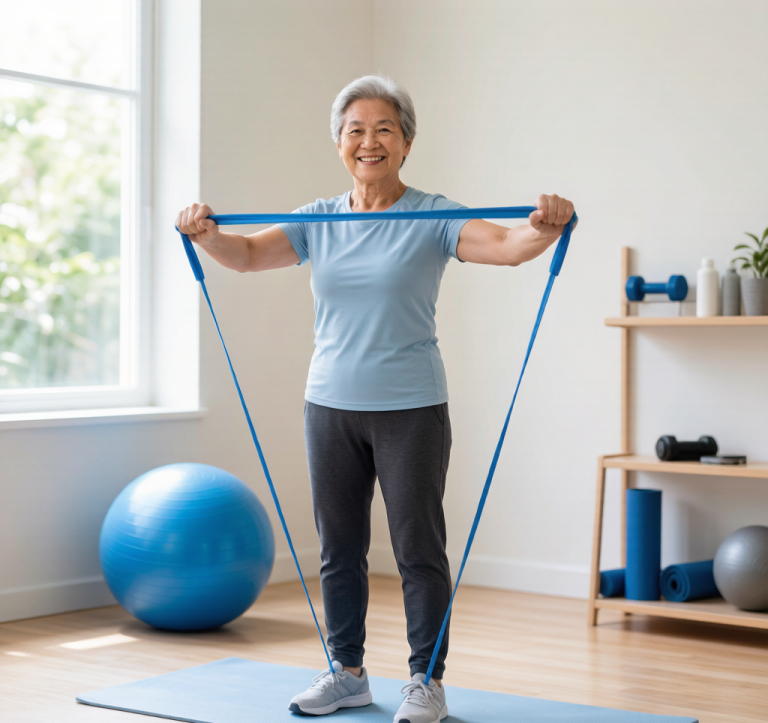
If your grip is lower than you’d like, squeezing harder in isolation is only part of the answer. Whole-body strength training tends to move the needle more. Deadlifts, rows, pull-ups or assisted pull-ups, farmer’s carries, and hauling heavy groceries all load your hands. If the gym isn’t happening right now, a grip trainer, resistance bands, or a couple of full water jugs will do.
A simple weekly structure I’ve used myself: test both hands once a month and log the number. Once or twice a week, tack two or three sets of grip work onto the end of a workout or a walk. Squeeze a grip trainer for 10 to 15 seconds per hand, rest, repeat. Or do farmer’s carries for 30 to 40 seconds with a weight you can hold safely. With gym access, try dead hangs from a pull-up bar, starting at 10 seconds and building from there.
Check current prices on Amazon for a hand grip trainer or dynamometer. These are simple tools, and you don’t need a fancy model. Then share your baseline in the comments. A number you track is a number you can improve.

How to Test Your Grip Strength at Home (Without Guessing)
You do not need a lab or a $200 device to get a useful grip number. A handgrip dynamometer is the best home option. A bathroom scale and a sturdy bar will get you a rough estimate if you would rather not buy anything. Both tests take under five minutes. The part that matters is doing them the same way every time, because an inconsistent test tells you nothing.
Option 1: Handgrip Dynamometer (The Most Reliable Home Test)
A dynamometer is a small device you squeeze. Basic spring models cost about as much as takeout for two. Digital versions with memory run a bit more. Mine lives in a desk drawer, and I test on the first Monday of the month. Thirty seconds, done.
Here is the protocol:
- Stand up straight. No sitting, no slouching.
- Let your arm hang at your side and bend the elbow to about 90 degrees, like you are holding a tray.
- Hold the dynamometer away from your thigh and hip. If it touches your leg, you are cheating the test.
- Squeeze as hard as you can for 3 to 5 seconds. Breathe out. Do not hold your breath.
- Rest one minute, then repeat twice more on the same hand. Record your best of the three.
- Switch hands and do the same thing.
Three attempts per hand, one minute of rest, best score counts. The rest is not optional. I skipped it once and my second squeeze came in about 15% lower than my first. That was fatigue, not a real drop in strength.
Option 2: Bathroom Scale and a Sturdy Bar (Rough Estimate)
No dynamometer? Put a bathroom scale on a hard floor, not carpet, and stand on it with both feet flat. Grab a fixed bar at roughly waist height: a squat rack pin, a bolted-down pull-up bar, a heavy machine. Skip the doorframe and the towel rack.
Grip the bar with one hand and pull upward as hard as you can for 3 to 5 seconds. Feet stay on the scale, arm fairly straight or slightly bent. The reading drops. That drop, in pounds, is roughly your grip force. If you weigh 180 lbs and the scale reads 130 while you pull, that is about 50 lbs of force. Same rules as above: three attempts per hand, one minute of rest, best drop per side.
This method is rough. Bar height, body position, and how much your legs pitch in all move the number. Use it to track your own trend, not to compare yourself with anyone else.
How to Read the Number
For adults, values below 60 lbs (27 kg) for men and 40 lbs (18 kg) for women are often flagged as low in clinical settings. That flag does not mean your future is written. It means your grip sits below a threshold many clinicians associate with higher risk. The Lifespan Research Institute’s October 2026 report, “The Biomarkers That Predict Mortality Risk,” lists grip strength among the markers that matter. Serious claim, practical upside: grip is easy to measure and easy to train.
One number on one day is not a verdict. Direction matters more. Start at 55 lbs and hit 65 three months later, and you are moving the right way. Start at 80 and drift down to 70 over six months, and it is worth asking why. Maybe recovery. Maybe protein. Maybe you quietly dropped your pulling work.
Search interest in grip strength has stayed flat over the past year in the US, according to Google Trends. That is a point in its favor. It is not a viral challenge. It is a steady clinical marker that researchers have been studying for years.
How to Track It Without Overthinking
Pick one day a month. Same time of day, before you eat or train, same hand order, same rest, same device. Write down the date and your best score for each hand. A notes app works fine. I use a four-column spreadsheet and update it in about 10 seconds.
Do not test after a heavy deadlift, a farmer’s carry, or a climbing session. Fatigued hands hand you a number that is not real. Save it for a fresh morning.
If you want a dynamometer, check current prices on Amazon. Spring models and digital ones with memory are both easy to find. If you go the bathroom scale route instead, post your baseline in the comments. I would like to know how close the two methods land for you.
Training Your Grip for Longevity (Not Just Crushing Cans)
You don’t need a gym membership or a drawer full of gadgets. You need a few minutes, some load, and a plan that respects your tendons. The Lifespan Research Institute’s October 2026 report “The Biomarkers That Predict Mortality Risk” put grip strength in the same conversation as other practical longevity markers. That doesn’t mean squeezing a rubber ring adds years to your life. It means your capacity to hold, carry, and hang tracks how well your body handles daily physical demands — and that capacity responds to training.
I added grip work after my forearms started quitting long before my back or legs on deadlift day. A few months of hangs and carries fixed it. My hands also got better at stubborn jars and heavy grocery runs. Here’s how to build the same thing at home.
Three moves that cover most of it
Grip splits into two jobs: crushing (squeezing) and supporting (holding). These cover both. If you do nothing else, do these.
- Dead hangs. Grab a pull-up bar shoulder-width apart and hang with your shoulders active — don’t just sag. Beginners can keep their feet on the floor or a box to unload some weight. Start with 10-second hangs, 3 sets, and add 5 seconds per week until 30-45 seconds feels manageable. A doorframe pull-up bar works if it’s rated for your weight. Never hang from anything that might shift.
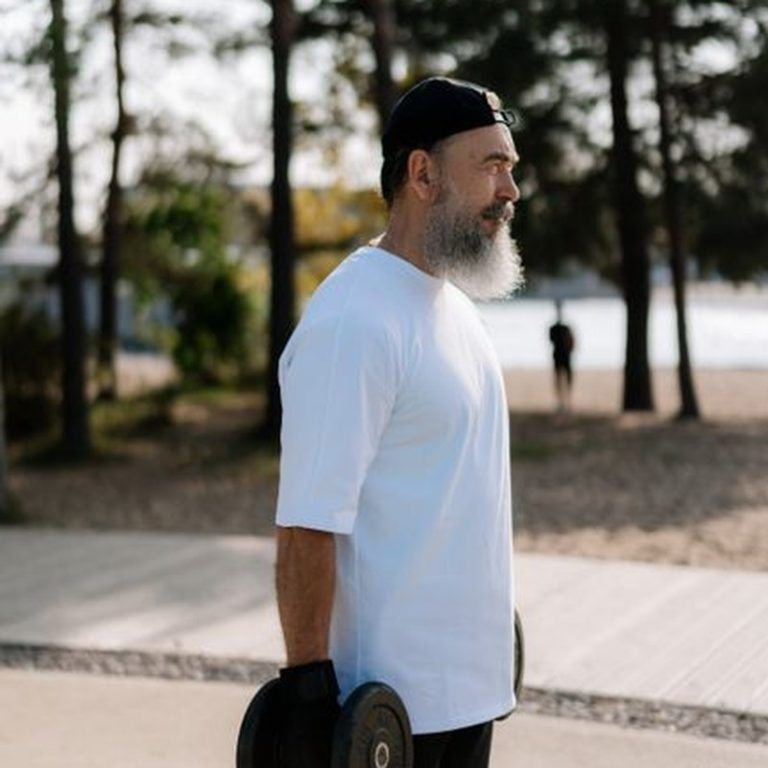
- Farmer’s carries. Pick up a heavy dumbbell, kettlebell, or water jug in each hand. Walk 30-60 seconds with tall posture, ribs down, shoulders back. That’s one round; do 3-4 rounds with 60-90 seconds rest. No weights? Two full grocery bags work — check the handles first. I use a pair of 25-pound dumbbells and walk laps in my driveway.
- Towel pull-ups or towel rows. Drape a towel over a pull-up bar and grip both ends. Can’t do a full pull-up yet? Loop a towel around a sturdy table leg or door anchor, sit on the floor, and pull yourself toward it with a straight body. That’s a towel row, and it builds supporting grip plus lats. Aim for 3-5 sets of 5-10 reps. Towel pull-ups are advanced, so start with towel hangs if you’re new.
Hand grip trainer: optional, but it makes consistency easy
A basic hand grip trainer lives in my desk drawer. It isn’t magic. It just makes consistency easy when I’m stuck on a call. Use it three times a week: 3-5 sets of 10-15 squeezes per hand, 60 seconds between sets. Squeeze until the handles nearly touch, then release slowly.
If you feel it in your elbow tendons more than your forearm, you’re going too heavy or too fast. Drop to a lighter tension and focus on full, controlled range. Check current prices on Amazon if you want one, but a tennis ball or a rolled-up towel works in a pinch.
Don’t skip wrist extension and flexion
Grip work without wrist work can leave you imbalanced, especially if you type for hours. Two movements fix that. Use a light dumbbell (2-5 pounds) or a resistance band.
- Wrist flexion: rest your forearm on a bench or thigh, palm up, and curl the weight toward you. 2-3 sets of 15-20 reps.
- Wrist extension: same setup, palm down, lift the weight upward. 2-3 sets of 15-20 reps.
Keep it light. This is joint health and balance, not max effort. I do these at the end of regular workouts while I’m already sitting on a bench.
Everyday carry counts as training
Groceries held in your hands instead of hugged to your chest. Jars opened by hand before you ask for help. A suitcase carried one-handed for 30 seconds, then switched. These small loads add up. Treat them as practice, not chores. I started carrying my briefcase one-handed on the walk from my car to the office, and after a month my grip felt noticeably more secure.
How to progress without wrecking your tendons
Tendons and ligaments adapt slower than muscle. Beginners get excited, add too much too soon, and end up with nagging elbow or wrist pain. Progress in this order:
- Time under tension first. Add 5 seconds to your hangs or 10 seconds to your carries before you touch the weight.
- Then load. Increase by the smallest increment you have. That might be 5 pounds for dumbbells, or the next tension level on a grip trainer — and only once you can finish every set and rep with slow control.
- Then volume. Add a set or an extra day only after your current workload feels easy for two straight weeks.
Back off immediately if you feel sharp pain in your fingers, wrists, or elbows. Dull fatigue is normal. Sharp or shooting pain is not. Leave at least one full rest day between hard grip sessions — tendons need recovery just like muscle. If pain sticks around past a week, see a physical therapist or your doctor. You can also rotate: if dead hangs irritate your shoulders, switch to farmer’s carries for a few weeks.
One more thing. Search interest in grip strength has stayed flat over the past year while longevity chatter keeps humming along in the background. That’s fine. You don’t need a trend to justify a simple habit. A few sets of hangs, a couple of heavy carries, and a grip trainer by your desk will do more for your hands than any viral protocol.
Ready to try a hand grip trainer? Check current prices on Amazon. Already training grip? Share what worked, what didn’t, and how long it took to notice a difference in the comments.
Putting It Together: A Simple Longevity Habit
Grip strength turns up in the same conversation as walking speed and blood pressure in the Lifespan Research Institute’s October 2026 report on mortality risk biomarkers. That framing is useful, but it doesn’t tell you what to do on a Tuesday morning. The short version: test every four to six weeks, train your grip inside a full-body routine two or three times a week, and chase small numbers instead of dramatic ones.
Here’s the whole system in four lines:
- Test every 4-6 weeks, same time of day, same hand position.
- Train grip as part of 2-3 full-body strength sessions per week.
- Progress by adding about 5 seconds to a dead hang or 5 pounds to a carry.
- Log the date, the hand, and the result so trends show up instead of noise.
Consistency is what gives the number meaning. I test on the first Saturday of the month, right after coffee, before I touch a weight. If you test after a rough night’s sleep or immediately after a workout, your result swings for reasons that have nothing to do with your long-term trend. Same day, same conditions, every time.
Grip work belongs inside a strength routine, not instead of one. Two or three sessions a week is plenty for a beginner. Each session, spend a few sets on something that challenges your hands, then move on to squats, push-ups, rows, or whatever else you’re already doing. Your hands are attached to the rest of you, and nine hours at a desk doesn’t care how strong your forearms are.
Progression should feel boring. If you can dead hang for 20 seconds, aim for 25 next time. Carrying 40 pounds for 30 seconds? Try 45, or hold the same weight five seconds longer. That’s the entire plan. My own dead hang went from 15 seconds to 45 over about eight months, one small bump at a time. Nothing about it was impressive on any given day.
If you want a hand grip trainer, skip the expensive stuff. A basic adjustable model works fine. Check current prices on Amazon and read through the reviews before you buy, since the cheapest option with solid ratings is usually all you need. I’ve used a cheap adjustable trainer for years and it still does the job. Worth saying plainly: the trainer is optional. Dead hangs and carries cost nothing if you have a bar and something heavy.
One thing the data can’t tell you is whether this will catch on. Google Trends shows interest in grip strength has been flat over the past year, which suggests most people still haven’t connected it to healthy aging. You can be ahead of that curve for the price of a pull-up bar.
So post your baseline in the comments. Your first hang time, your carry weight, whatever you’ve got. Then update it every month or two. Watching other people creep upward is oddly motivating, and it keeps everyone honest once the novelty wears off.
Your next step: test your grip this week, write the number down somewhere you’ll see it, and set a reminder for four to six weeks out. If you decide to buy a hand grip trainer, check the current prices on Amazon and read the reviews before you click. Then come back and tell us how it went. Your future self, the one still hiking, hauling groceries, and opening stubborn jars, will appreciate the effort.