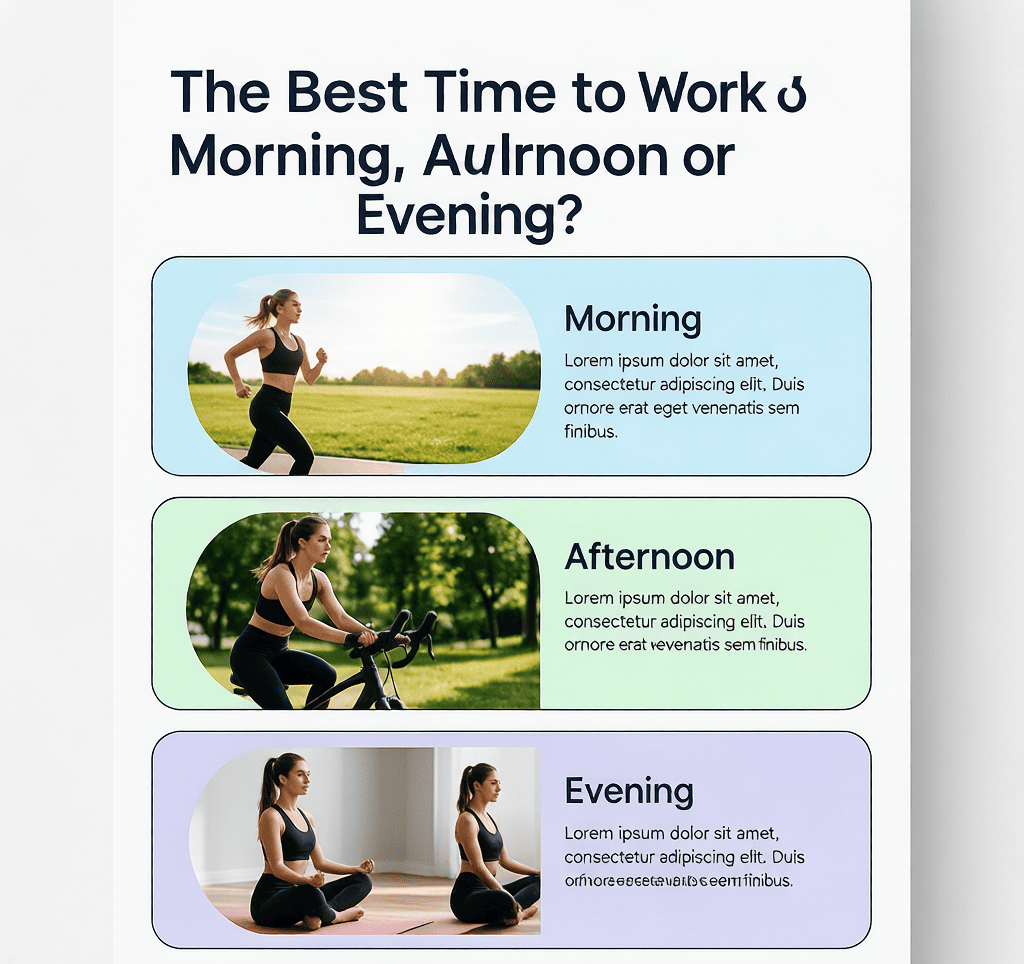
The Best Time to Work Out: Morning, Afternoon, or Evening?
By Liam Smith — Fitness enthusiast and founder of Apexfito. I test gear at home and share what actually works.
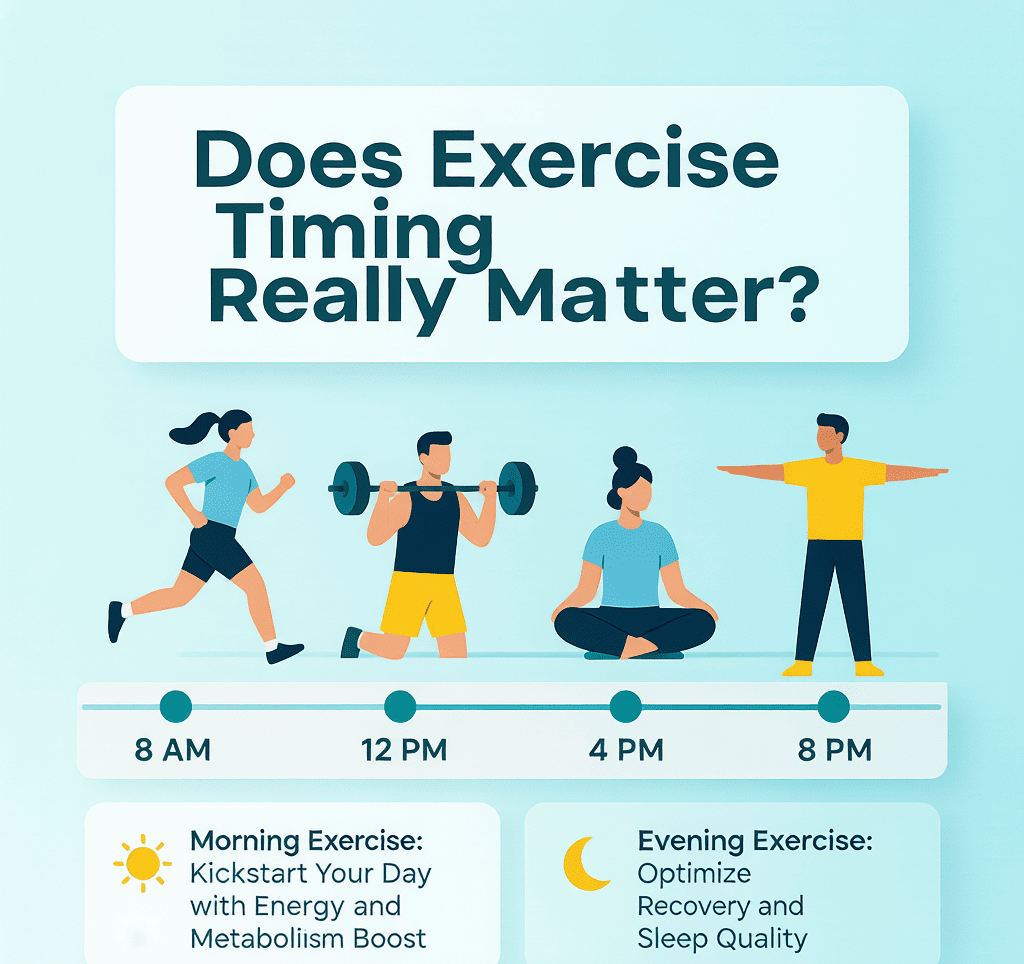
Does Exercise Timing Really Matter?
If you’ve ever stared at your alarm clock at 5:00 a.m. wondering if dragging yourself to the gym is worth it, you’re not alone. The question of when to work out has sparked countless debates, Instagram polls, and even a few family arguments. But before we dive into the science, let’s get one thing straight: the single biggest factor in getting results is showing up consistently. Whether that’s at sunrise, during your lunch break, or after dinner, the habit itself matters far more than the hour on the clock. Harvard Health notes that your metabolism determines how many calories you burn each day; building muscle can increase it.
That said, timing isn’t completely irrelevant. Your body operates on a roughly 24-hour internal clock called the circadian rhythm, which influences everything from core body temperature and hormone levels to energy and focus. For example, cortisol—a key stress hormone that helps mobilize energy—tends to peak in the early morning. Testosterone, which plays a role in muscle repair and growth, is often higher in the morning too, though it fluctuates throughout the day. Body temperature typically rises as the day goes on, peaking in the late afternoon or early evening. Warmer muscles are more pliable and can generate more force, which is why many people feel stronger later in the day.
So yes, biology does play a role. But here’s the nuance: the “best” time for you depends heavily on your personal goals. If fat loss is your primary focus, some research suggests that morning fasted cardio might help you burn a slightly higher percentage of fat during the workout itself. However, the total daily calorie burn and long-term fat loss tend to be similar regardless of timing, as long as you’re in a calorie deficit. For muscle building, training later in the day when your body temperature and testosterone are higher might give you a small edge in strength and performance. But again, the difference is modest compared to the impact of consistent, progressive overload training.
This article isn’t here to tell you there’s one magic hour that unlocks all your gains. Instead, we’re going to walk through the research on morning, afternoon, and evening workouts so you can make an informed choice—not a stressed one. By the end, you’ll have practical tools to figure out what fits your life and your body. And if you’re still unsure, that’s okay. The best time to work out is the time you’ll actually do it. Let’s start with morning workouts.
Morning Workouts: The Pros and the Pitfalls
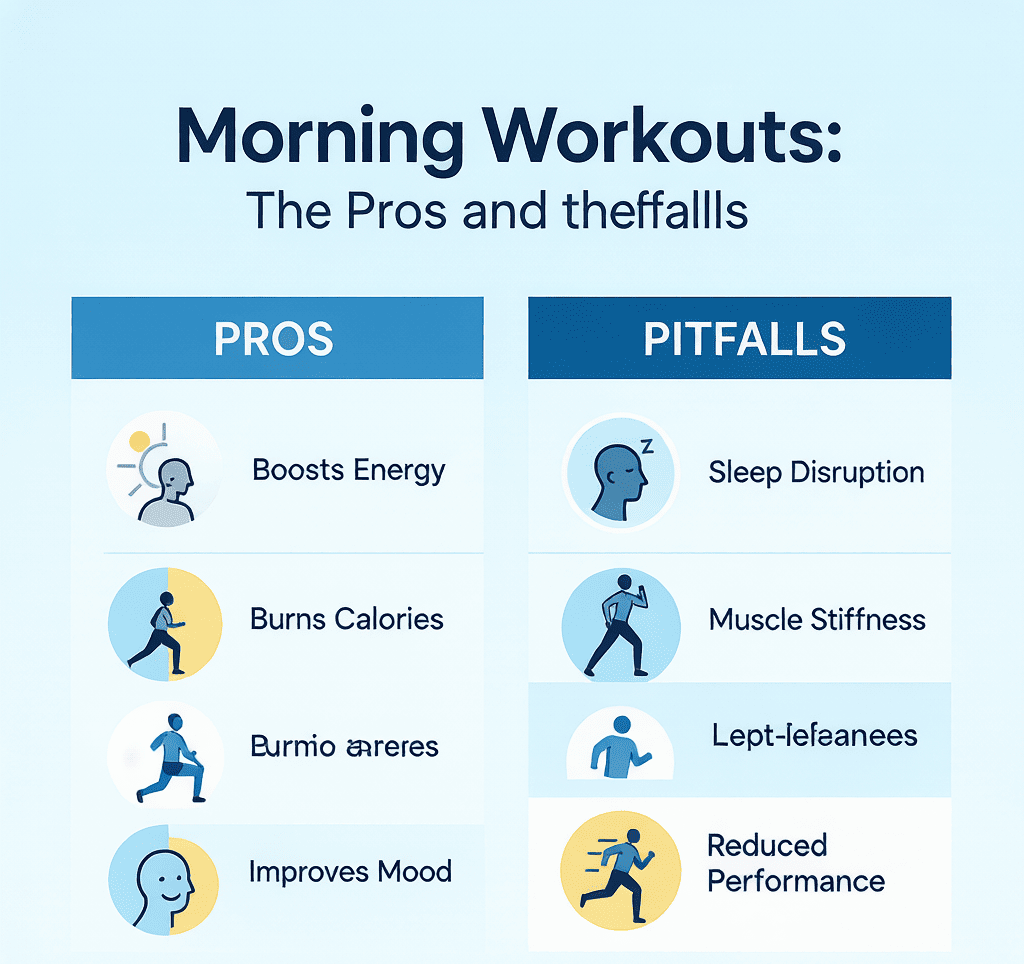
Getting your workout done before the day gets away from you sounds like a win. And for a lot of people, it is. But the science on morning exercise is more nuanced than the typical ”fasted cardio burns more fat” claim you see on social media.
The Fat-Burning Claim
Yes, working out on an empty stomach does shift your body toward using fat for fuel during that session. A 2018 study in the British Journal of Sports Medicine found that fasted morning cardio increased fat oxidation by about 20% compared to the same workout after breakfast. But here’s the catch: total daily fat loss comes down to calorie balance, not just what fuel you burn during exercise. If you end up eating more later because you’re ravenous from that fasted session, the fat-loss advantage disappears. I’ve seen this play out with clients who crush a morning run, then grab a 700-calorie muffin because they’re starving. That extra calorie intake cancels out the fat-burning advantage.
Adherence: The Real Win
Where morning workouts shine is consistency. A 2019 study from the University of Pennsylvania tracked 300 exercisers and found that those who worked out before noon were 50% more likely to stick with their routine after six months. The reason is simple: fewer interruptions. Emails, meetings, family obligations — they pile up fast. Get it done early and it’s done. I personally switched to 6 a.m. sessions a few years ago and my weekly compliance went from three days to five. That’s a bigger impact on results than any timing-related metabolic tweak.
There’s also some evidence that morning exercise can improve sleep architecture — specifically, it may increase time spent in deep sleep, which is when your body repairs muscle and consolidates memory. A small 2020 study in Sleep Medicine found that participants who exercised at 7 a.m. had longer periods of slow-wave sleep that night compared to those who worked out in the evening. Not a game-changer for everyone, but a nice bonus if you’re already a morning person.
The Performance Trade-Off
Your body temperature is about 1°F lower in the morning, and your muscles and joints are stiffer. That means peak strength and power are typically lower — by 3 to 5% for most people, according to a 2020 meta-analysis in Sports Medicine. You’re also at slightly higher risk of injury if you jump into heavy lifting without a proper warm-up. If your goal is maxing out your squat or hitting a new 5K PR, afternoon or evening may be better. But if you just want to get the work done, morning is fine — you just need to warm up longer.
Practical Advice for Morning Training
- Warm up for at least 10 minutes. Start with light cardio (jumping jacks, brisk walk) then dynamic stretches like leg swings and torso twists. Don’t skip this.
- Eat a small protein-rich snack before your workout if muscle preservation is your goal. A hard-boiled egg or a scoop of whey in water works. This blunts muscle breakdown without killing the fat-oxidation benefit.
- Hydrate first thing. You lose water overnight, and even mild dehydration hurts performance.
- If you’re lifting heavy, consider doing your main compound lifts later in the day and using mornings for cardio or lighter accessory work.
Morning workouts aren’t magic for fat loss, but they are a powerful tool for building a consistent habit. And consistency beats timing every time. Try it for two weeks and see how your energy and adherence feel. If you’ve tried morning workouts, share what worked (or didn’t) in the comments — and check current prices on Amazon for a good pre-workout snack or a foam roller to help with that warm-up.
Afternoon and Evening Workouts: Performance and Recovery

If mornings feel like a battle, you’re not alone. For many, the body simply isn’t ready to perform at its peak right after waking. The research consistently shows that late afternoon—roughly 4 p.m. to 6 p.m.—is when your physiology aligns for optimal output. Core body temperature peaks during this window, and that matters because warmer muscles contract more forcefully and recover faster. Studies find that strength, power, and endurance can improve by 3 to 5 percent compared to early morning efforts. That might not sound huge, but over a training cycle it adds up to real progress.
Reaction time also sharpens later in the day. Your nervous system is more alert, and perceived exertion—how hard a set feels—tends to be lower even when you’re moving the same weight. I’ve noticed this myself: a 5-rep max squat at 6 a.m. feels like a near-death experience, but at 5 p.m. it’s just hard. That difference isn’t in your head. It’s your circadian rhythm reducing the metabolic cost of the movement.
Evening Workouts and Sleep: What the Science Actually Says
The old warning that evening exercise ruins sleep has been largely debunked. For most people, moderate to vigorous training ending 90 minutes before bed doesn’t disrupt sleep quality or duration. That’s a general guideline, not a hard rule—some people can train right up to lights-out and still sleep fine. In fact, some research shows evening exercise can deepen slow-wave sleep, which is when your body does the most repair. The exception is if you’re someone who gets wired after intense training. If you finish a heavy deadlift session and can’t shut your brain off for two hours, you’re likely sensitive to the sympathetic nervous system activation. In that case, keep evening sessions to moderate cardio, mobility work, or lighter resistance training.
One practical cue: pay attention to your heart rate recovery. If your pulse is still elevated 30 minutes after you finish, your system is still revved. That’s a sign to either cool down longer or shift that session earlier.
Practical Scheduling for Real Life
Not everyone can train at 5 p.m. Work, family, and commute times get in the way. But if you have flexibility, slot your hardest sessions—heavy compound lifts, high-intensity intervals, or skill work—into the afternoon window. Keep your evening sessions moderate: think incline walks, circuit training with lighter loads, or steady-state cardio. This approach lets you capitalize on the performance boost when it’s available and still get in quality work later without compromising recovery.
If your only option is evening, don’t stress. The best workout is still the one you actually do. Just be smart about winding down: finish with 5–10 minutes of light stretching or walking, keep the lights low in the locker room or your home gym to signal your brain that sleep is coming, and pay attention to meal timing. Eating a heavy meal immediately after a late workout can blunt recovery by diverting blood flow away from muscles toward digestion. Aim for a balanced post-workout meal with protein and carbs within an hour of finishing, but keep it moderate in size—think a shake or a small chicken-and-rice bowl, not a full dinner plate.
Have you tried shifting your training to the afternoon or evening? Drop your experience in the comments—I read every one. And if you’re looking for gear to make those sessions more comfortable, check current prices on Amazon for adjustable dumbbells, resistance bands, or a good cooling towel. Prices change often, so it pays to compare.
How to Pick Your Personal Best Time and Stick With It
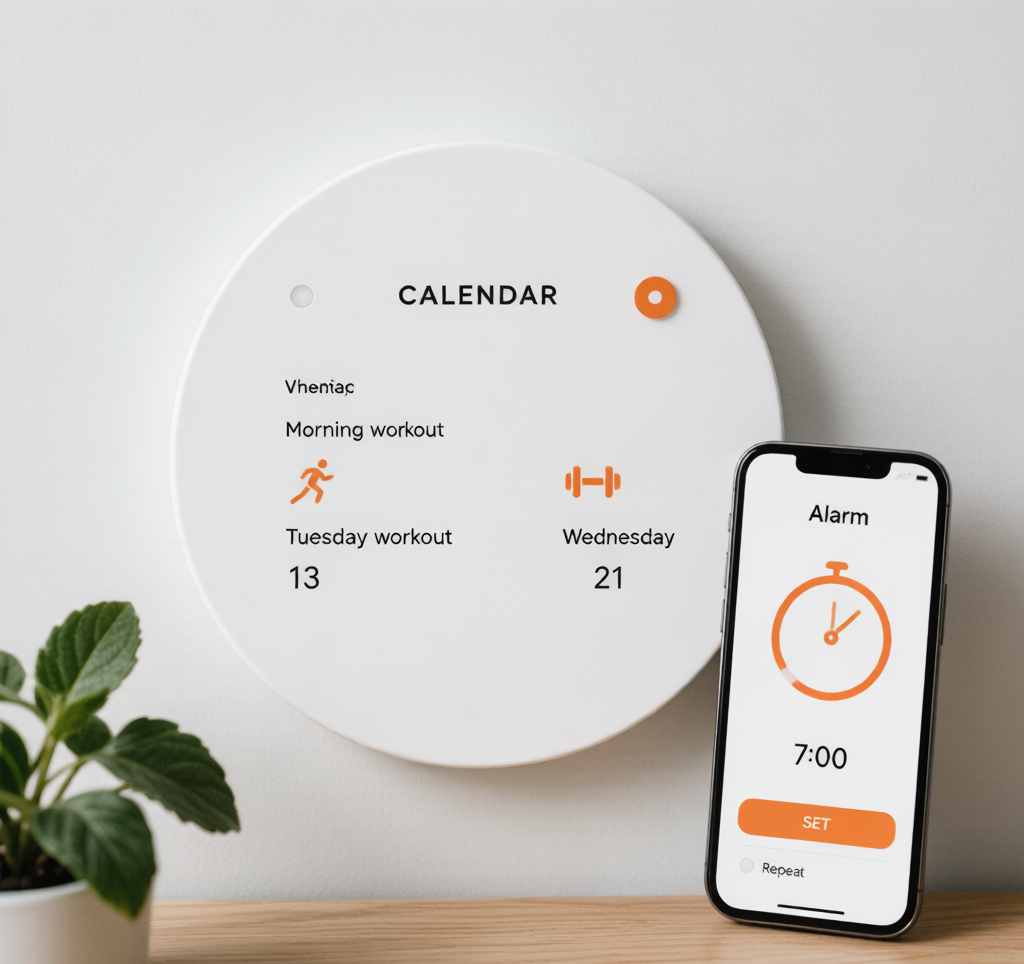
After looking at the research, you might still be wondering: what time should I actually work out? The honest answer is simpler than most fitness influencers want you to believe. The best time is the one you can do consistently about 80% of the time. Not 100%. Life happens. But if you’re hitting your workouts four out of five days a week, you’re already winning.
I’ve coached dozens of people who spent months trying to force a 5 a.m. routine because some podcast told them that’s when “winners” train. Most burned out within three weeks. Meanwhile, the guy who just went to the gym after work, even when tired, built real progress over a year. Consistency beats timing every time.
How to Test Your Ideal Time
Don’t guess. Experiment. Pick a time slot—morning, lunch, afternoon, or evening—and commit to it for two weeks. Track three things: how you feel during the workout, how you feel an hour after, and whether you actually showed up. At the end of two weeks, switch to a different time and repeat. Compare your notes. Which slot made you feel strongest? Which one did you skip the least? That’s your answer.
If you’re still unsure, try this quick self-assessment:
- Morning person? Try 6–8 a.m. workouts. You’ll likely have fewer distractions and more willpower early in the day.
- Afternoon slump? A 12–2 p.m. session can break up the workday and boost afternoon energy.
- Evening wind-down? 5–7 p.m. often aligns with peak body temperature and strength for many people.
If your schedule is irregular—like night shifts or rotating hours—focus on training at the same time relative to your wake-up window. For example, if you wake up at 4 p.m., aim to work out within two to three hours after that. Your body’s internal clock adapts to your routine, not the sun.
Fat Loss: Focus on the Big Picture
If fat loss is your main goal, stop obsessing over the hour on the clock. What matters more is your total weekly calorie burn and your protein intake. A 2019 study in the Journal of the International Society of Sports Nutrition found that total daily energy expenditure was similar regardless of workout timing, as long as participants were consistent. So if you burn 400 calories in a morning run or an evening spin class, your body doesn’t care. It cares about the weekly deficit.
I’ve seen clients lose fat training at 6 a.m. and others at 9 p.m. The common thread? They all hit their protein targets and stayed in a calorie deficit most days. If you’re struggling with fat loss, don’t blame your workout time. Look at your food log first.
Muscle Building: Train When You’re Strongest
For muscle growth, timing matters a bit more—but only because strength fluctuates. Research shows that grip strength, vertical jump, and power output often peak in the late afternoon or early evening, when body temperature is highest. If you can schedule your heavy lifting sessions during that window, you might get a small edge. But the difference is small. What matters more is progressive overload—adding weight or reps over time—regardless of the hour.
I personally lift heaviest around 5 p.m., but I’ve made solid gains training at 7 a.m. during busy periods. What mattered most was always the same: I pushed hard, tracked my numbers, and ate enough protein. If you’re a morning lifter, just warm up longer—your muscles and nervous system need a few extra minutes to wake up.
Practical Steps to Lock In Your Routine
Here’s what I’ve found works for most people:
- Pick a time and stick with it for two weeks. No switching. No excuses. Just show up.
- Set up your gear the night before. Lay out clothes, fill a water bottle, prep your gym bag. Remove friction.
- Track your consistency, not just your performance. A so-so workout you actually do beats a perfect one you skip.
- Adjust if needed. After two weeks, if you’re dreading every session, try a different time. But don’t change just because you’re bored.
If you’re working out at home, having the right equipment can make or break your routine. I’ve used adjustable dumbbells and resistance bands for years—they take up minimal space and let me train anytime without a commute. Check current prices on Amazon for gear like these to set up a home setup that fits your schedule.
Now I want to hear from you. What time works best for your workouts? Have you tried switching it up? Share your experience in the comments below—your story might help someone else find their groove.
Medical & Editorial Review: This article was reviewed by Liam Smith, founder of Apexfito, for accuracy and safety. Content is for educational purposes and is not a substitute for professional medical advice. Consult your physician before starting any exercise or nutrition program.