Foam Roller vs. Massage Gun for Muscle Recovery: Which Should You Buy First?
Full disclosure: Some links in this article are affiliate links. We may earn a small commission at no extra cost to you if you make a purchase through them. Our recommendations are based on what real users report, not on commission size.
Why Recovery Tools Exist: The Science of Soreness
Two days after my first serious leg day in months, I crawled down the stairs backward. My quads felt thick, hot, and stiff, and every step sent a deep ache through my thighs. That’s delayed onset muscle soreness — DOMS — the reason you’re probably shopping for a recovery tool right now.
DOMS peaks 24 to 72 hours after a hard session. Not immediately after, and not a week later. If you roll out right after a workout and still ache two days later, that doesn’t mean the tool failed. It means your muscles are following the normal timeline.
Most of that soreness comes from eccentric contractions — the lowering or lengthening phase of an exercise. Picture the slow descent of a heavy squat or the controlled negative of a pull-up. These moves place high tension on the muscle while it’s stretched, causing microdamage to the tissue (sometimes called microtears). Your immune system responds with inflammation, and the repair process over the following days produces that familiar tenderness.
Lactic acid, despite its long run as the scapegoat, has nothing to do with it. It clears from your muscles within about an hour of training finishing. Soreness that arrives a day later is a repair response, not a lactic acid hangover.
So how do foam rollers and massage guns fit in? Both aim to do two things: increase local blood flow to the treated area and reduce tissue stiffness for a window of time. Better blood flow delivers oxygen and nutrients to recovering tissue and flushes out byproducts of inflammation. Less stiffness means the muscle feels more pliable, you move more smoothly, and that first step off the couch isn’t so brutal.
But the physical mechanisms are different.
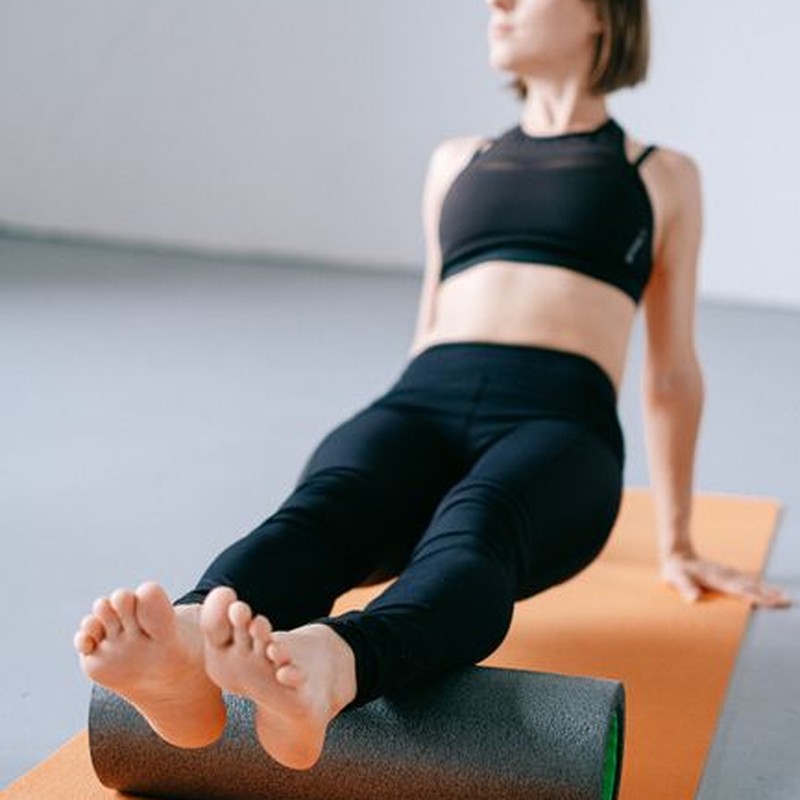
A foam roller uses broad, sustained compression. You lower your body weight onto the roller and it presses a wide section of muscle against the floor. That’s gentle stimulation across a large area, good for working out general stiffness. A massage gun uses percussive therapy: a small motorized head fires rapid taps — 1,500 to 3,000 times per minute in most consumer models — into a specific spot. Instead of pressing one big area, it targets a knot or a tendon insertion point with fast, focused impact. You feel the difference right away: a roller is a deep, slow press; a gun is a rapid, buzzing hammer.
Neither tool rebuilds muscle fibers or speeds up protein synthesis. I’ve tested both at home after leg days, and the effects I can actually feel are comfort and range of motion, not tissue repair. Rolling and percussion therapy temporarily change how the tissue feels and how it moves. They make recovery more comfortable, and that keeps you doing the things that actually drive healing — sleeping, eating, and easy movement.
So use these tools with realistic expectations. They won’t repair damaged fibers faster or add muscle. They will make you more comfortable while your body does the heavy lifting. And if something hurts sharp, back off. The ”no pain, no gain” mindset doesn’t belong in recovery. If you’re digging a roller into a knot and wincing, or pressing a massage gun hard enough to leave a bruise, you’re working against yourself. These tools reduce discomfort; they shouldn’t create a workout of their own.
That clears the ground for the comparison. Foam rolling and percussion therapy both earn a place in a recovery routine, but for different reasons, different days, and different kinds of discomfort.
Foam Roller: What It Does Well and Where It Falls Short
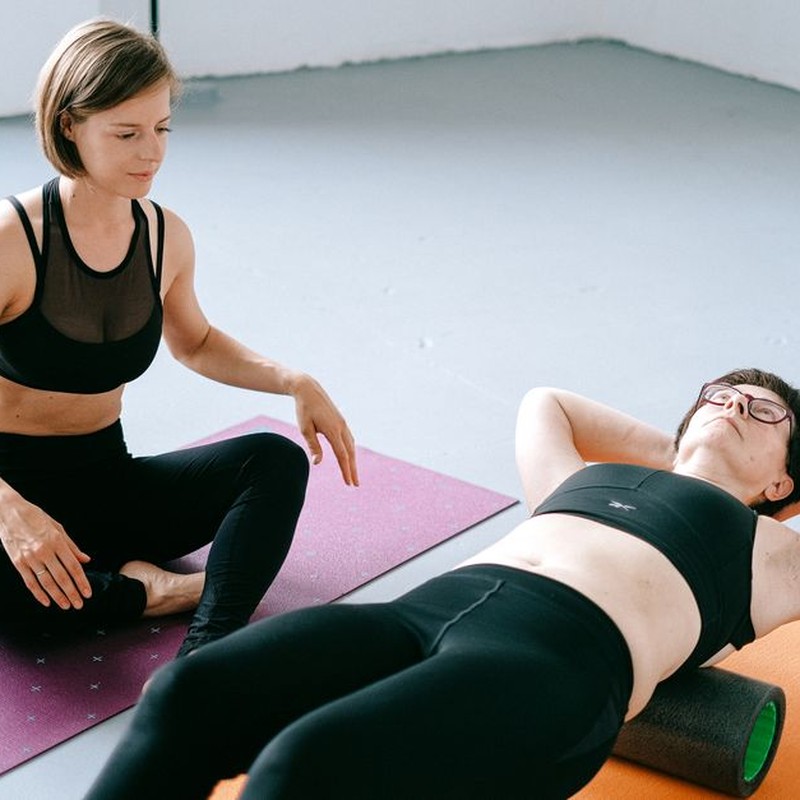
For less than the price of a pizza, a foam roller gives you a self-massage tool that never needs a battery. It’s quiet, simple, and hard to screw up. I’ve had the same high-density cylinder in my living room corner since 2018, and it still works as well as the day I got it.
The upsides
Foam rolling shines on big, broad muscles. Quads, lats, glutes, and hamstrings can take a lot of pressure, and a roller spreads that pressure over a wide area. You can lean into a tight spot, hold it for a few breaths, and feel the tension change without any heavy machinery.
- Cost: a basic 13-inch high-density roller runs about $15-25. A fancy vibrating model costs five times that and isn’t worth five times the price for most beginners.
- No noise: you won’t wake your partner or annoy your neighbors. That sounds small until you’re rolling at 6 AM.
- Easy to pack: throw it in the car for gym sessions or trips. It’s not a carry-on, but it fits in a weekend bag.
Where it falls short
Foam rolling doesn’t do well on small, point-specific areas. And one safety rule matters here: never roll directly over your spine or any bony structure. That’s not just personal preference—it’s standard advice. A standard cylinder on your lower back presses straight into vertebrae, and the result feels like someone is trying to crack you like a lobster claw.
I know from years of doing this: my lower back hates the foam roller. The pressure on the spine is too much. I use a lacrosse ball on the muscles next to my spine instead, and it reaches the knots without mashing bone.
Other limitations:
- Precision is weak. With a massage gun, you pick a speed and pressure. With a roller, your only choices are how much weight you put on it and how fast you move. That’s fine for general tightness, but weak if you want to work on one stubborn knot in your calf.
- Hard to use on your back without risk. You can position a roller under your upper back and roll the muscles around the shoulder blades, but you need to know what you’re doing. I’d rather use a ball or a gun for anything near the spine.
How to actually use one
Use a roller before training if you want a short-term range-of-motion boost. Rolling your quads and hip flexors for 30-60 seconds, then doing a few bodyweight squats, can improve hip mobility for the next 10-15 minutes. That’s a useful warm-up trick. It’s not a permanent fix, and it shouldn’t be treated like one.
After a workout, I roll slowly and breathe. Fast back-and-forth makes the area feel stimulated but doesn’t do much for lingering tightness. Slow movement, a few seconds per inch, with short pauses on the tender spots, gets me better results.
Don’t chase perfect tissue quality. Muscles are meant to have some tone, and a roller won’t make them feel like putty. If you’re trying to eliminate every little tight spot, you’ll be rolling for hours and still find more. Pick the big areas, spend 5-10 minutes, and move on.
What to buy (and what to skip)
A $20 high-density roller beats a $60 textured one for most beginners. The high-density version is firm enough to reach deep tissue, but not so aggressive that you need to work up to it. The textured ones with ridges and knobs can feel great once you’re used to pressure, but they often leave bruises when you start. Start plain. If you stick with it for a few months and want more intensity, upgrade later.
Skip the $100 heated rollers unless you have a specific need. Heat adds comfort, not pressure, and a warm shower before rolling does the same thing for free.
If you’re comparing costs, foam rolling wins by a mile. But it’s not always the best tool. A massage gun targets a knot with quick, localized pulses that no roller can mimic—that’s the next section’s territory.
Best foam rollers to start with
- Amazon Basics High Density Foam Roller — $16.99, the budget pick that is firm enough for deep tissue (4.5/5 stars)
- LuxFit High Density Foam Roller — $19.99, another solid entry-level option (4.5/5 stars)
- The Original Foam Roller by TriggerPoint — $34.99, a firm, consistent favorite for serious self-massage (4.5/5 stars)
- OPTP PRO-Roller Foam Roller — $44.99, the upgrade pick with a smooth, professional-grade surface (4.7/5 stars)
Prices and availability change often, so check current prices on Amazon before you buy.
Before you decide, check current prices on Amazon and tell us in the comments which tool you reached for first. Your experience helps other readers figure out where to spend their money.
Massage Gun: What Percussion Therapy Brings (and What It Doesn’t)
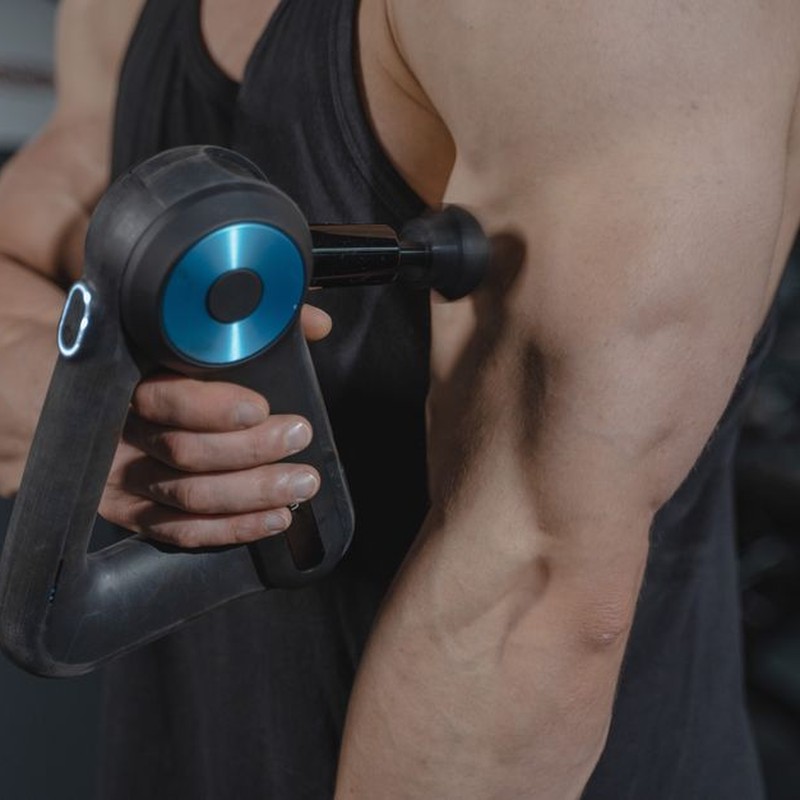
I remember the first time I unboxed a massage gun. The case was heavier than expected. The device looked like a power drill, and the lowest speed setting felt like a jackhammer. I placed it on my calf and nearly jumped off the couch. That’s not an exaggeration — the rapid pulses at 20-60 Hz hit deep and fast, way faster than any foam roller ever has.
Percussion therapy, as it’s officially called, uses a motor to deliver quick, repeated taps to muscle tissue. The pad pushes into your skin and muscle, then releases, over and over. The result is a vibrating, thumping sensation that many people find intense, even on the low settings. My first few sessions were a mix of ‘wow’ and ‘please stop.’
So what is a massage gun actually good for? In my experience, it shines in the spots where a foam roller gets awkward. Hamstrings, glutes, and the soles of your feet are nearly impossible to hit properly with a foam roller. You can try to lean on a lacrosse ball or roll a ball under your foot, but it’s clumsy.
With the massage gun, I can sit on the couch, reach down to my hamstring, and work through a knot while scrolling through my phone. For my glutes, the gun lets me apply pressure exactly where I need it without contorting myself on the floor.
The soles of the feet are another win. After long runs or long days on my feet, I use the flat attachment on my foot while sitting. It feels weird at first, but it calms the arch and makes the next morning easier. A foam roller can’t do that unless you balance on one leg and hope for the best.
Using a massage gun well comes down to a few rules. Keep the gun moving at all times. Don’t hold it over one spot or press down hard. The device does the work, so you don’t need to add extra pressure.
Never press hard over a joint or bone, especially around the knee, shin, or spine. If a spot feels too tender, back off the pressure and let the vibrations do their thing.
Here’s how I use the attachments that come with most guns:
- Flat or round head: Start here, on low speed, for quads, lats, and other big muscles.
- Bullet head: For trigger points only — and keep it moving.
- Fork head: Around the calf or the foot, but avoid pressing directly on the Achilles tendon or any bony area.
Spend 30-60 seconds per muscle group. Ten minutes on a single knot is too much; you’ll end up bruised and more sore than before.
What about the evidence? Honestly, the research on percussion guns is thinner than the marketing suggests. There are a few small studies, but nothing that proves 30 minutes of hammering will dramatically speed up muscle repair. That said, the common feedback I’ve heard from friends and training partners is that perceived soreness drops after using one. The sensory input can make you feel better even if the biology is unclear.
One of the biggest benefits I don’t hear enough about is sleep. I’ve used the gun before bed on sore shoulders and calves, and the relaxation effect is real. It’s not a sedative, but it calms the tightness and makes it easier to get comfortable. If that helps you sleep better, that’s a win regardless of what the studies say.
There are real downsides, too. A decent massage gun costs anywhere from $80 to $300, while a good foam roller costs $20-40. The gun is loud, so you won’t be using it while watching a movie with someone else. And the battery dies at the worst times. I’ve had my gun shut off mid-session and had to switch back to the foam roller in frustration.
So which is better? It depends. If you want a cheap, quiet, no-frills recovery tool that covers most of your body, foam rolling is hard to beat. If you have stubborn knots in your hamstrings, glutes, or feet, and you’re okay with some noise and an upfront cost, a massage gun is worth adding to your recovery lineup.
Try one before you buy if you can. A friend’s gun or a display model at a store will give you a sense of the intensity. And when you do pick one, start on the lowest speed for the first few days. Your muscles need to get used to the rapid tapping. Mine
The Verdict: Which One Should You Buy First?
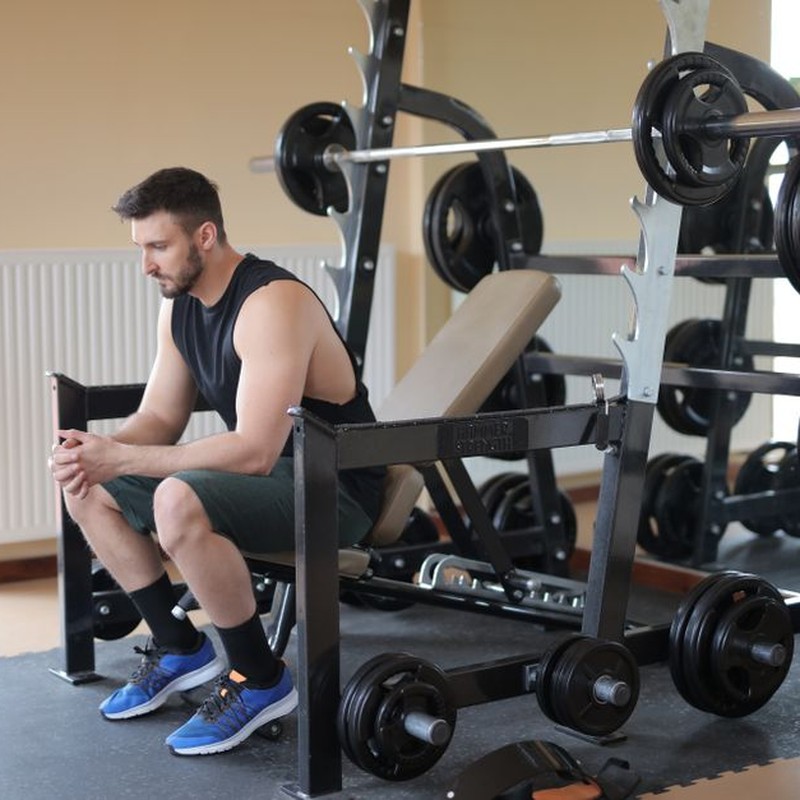
If you’re only going to buy one right now, the answer depends on where you feel your tightest muscles most often. I’ve used both for years, and I keep a foam roller by my squat rack and a massage gun on my desk. But if I had to start over with a tight budget, I’d pick based on my training style.
Do you spend most of your sessions squatting, deadlifting, or doing heavy lower-body work? Start with a foam roller. You can lay into your quads, hamstrings, and glutes with your full body weight, and the slow, sustained pressure does more to smooth out those big muscle groups than a buzzing gun can. I’ve found that five minutes of rolling before heavy squats does more for my depth than ten minutes of percussion afterward.
If you run multiple times a week or sit at a desk all day, the massage gun earns its price. Those stubborn knots in your calves, shins, and upper traps respond better to rapid, targeted bursts. A gun can also reach your lower back and shoulders without contorting yourself on the floor. You don’t need a $400 model either — a decent percussion gun in the $60 to $200 range will do the job. I bought a mid-range one for $120 two years ago, and it still works fine.
Here’s a quick-scan summary to help you decide:
- Choose foam rolling first if: you squat, deadlift, or do heavy leg work and want to loosen your whole posterior chain with slow pressure.
- Choose a massage gun first if: you run or sit all day and need targeted relief for calves, shins, or upper traps that a roller can’t reach easily.
You can get most of the benefit with a simple two-step routine:
- Before training: Spend 3–5 minutes foam rolling the muscle groups you’re about to work. Keep it slow and breathe through the tight spots.
- After training: Use the massage gun for about 2 minutes on the muscles that felt the most worked. Move it slowly, holding it over one area for 20–30 seconds before shifting.
That combo takes less than ten minutes total and covers the two things you actually need: loosening the tissue before you load it and calming it down afterward. I’ve done this before and after leg days and it’s the most practical routine I’ve found. And you don’t need to spend much to build it.
A quality foam roller runs $15 to $40, and a decent massage gun costs $60 to $200. You do not need the most expensive version of either. The extra features on high-end guns — app connectivity, fancy cases, quieter motors — are nice but not essential. The same goes for textured foam rollers with weird bumps. A smooth, dense roller works for most people.
Before you buy anything, open Amazon and search for ”best muscle recovery tool” — not just ”foam roller” or ”massage gun” — so you can compare current prices side by side. Then read reviews from people who’ve used the tool on the same muscle groups you’re targeting. Pay attention to comments about how loud a massage gun is or how firm a foam roller feels. Those details matter more than the marketing photos.
Once you’ve picked one — or decided to save up for both — come back and tell us what worked for you in the comments. Share your experience with rolling before workouts or using the gun on stubborn calves. Your feedback helps other readers make the same call.
Medical & Editorial Review: This article was reviewed by Liam Smith, founder of Apexfito, for accuracy and safety. Content is for educational purposes and is not a substitute for professional medical advice. Consult your physician before starting any exercise or nutrition program.