
The Busy Beginner’s Guide to Sustainable Fat Loss:
By Liam Smith — Fitness enthusiast and founder of Apexfito. I test gear at home and share what actually works.
External Resources: NIDDK weight management health information
Busy Beginner Fat Loss Diet Training Plan: The Simple Rule That Works
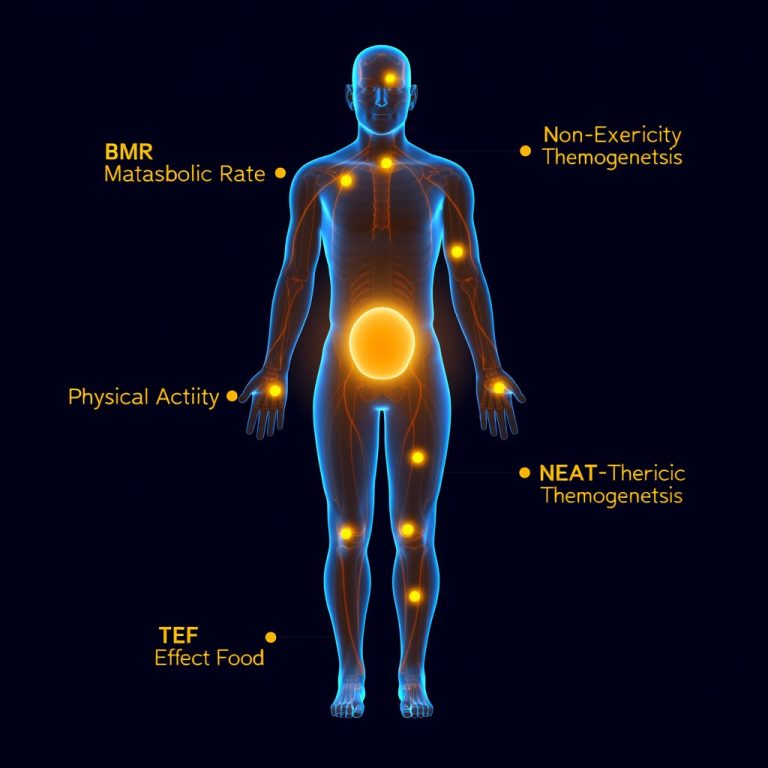
 Harvard Health notes that your metabolism determines how many calories you burn each day; building muscle can increase it.
If you’re a busy professional looking for a busy beginner fat loss diet training plan staring at a screen all day, the idea of “getting in shape” can feel overwhelming. You’ve probably tried a trendy diet or downloaded a fitness app, only to fall off track when work got crazy. I get it. Here is the reality: Sustainable fat loss isn’t about extreme measures. It’s about understanding one core principle and building simple, realistic habits around it. This guide is your straightforward roadmap. We’re going to talk about food you’ll actually enjoy eating and workouts you can do with minimal equipment. Explore our full library of structured fitness plans for every experience level. Let’s get started.
The Non-Negotiable Key: The Calorie Deficit

All successful fat loss comes down to one thing: a calorie deficit. This simply means you consume fewer calories than your body burns over time. Think of your body like a bank account. Calories in (food and drink) are deposits. Calories out (basal metabolism, daily activity, exercise) are withdrawals. To lose fat, you need more withdrawals than deposits.
Why it works: When you’re in a deficit, your body taps into stored energy (body fat) to make up the difference. It’s basic energy balance, backed by decades of science. No magic pill, no special juice cleanse—just consistent, mindful energy management.
Your Realistic Weekly Training Schedule (That Actually Fits)
Forget the “go hard or go home” mentality. As a beginner with a packed schedule, consistency beats intensity every time. Here’s a flexible 3–5 day framework. Pick the version that fits your life right now.
| Weekly Goal | Schedule Example | Focus |
|---|---|---|
| 3 Days (The Foundation) | Monday, Wednesday, Friday | Full-body strength training. Add a 10-minute brisk walk daily. |
| 4 Days (The Sweet Spot) | Monday, Tuesday, Thursday, Friday | Upper body (Monday/Thursday), Lower body (Tuesday/Friday). |
| 5 Days (The Accelerator) | Monday through Friday | Strength training (3 days), cardio or yoga (2 days). |
Pro Tip: Schedule these sessions like important meetings. A 45-minute workout is less than 5% of your day. You can find the time.
Diet Control Made Simple: Calories, Macros, and Real Food
Step 1: Find Your Daily Calorie Target
First, calculate your Basal Metabolic Rate (BMR)—the calories your body needs at rest. Use the Mifflin-St Jeor Equation (it’s the most accurate). Convert your weight to kilograms (weight in lbs ÷ 2.205) and height to centimeters (height in inches × 2.54):
- For men: BMR = (10 × weight in kg) + (6.25 × height in cm) – (5 × age in years) + 5
- For women: BMR = (10 × weight in kg) + (6.25 × height in cm) – (5 × age in years) – 161
Then, multiply your BMR by an activity factor:
- Mostly sedentary (office job): BMR × 1.2
- Lightly active (light exercise 1-3 days/week): BMR × 1.375
This gives your Total Daily Energy Expenditure (TDEE). To lose fat, subtract 300-500 calories from this number. That’s your daily target. A 500-calorie daily deficit leads to about 1 pound of fat loss per week—a healthy, sustainable rate.
Step 2: Split Your Macros (The Easy Way)
Macronutrients (“macros”) are your protein, carbs, and fats. Don’t overcomplicate it. For fat loss, aim for:
- Protein: 0.7–1 gram per pound of body weight. Keeps you full and preserves muscle.
- Fats: 20–30% of your daily calories. Supports hormone health.
- Carbs: The remaining calories. Your body’s preferred energy source.
Use a free app like MyFitnessPal or Cronometer to log food for the first week or two. It builds awareness.
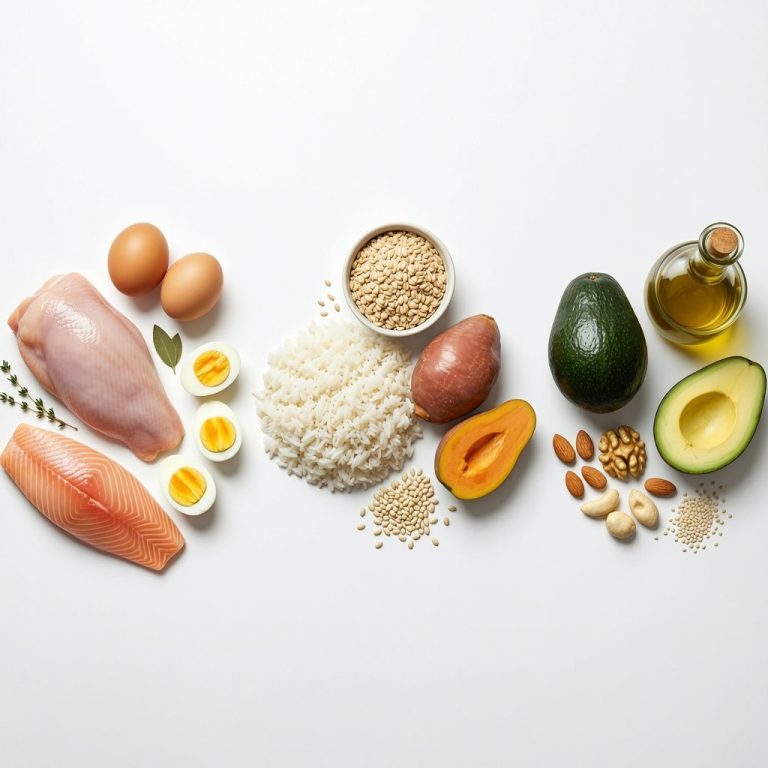
Step 3: Build Your Plate (No Weird Ingredients)
Every meal should be simple and satisfying. Follow this visual guide:
- ½ Plate: Non-starchy vegetables (broccoli, spinach, peppers, salad greens).
- ¼ Plate: Lean protein (chicken breast, ground turkey, fish, tofu, eggs).
- ¼ Plate: Complex carbs or starchy vegetables (brown rice, quinoa, sweet potato, oats).
- Add a thumb-sized portion of healthy fats (avocado, olive oil, nuts).
Sample Day of Eating (Approximately 1,800 calories):
- Breakfast: 3 scrambled eggs with spinach, 1 slice of whole-wheat toast, ½ avocado.
- Lunch: Large salad with 5 oz grilled chicken, mixed greens, vegetables, and vinaigrette.
- Snack: Greek yogurt with a handful of berries.
- Dinner: 6 oz salmon, 1 cup roasted broccoli, about ¾ cup cooked quinoa.
The Complete Beginner Strength-Training Plan (Home Edition)
You don’t need a gym. Start with bodyweight or a pair of dumbbells. Perform each exercise with control. Rest 60-90 seconds between sets.
| Exercise | Sets & Reps | Notes |
|---|---|---|
| Goblet Squats (hold a dumbbell or kettlebell at chest) | 3 sets of 10-12 reps | Keep your chest up, squat as low as comfortable. |
| Push-Ups (on knees or incline if needed) | 3 sets of as many reps as possible (AMRAP) | Focus on form. Keep elbows at a 45-degree angle. |
| Dumbbell Rows (one arm at a time) | 3 sets of 10-12 reps per arm | Keep your back flat, pull the weight to your hip. |
| Glute Bridges | 3 sets of 15 reps | Squeeze your glutes at the top. Hold for 2 seconds. |
| Plank | 3 sets, hold for 30-60 seconds | Keep your body in a straight line from head to heels. |
Do this circuit 3 times a week on non-consecutive days (e.g., Monday, Wednesday, Friday).
5 Fat-Loss Myths Busted (And How to Fix Them)
Myth 1: “Carbs Make You Fat.”
The Fix: Excess calories make you fat. Carbs are fuel. Choose fiber-rich, complex carbs (oats, potatoes, fruit, whole grains) and eat them in portions that fit your calorie target.
Myth 2: “You Have to Do Tons of Cardio.”
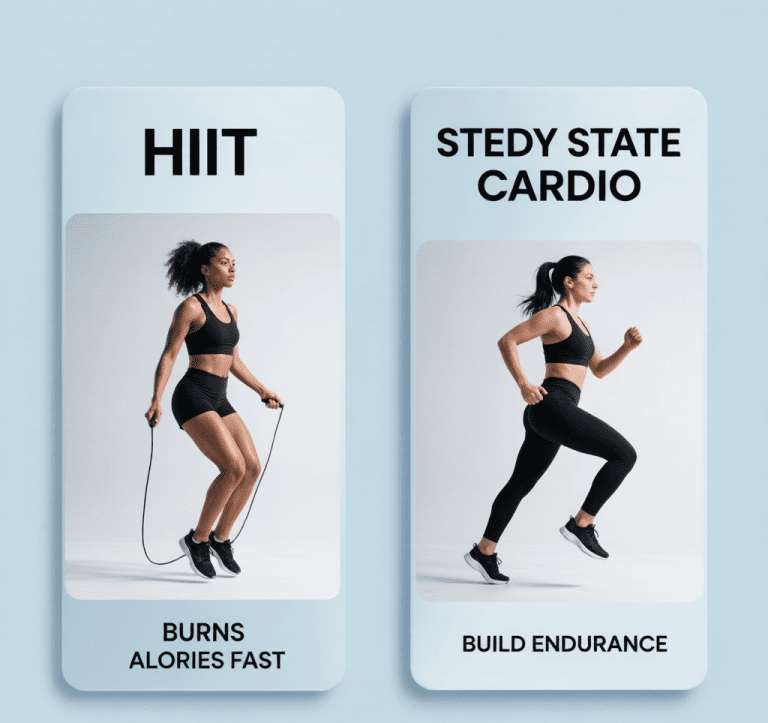
The Fix: Strength training is key for fat loss. It builds metabolically active muscle and keeps you burning calories after the workout. Cardio is great for heart health—add 2-3 sessions of 20-30 minutes if you enjoy it, but don’t rely on it alone. Consistency matters more than intensity. If staying motivated is your challenge, check out why most people quit the gym and how to stay consistent.
Myth 3: “Eating Late at Night Causes Weight Gain.”
The Fix: It’s your total daily intake that matters. If you’re within your calories, a healthy snack before bed won’t derail you. In fact, a protein-rich snack (like cottage cheese) can aid muscle recovery overnight.
Myth 4: “Spot Reduction is Possible.”
The Fix: You can’t choose where you lose fat from (genetics decide that). Focus on losing fat overall through a calorie deficit and strength training your entire body. The stubborn areas will come off in time.
Myth 5: “You Must Eat 6 Small Meals a Day to Boost Metabolism.”
The Fix: Meal frequency has a negligible effect on metabolism. Do what works for your schedule and hunger cues. Some people thrive on 3 meals, others prefer 4-5. Consistency in your total calories is what matters.
How to Track Progress and Avoid the Dreaded Plateau
The scale is just one data point. Track these weekly:
- Weight: Weigh yourself first thing in the morning, 1-2 times per week.
- Measurements: Use a tape measure on your waist (at the belly button), hips, and chest.
- Progress Photos: Take front, side, and back photos every 4 weeks in the same lighting and clothes.
- How Your Clothes Fit: This is often the best indicator!
Hitting a plateau? It’s normal after 4-8 weeks. First, double-check your calorie intake—we often start underestimating. If you’ve been consistent, try:
- Increasing your daily step count by 2,000.
- Changing your strength exercises (e.g., swap goblet squats for lunges).
- Recalculating your TDEE—as you lose weight, your calorie needs drop slightly.
Your First Step Starts Right Now
Knowledge is useless without action. You now have the blueprint. The hardest part is starting.
Take action today—calculate your basal metabolic rate right now and build your first-week meal plan. Drop your fat-loss goal and current weight in the comments below. I’ll pick some real examples and give personalized tips in future posts. Make sure you subscribe to the newsletter or follow the blog so you never miss the free workout templates and meal guides!
Remember, this is a marathon, not a sprint. Be patient with yourself. One healthy meal, one solid workout at a time. You’ve got this. For a step-by-step next step, follow our 4-week beginner fat loss workout plan to apply what you’ve learned.
External Resources: NIDDK weight management health information · CDC Healthy Weight: sustainable diet and physical activity guidelines
What has been your biggest challenge with fat loss or muscle building? Share what worked for you—or what didn’t—in the comments. Your story could help someone else on the same journey.
Related Reading
Medical & Editorial Review: This article was reviewed by Liam Smith, founder of Apexfito, for accuracy and safety. Content is for educational purposes and is not a substitute for professional medical advice. Consult your physician before starting any exercise or nutrition program.

3 Comments