
The Beginner’s No-BS Guide to Sustainable Fat Loss:
By Liam Smith — Fitness enthusiast and founder of Apexfito. I test gear at home and share what actually works.
External Resources: CDC healthy weight and calorie guidelines · NIH weight management and sustainable weight loss guide

Beginner Fat Loss Workout Plan: The Simple Rule That Works

In this beginner fat loss workout plan, let’s cut through the noise. You don’t need a fancy detox, an expensive supplement, or to completely cut out your favorite foods. Fat loss, at its core, comes down to one fundamental principle: the calorie deficit. Harvard Health notes that keep your back straight and lower your hips until your thighs are parallel to the floor.
Think of your body like a bank account for energy. Calories are the currency. You “deposit” calories through food and drink. You “withdraw” calories through everything your body does to keep you alive (your metabolism) and through physical activity (your workouts and daily movement).
A calorie deficit simply means you’re withdrawing more than you’re depositing. When this happens consistently, your body taps into stored energy (body fat) to make up the difference. That’s fat loss.
Everything else—workouts, meal timing, specific diets—is a strategy to help you create and maintain that deficit comfortably. They are the how, but the deficit is the why.
Your Realistic, No-Excuses Weekly Training Split
Forget trying to live at the gym. As a beginner with a busy schedule, consistency beats intensity every time. This 3-day full-body split is your golden ticket. It’s effective, efficient, and gives you plenty of recovery time.
- Monday: Full-Body Strength Workout A
- Tuesday: Active Recovery (30-minute brisk walk, light stretching)
- Wednesday: Full-Body Strength Workout B
- Thursday: Active Recovery or Rest
- Friday: Full-Body Strength Workout A
- Saturday: Fun Activity (hike, bike ride, recreational sports) or Rest
- Sunday: Rest
This schedule hits each major muscle group multiple times per week, which is ideal for boosting metabolism and building lean muscle (which helps you burn more calories at rest). The active recovery days keep you moving without burning you out. For more beginner-friendly routines, check out our complete beginner workout plans hub.
Diet Control Made Simple: Your Plate, Your Deficit
You can’t out-train a bad diet. But “diet” doesn’t mean deprivation. It means building a sustainable way of eating that supports your goals.
Step 1: Find Your Calorie Target
First, calculate your Total Daily Energy Expenditure (TDEE)—the total calories you burn in a day. Use a simple online TDEE calculator. Input your age, weight, height, and activity level (choose “Sedentary” or “Lightly Active” if you have a desk job). The number it gives you is your maintenance calories.
To lose fat, subtract 300-500 calories from that number. This creates a modest, sustainable deficit. Example: If your TDEE is 2,200 calories, aim for 1,700-1,900 calories per day.
Step 2: Split Your Macros (The Easy Way)
Macronutrients (“macros”)—protein, carbs, and fats—are the building blocks of your food. A simple split for fat loss and muscle retention is:
- Protein: 30-35% of calories. Crucial for preserving muscle and keeping you full. (Aim for 0.7-1 gram per pound of your target body weight).
- Carbohydrates: 40-45% of calories. Your body’s preferred energy source, especially for workouts.
- Fats: 20-25% of calories. Essential for hormone health and satiety.
Don’t stress over hitting these perfectly. Focus on hitting your calorie target and prioritizing protein.
Step 3: Build Your Plate (The Visual Guide)
Forget weighing everything at first. Use this plate method for each main meal:
- 1/2 Plate: Non-starchy vegetables (broccoli, spinach, peppers, salad greens).
- 1/4 Plate: Lean protein (chicken breast, ground turkey, fish, tofu, eggs).
- 1/4 Plate: Complex carbs or starchy vegetables (brown rice, quinoa, sweet potato, oats).
- Add a Thumb-sized Portion: Healthy fats (avocado, olive oil, nuts, seeds).
Real-Life Meal Examples:
- Breakfast: 3 scrambled eggs with spinach, 1 slice of whole-wheat toast, 1/2 avocado.
- Lunch: Large salad with grilled chicken, mixed veggies, 1/2 cup of chickpeas, and a vinaigrette.
- Dinner: 6 oz baked salmon, 1 cup roasted broccoli, 3/4 cup cooked quinoa.
- Snack: Greek yogurt with berries, or an apple with a tablespoon of almond butter.
The Complete Beginner Strength-Training Plan (Dumbbells or Bodyweight)
Strength training is non-negotiable. It builds metabolically active muscle, shapes your physique, and makes you stronger for life. Perform each workout as a circuit. Complete all sets of one exercise before moving to the next. Rest 60-90 seconds between sets.
Workout A
- Goblet Squats: 3 sets of 10-12 reps. Hold one dumbbell vertically against your chest. Keep your chest up and squat down as if sitting in a chair.
- Dumbbell Bench Press (or Floor Press): 3 sets of 10-12 reps. Lie on a bench or the floor. Press the dumbbells straight up from your chest.
- Bent-Over Dumbbell Rows: 3 sets of 10-12 reps per arm. Hinge at your hips, keep your back flat, and row the dumbbell to your ribcage.
- Dumbbell Romanian Deadlifts: 3 sets of 10-12 reps. Hold dumbbells in front of your thighs. With a slight knee bend, hinge at your hips, lowering the weights down your legs until you feel a stretch in your hamstrings.
- Plank: 3 sets, hold for 30-60 seconds. Keep your body in a straight line from head to heels.
Workout B
- Dumbbell Lunges: 3 sets of 10-12 reps per leg. Step forward and lower your back knee toward the floor.
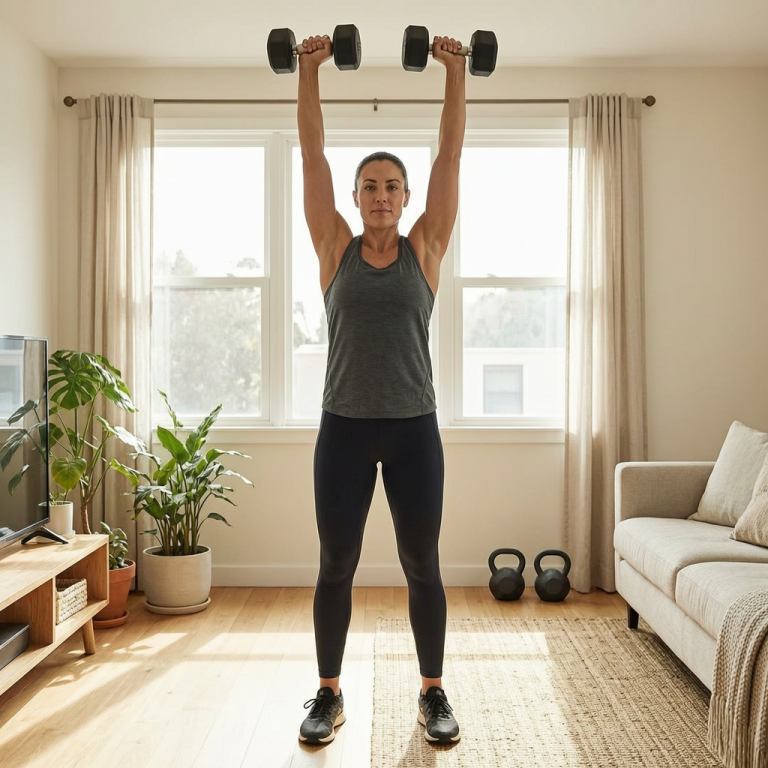
- Dumbbell Overhead Press: 3 sets of 10-12 reps. Sit or stand tall. Press the dumbbells from shoulder height to overhead.
- Bodyweight or Assisted Pull-Ups (or Lat Pulldown with a resistance band): 3 sets of as many reps as possible. Focus on pulling your elbows down and back. If using a band, anchor it overhead and pull the handles to your chest.
- Glute Bridges: 3 sets of 15-20 reps. Lie on your back, knees bent. Drive through your heels to lift your hips toward the ceiling, squeezing your glutes at the top.
- Bird-Dog: 3 sets of 10 reps per side. On all fours, simultaneously extend your right arm and left leg, keeping your core braced and back flat.
5 Common Fat-Loss Mistakes (And Exactly How to Fix Them)
- Mistake: Slashing calories too low. Fix: Never drop below 1,200 (women) or 1,500 (men) calories without professional guidance. A moderate deficit is sustainable; a drastic one wrecks your metabolism and energy.
- Mistake: Skipping strength training. Fix: Commit to the 3-day plan above. Muscle is your metabolic engine. Cardio alone can lead to muscle loss alongside fat.
- Mistake: “Earning” food with exercise. Fix: View exercise as a health and body-shaping tool, not a punishment. Stick to your calorie target regardless of workout intensity.
- Mistake: Not tracking accurately. Fix: Use a free app like MyFitnessPal or Lose It! for 2-3 weeks. Measure dressings, oils, and snacks. This builds awareness, so you can eventually eyeball portions.
- Mistake: Expecting linear, fast progress. Fix: Aim for 0.5-1 lb of weight loss per week. The scale will fluctuate. Trust the process, take progress photos, and notice how your clothes fit.
How to Track Progress and Smash Through Plateaus
The scale is a liar. Use multiple metrics:
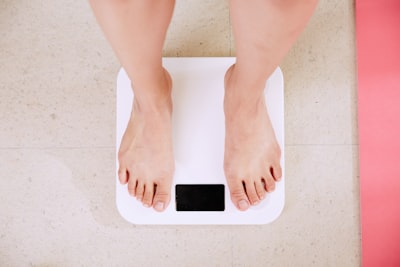
- Weekly Weigh-Ins: Same day, same time (Friday morning), after using the bathroom. Look at the trend over 3-4 weeks.
- Progress Photos: Take front, side, and back photos every 4 weeks in consistent lighting and clothing.
- Measurements: Use a soft tape measure on your waist (at the navel), hips, chest, and thighs monthly.
- Strength Gains: Are you lifting slightly heavier or doing more reps with the same weight? That’s progress!
Hit a Plateau? Don’t panic. First, double-check your calorie tracking accuracy. If you’ve been consistent for 4+ weeks, try one of these tweaks:
- Increase daily steps by 2,000-3,000.
- Swap 1-2 steady-state cardio sessions for 15-20 minutes of interval training (e.g., 30 sec sprint/60 sec walk).
- Recalculate your TDEE (you weigh less now!) and adjust your calorie target down by 100-150 calories.
- Change your strength workout rep ranges (e.g., try 4 sets of 6-8 reps with heavier weight).
Your First Step Starts Now
Knowledge is useless without action. Your mission today is simple:
1. Google “TDEE calculator” and find your maintenance calories. Subtract 300-500 to set your daily target.
2. Open your calendar and block out time for your first three workouts this week.
3. Based on the plate method, write down what you’ll eat for your next three meals.
That’s it. You’ve started.
Take action today — calculate your daily calorie needs right now and build your first-week meal and workout plan. Drop your fat-loss goal and current weight in the comments below. I’ll pick some real examples and give you personalized tips in future posts. Hit subscribe or follow the blog so you get the free 7-day beginner fat-loss plan, printable workout sheets, and meal guide delivered straight to your inbox!
External Resources: CDC healthy weight and calorie guidelines · NIH weight management and sustainable weight loss guide
Have you tried this exercise? What form cues helped you the most? Drop your experience in the comments below—I read every response and update articles based on real feedback.
Related Reading
Medical & Editorial Review: This article was reviewed by Liam Smith, founder of Apexfito, for accuracy and safety. Content is for educational purposes and is not a substitute for professional medical advice. Consult your physician before starting any exercise or nutrition program.



3 Comments