Shoulder Pain During Overhead Press?
By Liam Smith — Fitness enthusiast and founder of Apexfito. I test gear at home and share what actually works.
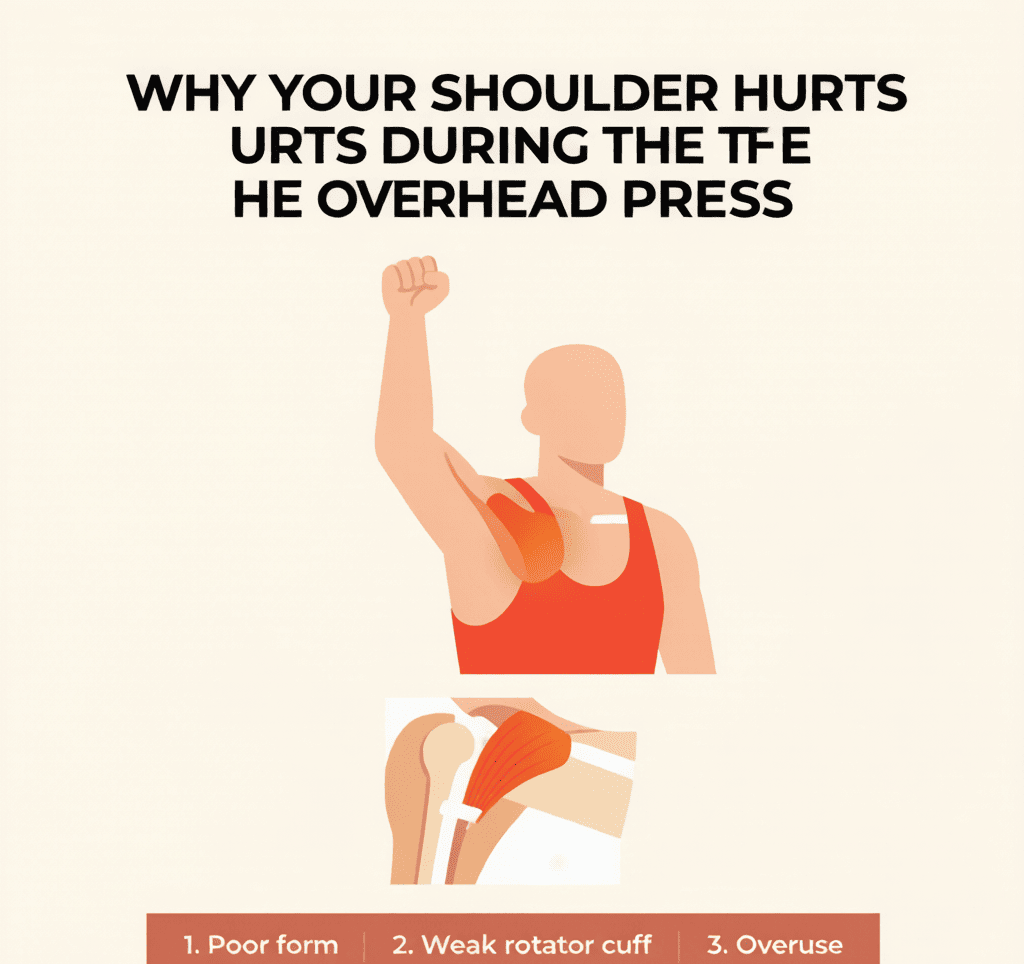
Why Your Shoulder Hurts During the Overhead Press
You brace your core, press the bar overhead, and then—ouch. That sharp pinch or deep ache in your shoulder stops you cold. You’re not alone. The overhead press is one of the most common lifts to trigger shoulder pain, but it’s usually fixable once you understand what’s going on inside the joint. Harvard Health notes that strengthening core muscles and maintaining proper posture are key to preventing back pain.
Your shoulder is a ball-and-socket joint that relies on a delicate balance of mobility and stability. When you press overhead, the humeral head (the ball) needs to glide smoothly within the glenoid (the socket) while your rotator cuff muscles keep everything centered. Any breakdown in this rhythm can lead to pain. The three most common culprits are impingement, biceps tendonitis, and rotator cuff overload.
Impingement: The Pinch That Stops the Press
Impingement happens when the acromion—a bony projection on your shoulder blade—rubs against the rotator cuff tendons as you lift your arm. This friction causes inflammation and pain, typically felt as a sharp pinch near the top or side of your shoulder during the press. I see this most often in lifters who flare their elbows out to the sides or poke their head forward as they push the bar up. Both positions narrow the subacromial space, turning a smooth glide into a painful grind.
If this sounds familiar, try tucking your elbows to about 45 degrees from your torso and keeping your chin tucked as you press. That small adjustment can open up room for the tendons to move freely.
Biceps Tendonitis: Front-of-Shoulder Sharpness
That sharp, stabbing pain in the front of your shoulder during the press is often biceps tendonitis. The long head of the biceps tendon runs through the shoulder joint and can become irritated when it’s repeatedly loaded in a compressed position. A narrow grip or excessive elbow tucking—where you bring your elbows too far forward—puts direct pressure on this tendon. I’ve had clients who switched from a close-grip barbell press to a neutral-grip dumbbell press and saw their front shoulder pain vanish within two weeks.
If you feel this type of pain, widen your grip slightly and let your elbows track naturally. You can also try a palms-facing grip with dumbbells to reduce tension on the biceps tendon.
Rotator Cuff Overload: The Lingering Ache
Unlike the sharp pain of impingement or tendonitis, rotator cuff overload shows up as a deep, dull ache that lingers after your set—sometimes even the next day. It’s a sign that the small stabilizing muscles around your shoulder are fatigued and overworked. This usually happens when you pile on too much pressing volume without enough pulling or external rotation work. Weak scapular control also plays a role: if your shoulder blades aren’t stable, your rotator cuff has to work overtime to keep the joint centered.
I’ve been guilty of this myself—adding extra sets of overhead press without balancing it with rows and face pulls. The fix is simple: cut back on pressing volume for a week, add more horizontal pulling, and include external rotation exercises like band pull-aparts or side-lying dumbbell rotations.
Quick Self-Check: What Kind of Pain Do You Have?
Here’s a simple way to figure out what you’re dealing with:
- Sharp pain during the lift — likely impingement or biceps tendonitis. Check your elbow position and grip width.
- Dull ache that lingers after your set — suspect rotator cuff strain. Reduce volume and strengthen your external rotators.
- Pain that radiates down your arm or into your neck — this could be something more serious. See a physio or doctor before pressing again.
Note: This is a general guide, not a medical diagnosis. If you’re unsure, consult a physical therapist.
Listen to your body. If something hurts, don’t push through it. Adjust your form, lower the weight, or switch to a different variation. Your shoulders will thank you.
Fix Your Setup: Grip, Elbow Position, and Bar Path
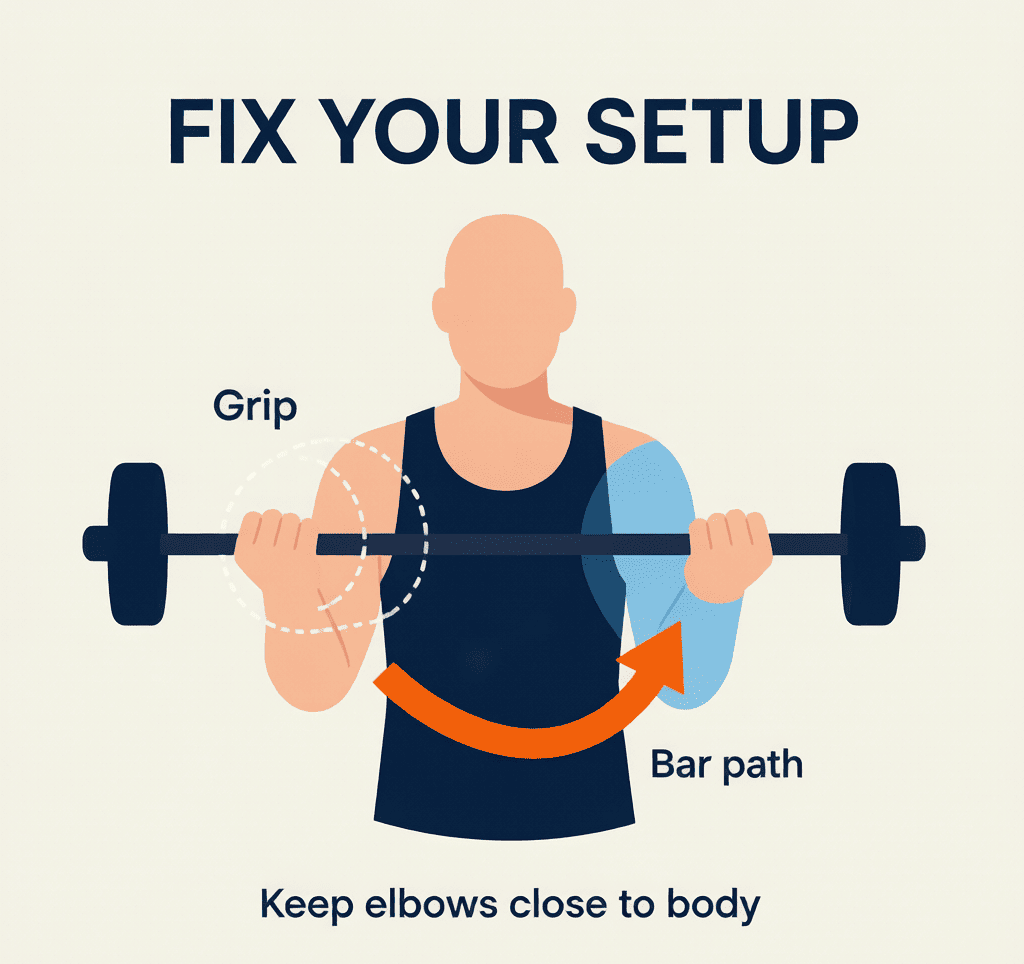
If your shoulder hurts during the overhead press, the problem is almost never that you’re too weak. It’s that your setup is putting your shoulder joint at a mechanical disadvantage. I’ve seen lifters fix their pain in a single session just by adjusting their grip width. Here’s exactly how to do it.
Grip Width: Find Your Forearm Vertical
Set up under the bar with your hands shoulder-width apart. Before you unrack, look at your forearms from the side. They should be perfectly vertical at the bottom of the press — not angled in or out. If your grip is too narrow, your elbows will flare out and jam the humerus into the acromion. Too wide, and you’ll lose power and torque the shoulder joint. I’ve had clients who were convinced they had impingement, and simply moving their hands one finger-width wider eliminated the pain.
Elbow Position: Slightly In Front of the Bar
This is the most common mistake I see. Lifters let their elbows flare out to the sides like chicken wings. That position forces the top of your humerus to jam into the acromion — a classic impingement setup. Instead, keep your elbows slightly in front of the bar. Think about pointing your elbows forward, not out. At the bottom of the press, your forearms should be vertical and your elbows should be just forward of the bar. This keeps the shoulder in a safer, more stable position.
Bar Path: Straight Line from Front Delt to Overhead
Don’t loop the bar around your face. That’s the old-school Olympic lifting technique, and it shifts your shoulders into a weak, painful position. For strict pressing, the bar should travel in a straight line from your front delt to directly overhead. If you need to tilt your head back to clear the bar, that’s fine — just don’t let the bar drift forward. I tell my clients to imagine a string pulling the bar straight up from their collarbone.
Brace Your Core and Squeeze Your Glutes
Before you unrack, take a deep breath into your belly, brace your core, and squeeze your glutes. This creates a stable platform from your feet to your shoulders. If your ribcage flares up, your shoulders roll forward and you lose the safe pressing position. A stable trunk prevents that. I’ve seen lifters who thought they had shoulder issues, but it was actually a core stability problem. Fix the trunk, and the shoulder pain disappears.
Thumbs-Around Grip Over False Grip
Many lifters use a false grip (thumb over the bar) because it feels more comfortable. But that grip often causes you to lose control of the bar. When the bar wobbles, your body compensates by shrugging your shoulders up, which irritates the shoulder joint. Switch to a thumbs-around grip. It gives you more control and keeps your shoulders packed down. I made this switch myself and noticed an immediate difference in shoulder comfort.
Try these adjustments on your next press day. If your shoulder pain persists, these adjustments are a great first step. Check out current prices on Amazon for gear that can help, and share your experience in the comments below.
Strengthen What’s Weak: The Real Solution for Pressing Pain
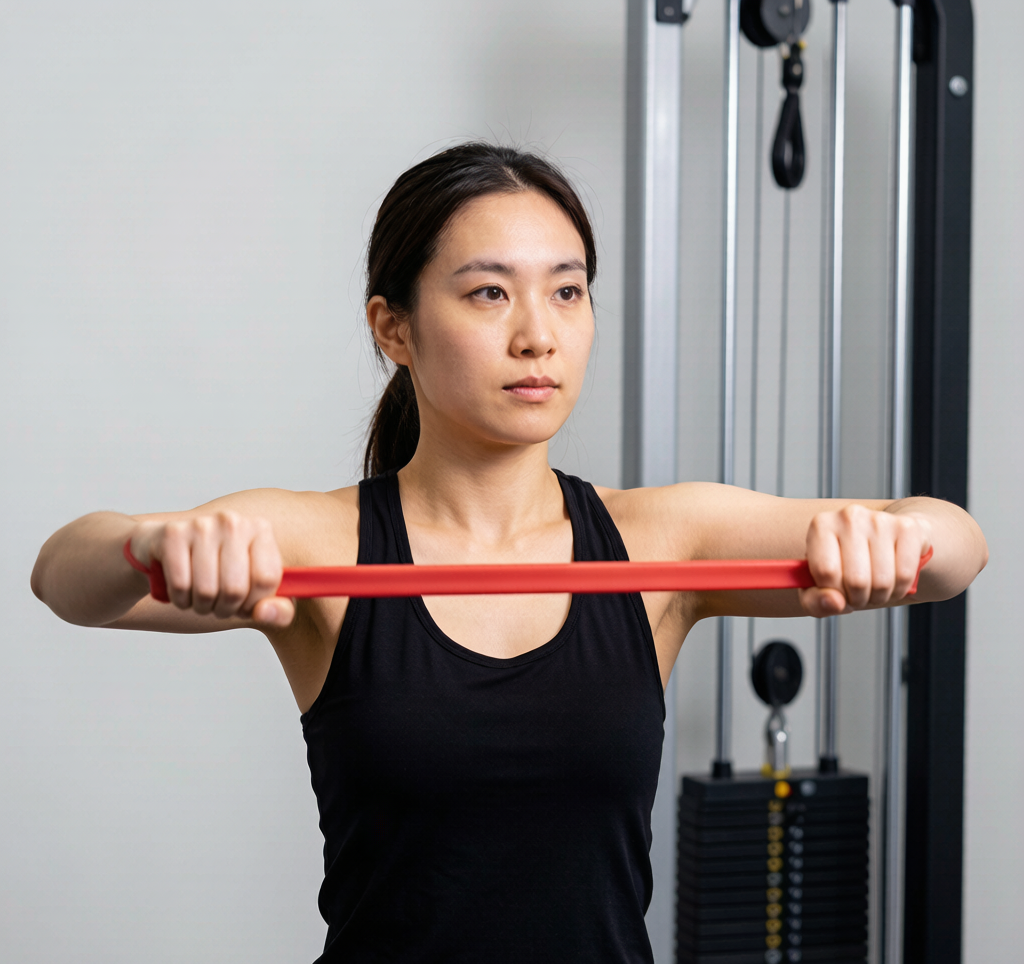
Here’s what I’ve learned from coaching hundreds of lifters and from my own shoulder rehab: most overhead press pain isn’t a structural problem. It’s a stability problem. Your rotator cuff’s main job is to keep the humeral head centered in the shallow socket of your shoulder blade. When your external rotators—especially the infraspinatus and teres minor—are weak, the humerus drifts upward during the press. That upward migration pinches the supraspinatus tendon or the bursa against the acromion. That pinch is what you feel as sharp pain near the top of the movement.
The fix isn’t to stop pressing. It’s to strengthen what’s weak.
The Prehab Exercises That Actually Work
I’ve seen lifters eliminate years of shoulder pain in three weeks by adding three specific exercises to their routine. Do these 2-3 times per week, either as part of your warm-up or on off days. In fact, doing them on rest days can speed up recovery even more—your muscles get extra blood flow without the fatigue of pressing.
- Face pulls: Set a cable or band at upper-chest height. Grab the handles with both hands and pull toward your face, separating the handles as you pull. Squeeze your upper back and externally rotate your shoulders at the end. Do 3 sets of 15-20 reps. This is the single best prehab exercise for overhead pressers.
- Band pull-aparts: Hold a band in front of you with straight arms at shoulder height. Pull it apart until it touches your chest. Control the return. 3 sets of 15-20 reps. This wakes up your rhomboids and lower traps, which help your shoulder blades sit in a better position for pressing.
- Side-lying external rotations: Lie on your side with a light dumbbell (3-5 lbs). Keep your elbow pinned to your ribs and rotate your forearm upward. Don’t let your body roll back. 3 sets of 12-15 reps per side. This directly targets the infraspinatus and teres minor.
I’ve had lifters tell me they felt the difference after just one session. The ache that had been nagging them for months started to fade within two weeks.
Don’t Forget Your Scapula
Your shoulder blade needs to upwardly rotate as you press overhead. If it doesn’t, you lose space in the subacromial space, and impingement worsens. Two exercises fix this:
- Scapular push-ups: Get in a push-up position, but keep your arms straight. Let your shoulder blades pinch together, then push them apart as far as you can. That’s one rep. 3 sets of 10-15 reps. This teaches your serratus anterior to fire properly.
- Wall slides: Stand with your back against a wall, arms bent at 90 degrees with elbows and wrists touching the wall. Slide your arms upward while keeping contact. If your elbows or wrists lift off, you’re going too far. 3 sets of 8-10 slow reps. This improves scapular upward rotation and thoracic extension.
The Lat Factor Everyone Ignores
Tight lats are a hidden cause of shoulder pain. Your lats attach to your humerus and your shoulder blade. When they’re tight, they pull your shoulder blade down and internally rotate your shoulder. That’s the exact opposite of what you need for a healthy overhead press. Stretch your lats daily with a lat hang from a pull-up bar (just hang for 30-60 seconds) or use a foam roller under your upper back while reaching overhead. I do this every evening and it’s made a noticeable difference in my own pressing comfort.
How to Put It All Together
Before your next pressing session, do 3 sets of 15-20 face pulls. Then do 1-2 sets of scapular push-ups and wall slides. That’s a 5-minute warm-up that will save you months of rehab. Most lifters see significant improvement in 2-3 weeks. If you’re consistent, the pain often disappears entirely within 4-6 weeks.
If you’ve been dealing with shoulder pain, try this approach for three weeks. Check current prices on Amazon for resistance bands and light dumbbells to get started. And share your experience in the comments—I read every one and I’m curious what works for you.
When to See a Pro and How to Keep Pressing Safely
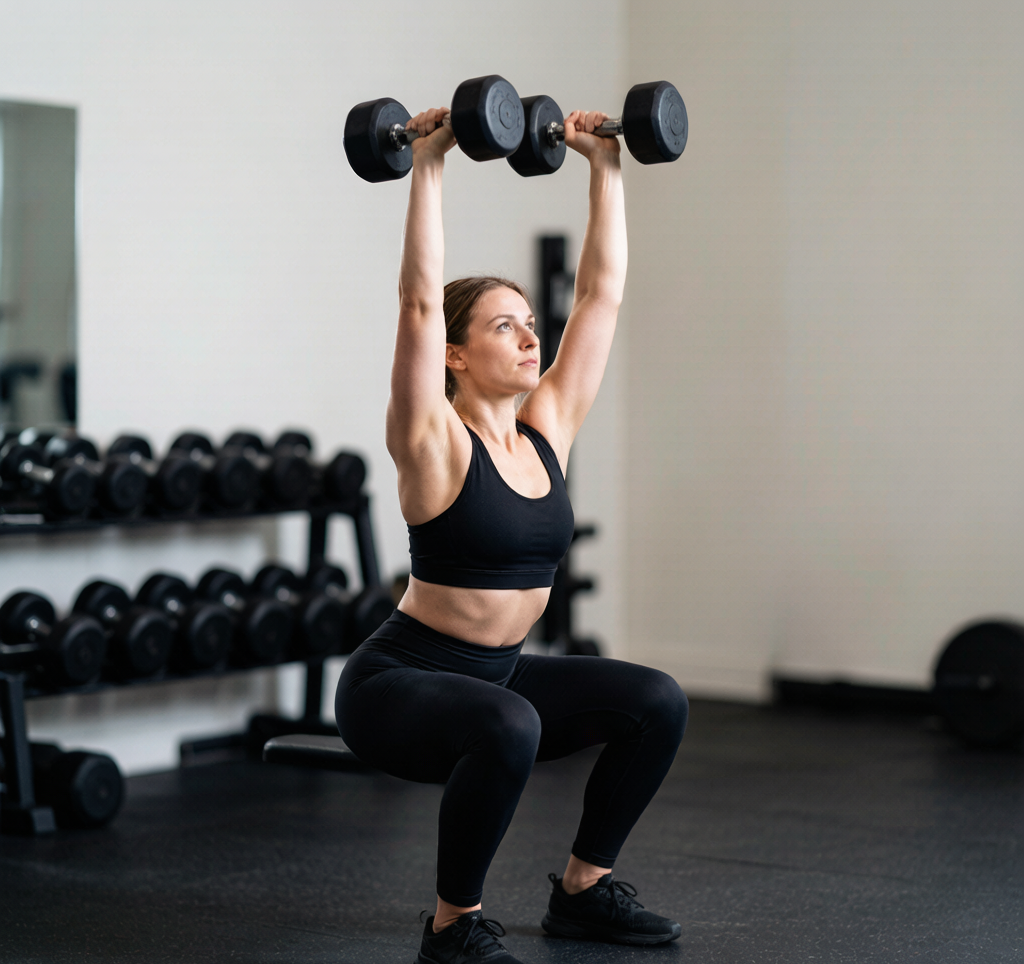
Most shoulder pain from overhead pressing resolves with form adjustments and a little prehab. But not all pain is created equal. If you experience sharp pain that stops you mid-rep, pain that radiates down your arm into your hand, or pain that hasn’t improved after two weeks of consistent form changes and rotator cuff work, it’s time to see a physical therapist. I’ve seen too many lifters try to push through a bad shoulder — it only digs the hole deeper.
While you’re recovering, you don’t have to give up overhead pressing entirely. The barbell forces your shoulders into a fixed path, which can aggravate impingement. The fix? Switch to dumbbell overhead press. Dumbbells let each arm move in its own natural arc, reducing the stress on your shoulder joint. I’ve used this myself after a bout of subacromial pain, and it kept me pressing without the ache.
Go with a neutral grip — palms facing each other. This position externally rotates your shoulders, giving your rotator cuff more room inside the joint. It’s a small change that makes a big difference. Start with a weight you can press for 3 sets of 10–12 reps without any pain. Focus on control: lower the dumbbells slowly, pause at the bottom, then drive up. Full range of motion matters more than load right now.
For daily shoulder maintenance, grab a lacrosse ball or a massage gun. Roll out your upper traps and pecs before you press — tightness there pulls your shoulders forward and narrows the space for your rotator cuff. I keep a lacrosse ball in my gym bag and spend two minutes on each side before overhead work. It’s cheap and it works.
Check current prices on Amazon for resistance bands, a lacrosse ball, or a massage gun to help with your shoulder maintenance. And share your experience in the comments — what helped you get back to pressing pain-free?
Medical & Editorial Review: This article was reviewed by Liam Smith, founder of Apexfito, for accuracy and safety. Content is for educational purposes and is not a substitute for professional medical advice. Consult your physician before starting any exercise or nutrition program.