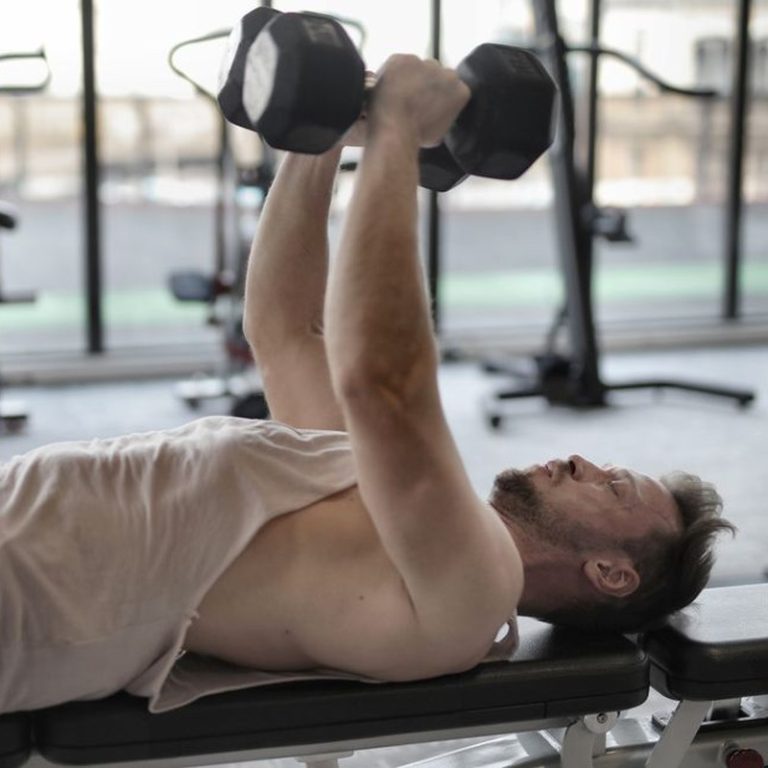
Morning vs. Evening Workouts: What Science Has to Say About Muscle Growth and Fat Loss
Full disclosure: Some links in this article are affiliate links. We may earn a small commission at no extra cost to you if you make a purchase through them. Our recommendations are based on what real users report, not on commission size.
Why Workout Timing Gets Overhyped
Most fitness arguments age poorly. The morning-versus-evening workout question is no exception. Pick a side and you can find a study that supports it; late-day training tends to align with peak body temperature, while early morning gets a reputation for boosting discipline and fat burn. The bigger picture is simpler: time of day matters, but far less than whether you actually train.
Start with two lifters. One sets an alarm for 5:55 AM, chugs water, and hits the squat rack before work. The other walks into the same gym at 6 PM and runs the same sets. Both track their lifts, both sleep about seven hours, both eat enough protein. A year later, who looks and performs better?
In most cases, the answer is whoever missed fewer sessions and pushed harder on the sets they completed. Not whoever trained at the supposedly optimal hour. That is not a guarantee, but it is the pattern that repeats in real gyms.
I have been on both sides. In my twenties, I trained late at night because my schedule was a mess. More recently, I switched to early mornings, partly to dodge the after-work crowd. The weights did not care what time I showed up. Progress came down to consistency, weekly volume, and rest.
Research on chronobiology backs that up. Body temperature, cortisol, and neural drive follow a 24-hour rhythm, and some studies do find strength and power output slightly higher in the late afternoon, when body temperature peaks. But the gap is small. In a 2012 review, exercise scientists Hamdi Chtourou and Nizar Souissi found that after training at a fixed time for a few weeks, your body’s performance rhythm shifts and the morning-evening difference shrinks. Put that small gap next to weekly volume, sleep, and calorie intake, and it usually gets lost in the noise.
A 2016 study published in Applied Physiology, Nutrition and Metabolism tested that directly. Researchers at the University of Jyväskylä, led by Maria Küüsmaa, assigned two groups of men to the same combined strength-and-endurance program, with one group training in the morning and the other in the evening. After 24 weeks, both groups gained similar strength and muscle mass at a similar rate. Total training load mattered more than the position of the hands on the clock.
So what moves the needle? The full week, not the hour. Keep an eye on this list:
- Number of weekly training sessions you actually complete
- Total hard sets close to failure
- Consistent sleep, ideally with a set anchor around your workout
- Enough protein and total calories
- Gradual progress on the bar or machine
Take two lifters again. One trains at 6 AM with perfect consistency. The other trains at 6 PM, but misses one session a week because work keeps running over. The early bird gets the gains, not because morning is magical, but because she shows up more often. Reverse the scenario and the same thing happens in the other direction.
So when you decide on a training time, stop looking for a secret hour. The best time is the one you can repeat five or six times per week without negotiation. For a parent with a 6 AM kid, that might be lunch. For a shift worker, it might be 3 AM. For a student, it might be right after class.
A practical way to find your slot: pick the time you can defend on your busiest day of the week, not your easiest day. Train there for two weeks. If you are not dragging yourself in at least five times, move the slot. The goal is not the perfect window. It is the repeatable one.
What Morning Workouts Actually Do for Fat Loss and Muscle
If you train before breakfast, you’ve probably heard that fasted cardio burns more fat. It’s a seductive idea, but the research doesn’t back it up as a weight-loss shortcut. In controlled studies where total daily calories and protein are matched, people doing fasted morning cardio and people training after eating lose about the same amount of body fat. Your body does use more fat as fuel during the session, but over the rest of the day, energy balance levels out.
This distinction matters because fat loss isn’t decided in one hour. It’s decided over weeks of consistently eating slightly fewer calories than your body uses. A fasted workout may influence that by changing appetite. One crossover study of healthy men found that a morning treadmill run lowered acylated ghrelin and increased peptide YY compared with a resting control session (Broom et al., 2009). This effect, however, isn’t universal. Some people wake up hungry after a hard session and eat more later, while others feel less hungry and find it easier to stay in a deficit.
What does this mean for you? If morning fasted cardio feels good and makes you less prone to mid-morning snacking, use it. If it leaves you starving and cranky, eat something first. The fat-loss results should not be meaningfully different either way.

Morning Resistance Training and Sleep
For muscle growth, workout timing matters less than consistency, but morning lifting has one underrated benefit: it anchors your circadian rhythm. Bright light, movement, and a rise in core temperature in the early hours all send a signal that the day has started. For some people, this translates into better sleep the following night — falling asleep faster, more deep sleep, and fewer midnight wakings.
That sleep benefit is not guaranteed. It depends on your chronotype, your training load, and how much morning light you actually get. But when it lands, it’s powerful. Better sleep means lower cortisol the next day, better insulin sensitivity, and more complete muscle recovery. In that indirect way, a 6 a.m. lifting session can support both muscle growth and fat loss.
I saw this with a client who shifted his workouts from 7 p.m. to 6:30 a.m. He didn’t change his training split or his calories at first. His sleep quality score went up, his evening cravings dropped, and he stopped waking up groggy. The workout itself didn’t build more muscle; the sleep and recovery it created did.
The Trade-Off: Strength and Power
Now for the catch. Maximal strength and power output are usually lower in the morning. Core body temperature is about a degree lower a few hours after waking, your nervous system hasn’t fully switched on yet, and muscle activation is slower. If you test a one-rep max at 7 a.m., you’ll likely be weaker than if you did the same test at 5 p.m. The gap can be narrowed with a longer warm-up and some explosive activation sets, but it won’t disappear for most people.
For practical training, warm up for 10-15 minutes with easy cardio, then do ramp-up sets on the first lift before you load the bar. If pure strength is your priority, consider saving heavy compound movements for later in the day when your nervous system is ready.
- Fasted cardio won’t magically melt more fat. Match total calories and protein, and fat loss is similar.
- Morning exercise can tamp down later appetite for some people, which makes staying in a deficit easier.
- Morning lifting improves sleep quality for many lifters, an indirect boost to recovery and body composition.
- Expect 5-10% lower peak strength and power early in the day. Warm up longer to compensate.
If you decide to test morning training, make the setup easy the night before. Before you set your alarm, check current prices on Amazon for anything you need to make your morning session smoother, whether that’s a blackout eye mask, a thermos, or a set of adjustable dumbbells. And after you try a week of morning workouts, share your experience in the comments: do you feel sharper, or are you just going through the motions?
Evening Workouts: Performance Peaks and Potential Downsides
The 5 p.m. gym rush isn’t just a work-schedule accident. Many regular lifters notice their warm-ups feel smoother and their lifting straps feel less needed later in the day. That impression matches a solid line of time-of-day research.
A 2019 review in the Journal of Strength and Conditioning Research looked at 31 studies and found that maximal voluntary contraction, vertical jump, and sprint performance tended to peak in the late afternoon to early evening. The usual explanation is straightforward: your core body temperature runs about 0.5 to 1 degree Fahrenheit higher by 4 p.m., and muscles contract more efficiently when they’re warm. Neuromuscular coordination also sharpens, which helps with explosive moves and complex lifts.
That doesn’t mean every single person jumps higher at 5 p.m. than at 7 a.m. But the pattern is consistent enough that competitive lifters and sprinters intentionally schedule their key sessions in the evening.
The performance advantage is typically a few percentage points. On most training days, that won’t transform your workout. It matters more when you’re testing a one-rep max, trying to beat a previous squat number, or doing a timed sprint. Moving that test to the late afternoon can feel almost like a tiny cheat code.
Evening training also comes with a hormonal twist. Some studies show a more robust testosterone response to resistance training in the evening compared with the morning. Testosterone supports muscle repair and growth, but that acute bump alone doesn’t automatically mean more muscle. Total training volume, protein intake, and progressive overload matter much more. A 10 p.m. session that leaves you only 30 minutes to eat before bed won’t beat a consistent 7 a.m. routine with solid food and enough sleep. The clock can help, but it doesn’t replace the basics.
The main downside is sleep. Intense exercise ending within 60 to 90 minutes of bedtime can lengthen the time it takes to fall asleep, raise resting heart rate, and make you feel less recovered the next morning. But sleep disruption isn’t universal. Some people can hammer heavy deadlifts at 9 p.m. and fall asleep immediately. Others lie there with their brain running through the workout.
My own data point is the second group. A few years ago, I was running a program with heavy deadlifts scheduled at 9 p.m. and spent several nights staring at the ceiling. Moving the session two hours earlier made a huge difference. That’s one example, not proof, but it taught me to treat nighttime intensity like caffeine: everyone metabolizes it differently.
If you want to test evening training and protect sleep, try these practical guardrails:
- Plan to stop your workout at least two hours before your target bedtime.
- Use the last ten minutes as a cool-down — jog, row, or just walk with your heart rate dropping.
- Make the final set lighter. You don’t need to chase a PR at 10 p.m. unless you’re prepared for the trade-off.
- Take a warm shower afterward. A mild temperature drop after the shower signals your body to transition down.
Then run a one-week experiment: train in the evening for five sessions, note how long it takes to fall asleep, and compare your morning energy with a normal week. If your sleep quality stays the same, evening training is a strong option. If you’re lying awake, try shifting the session earlier or finishing with more cool-down time.
For the cool-down, a cheap foam roller or a lacrosse ball can help you slow down and release some tension. Check current prices on Amazon, and pop into the comments to share how your evening session affects your sleep — both outcomes help the next person decide.

How to Choose Your Ideal Training Window
If you’re trying to decide between morning and evening workouts, stop reading theory and start testing. I ran my own two-week experiment years ago, and the results changed how I plan every training block.
Your natural energy rhythm tells you where to start, but it doesn’t decide the winner. A simple trial will show you what actually works for your schedule, your sleep, and your recovery.
Match Your Training Window to Your Energy Rhythm
Before you set the alarm, pay attention to your first hour awake. Do you feel groggy and need caffeine before you can think? Or are you already alert? People who feel sluggish after waking typically see better workout quality in the afternoon. Night owls often push more weight later in the day. That matches research showing body temperature peaks in the late afternoon, which can improve strength and anaerobic performance.
But group trends don’t predict your response. The only reliable way to know is to test it.
Run a Two-Week Experiment
Here’s the plan: train in the morning for one week, then train in the evening for the next. Keep the sessions similar — same exercises, same total sets, same target reps. You’re testing the time of day, not a new program.
Track three things after every session:
- Workout quality: total weight lifted, reps completed, or time to finish a run.
- Soreness: how your body feels a few hours later and the next morning.
- Sleep: how easily you fall asleep and whether you wake up rested.
Use a notes app or a simple log. No need for fancy equipment. I tried this with a client who was certain she was a morning person. Her morning week felt productive, but she woke up tired and her lifts plateaued. During the evening week, she added five reps to her final set of squats and slept deeper. The data didn’t lie.
Another person I know — a nurse on rotating shifts — found evening workouts were the only time she never missed. The exact time didn’t matter as much as having a slot that survived a realistic schedule.
Choose the Slot That Feels Sustainable
After two weeks, compare the three metrics plus your mood. Choose the window that felt sustainable, not just the one with slightly better numbers. A seven a.m. session that you skip three times a week won’t beat a six p.m. session you never miss.
Once you pick a slot, keep it regular for at least a month so your body can adapt. Research shows training at a consistent time can lead to better performance gains over time, but that only matters if the time is realistic for you.
One extra tip: if your schedule shifts — traveling, new job, different shift pattern — give yourself a week or two to adapt. Keep the intensity slightly lower during that transition, especially for the first few sessions.
For the two-week test, all you really need is a timer. I use a simple digital stopwatch, the kind that’s been sitting in my gym bag for years. If you don’t have one, check current prices on Amazon for a basic digital stopwatch — the under-$10 models work just as well as any fancy smartwatch feature.
If you’ve tried both morning and evening training, tell me which one stuck and why. Share your experience in the comments below.
Medical & Editorial Review: This article was reviewed by Liam Smith, founder of Apexfito, for accuracy and safety. Content is for educational purposes and is not a substitute for professional medical advice. Consult your physician before starting any exercise or nutrition program.